Linux Kernel 7.1 Kicks Intel 486 to the Curb After 35 Years
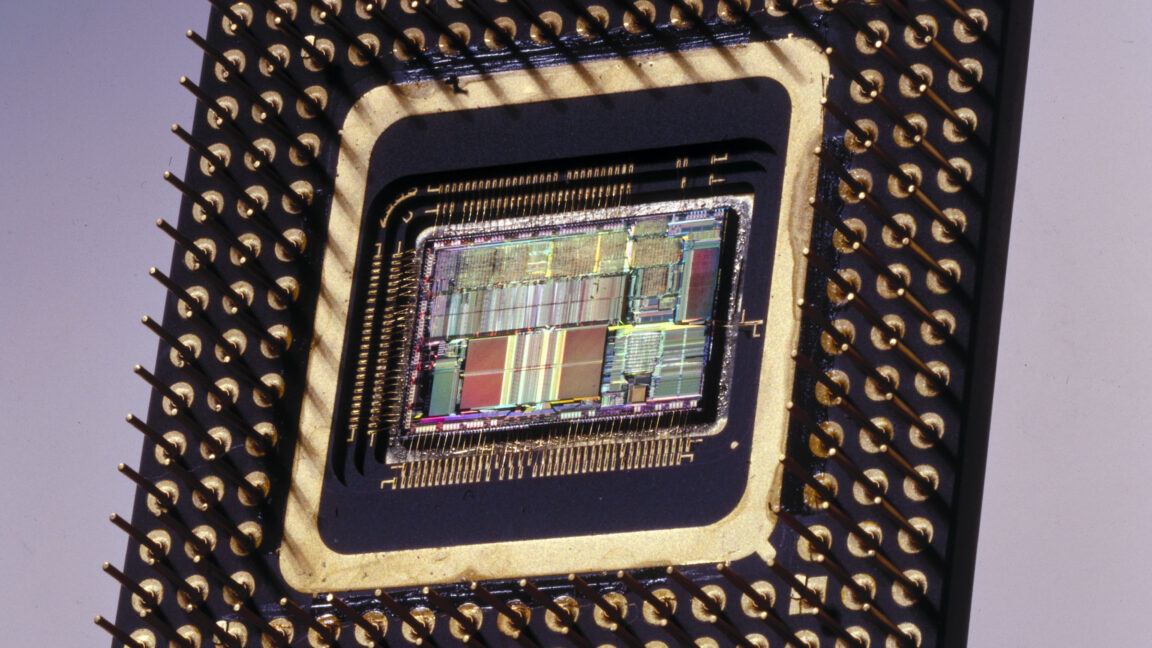
What if your prized 486 DX2-66 suddenly can't boot the latest Linux anymore? Kernel 7.1 is drawing a line in the sand on 35-year-old silicon.
SpaceX's IPO isn't just about rockets anymore. It's a colossal, multi-billion dollar gamble on artificial intelligence, and frankly, it smells like desperation.
What if your prized 486 DX2-66 suddenly can't boot the latest Linux anymore? Kernel 7.1 is drawing a line in the sand on 35-year-old silicon.

Raccoons once claimed Intel's idle Fab 9 in New Mexico. Now, fueled by CHIPS Act cash, it's central to the company's advanced chip packaging push.
The most significant U.S. industrial policy in decades: how the CHIPS Act's $52.7 billion in subsidies is reshaping where and how semiconductors are manufactured worldwide.
EUV lithography is a cutting-edge semiconductor manufacturing process that uses extreme ultraviolet light to create highly complex and minuscule circuit patterns on silicon wafers. This technology is fundamental to producing the most advanced and powerful microchips, driving innovation across the electronics industry.
Beyond NVIDIA GPUs, a growing ecosystem of custom AI accelerators is reshaping the compute landscape. Here is how TPUs, Trainium, Gaudi, and others compare.
Chiplet architecture is a modular approach to designing complex processors, breaking down monolithic SoCs into smaller, specialized components. This strategy offers flexibility, cost-effectiveness, and improved performance for modern computing needs.
Three instruction set architectures dominate computing. Here is how RISC-V, ARM, and x86 differ in design, ecosystem, and real-world applications.
Extreme ultraviolet lithography is the most critical technology in modern chipmaking. Learn how EUV works and why ASML holds a monopoly on these machines.
Understanding the three dominant memory technologies and how their architectural differences determine where each excels in modern computing systems.
Semiconductors have become a central front in great-power competition. Here is how the CHIPS Act, export controls, and the Taiwan question are reshaping the industry.
Moore's Law describes the historical trend of exponential growth in the number of transistors on integrated circuits. This fundamental observation has driven decades of rapid technological advancement and innovation.
Chiplets and advanced packaging are replacing monolithic chip design. Learn how this architectural shift is transforming semiconductor economics and performance.