Semiconductors have moved from an obscure industrial input to the center of great-power geopolitical competition. The ability to design and manufacture advanced chips now directly determines a nation's military capabilities, economic competitiveness, and technological sovereignty. This reality has triggered the largest government intervention in the semiconductor industry since its founding, with hundreds of billions of dollars in subsidies, sweeping export controls, and strategic investments reshaping the global chip landscape.
The Taiwan Vulnerability
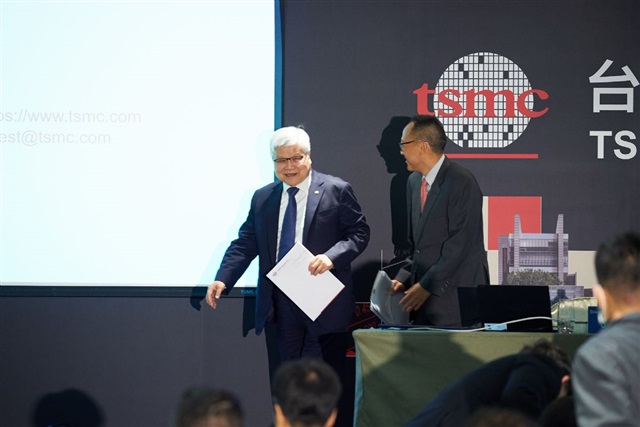
The geopolitical significance of semiconductors begins with a geographic concentration that would be alarming for any critical industry. Taiwan Semiconductor Manufacturing Company (TSMC) produces over 90% of the world's most advanced semiconductors (sub-7nm). This extreme concentration on an island 100 miles from mainland China, which considers Taiwan a breakaway province, represents what many analysts call the single greatest supply chain vulnerability in the global economy.
A disruption to Taiwan's chip production, whether from a military conflict, natural disaster, or blockade, would be catastrophic. Modern economies cannot function without advanced chips. Automobile production, telecommunications, medical devices, financial systems, military equipment, and AI development would all grind to a halt. Studies estimate that a prolonged interruption of Taiwanese chip manufacturing could cause global economic losses exceeding $1 trillion per year.
This vulnerability is not theoretical. Cross-strait tensions have increased significantly, with Chinese military exercises simulating blockade scenarios and Taiwan's defense posture shifting to reflect a more imminent threat assessment. While most analysts believe a full-scale invasion is unlikely in the near term, even a partial blockade or trade disruption could severely impact chip supply.
The U.S. CHIPS and Science Act
The CHIPS and Science Act, signed into law in August 2022, represents the most significant U.S. industrial policy intervention in decades. The legislation provides $52.7 billion in semiconductor-specific funding, including $39 billion in direct manufacturing subsidies, $13.2 billion for R&D, and additional tax incentives worth an estimated $24 billion.
The strategic objective is straightforward: build advanced chip manufacturing capacity on American soil to reduce dependence on Taiwan. The U.S. share of global semiconductor manufacturing has declined from 37% in 1990 to approximately 12% today, and the country has virtually no leading-edge manufacturing capability. The CHIPS Act aims to reverse this decline by making it economically viable for chipmakers to build fabs in the United States despite the higher construction, labor, and operating costs.
Major CHIPS Act Investments
- Intel: Received $8.5 billion in grants and $11 billion in loans to support fab construction in Arizona, Ohio, Oregon, and New Mexico. Intel's investment is the largest single allocation under the CHIPS Act.
- TSMC: Received $6.6 billion in grants for its Arizona fab complex, which will eventually include three fabs covering processes from N4 to N2. Total investment exceeds $65 billion.
- Samsung: Received $6.4 billion in grants for its fab in Taylor, Texas, with total planned investment of $40 billion.
- Micron: Received $6.1 billion in grants for memory fab construction in New York and Idaho.
- GlobalFoundries, Texas Instruments, and others: Received smaller grants for trailing-edge and specialty chip manufacturing.
The CHIPS Act includes guardrails preventing recipients from significantly expanding semiconductor manufacturing capacity in China for 10 years. This provision explicitly links domestic subsidy to restrictions on technology transfer, reinforcing the strategic intent behind the legislation.
U.S. Export Controls on China
Beginning in October 2022, the U.S. Department of Commerce implemented sweeping export controls targeting China's ability to access, develop, and produce advanced semiconductors. These controls represent the most significant technology restriction imposed on a major economy since the Cold War.
Key Restrictions
The export controls operate on multiple dimensions. Advanced chips above certain performance thresholds cannot be exported to China. This effectively blocks NVIDIA's most powerful AI GPUs (A100, H100, and subsequent generations) from being sold to Chinese customers. NVIDIA has developed China-specific variants (A800, H800, then later versions) that comply with the restrictions, but these chips have significantly reduced performance.
Semiconductor manufacturing equipment is also restricted. This includes EUV lithography machines from ASML (already blocked by Dutch export controls), as well as certain DUV lithography tools, etching equipment, deposition systems, and inspection tools from American, Japanese, and Dutch companies. The intent is to prevent China from building indigenous capability to manufacture advanced chips.
The controls also restrict U.S. persons (including U.S. citizens and permanent residents) from supporting the development or production of advanced chips at Chinese fabrication facilities. This provision targets the human expertise required to operate advanced fabs, not just the equipment.
Impact and Effectiveness
The export controls have demonstrably slowed China's access to the most advanced AI hardware. Major Chinese AI labs have reported difficulties acquiring sufficient computing power for training large models. Huawei's Ascend AI chips, manufactured domestically by SMIC, are based on older process technology and deliver substantially less performance than NVIDIA's latest offerings.
However, the controls have also accelerated China's efforts to build an independent semiconductor ecosystem. Government funding for domestic chip companies has surged. SMIC has demonstrated the ability to produce 7nm-class chips using multi-patterning DUV lithography, despite not having access to EUV. Chinese equipment makers are developing indigenous alternatives to restricted tools, though these remain generations behind Western equivalents.
The controls have also created complications for the U.S. semiconductor industry. NVIDIA, Qualcomm, Intel, and other American chip companies derive significant revenue from China, and export restrictions reduce their sales and profits. This lost revenue reduces funding available for R&D, potentially undermining the long-term competitiveness the controls are meant to protect.
The Global Subsidy Race
The CHIPS Act was the starting gun for a global race to subsidize domestic semiconductor manufacturing. Other major economies have responded with their own programs:
- European Union: The European Chips Act provides approximately 43 billion euros ($47 billion) in public and private investment to double Europe's share of global chip manufacturing to 20% by 2030. Intel's fab in Magdeburg, Germany, and TSMC's fab in Dresden are major projects under this initiative.
- Japan: Has committed over $25 billion in semiconductor subsidies, focusing on attracting TSMC (which has built a fab in Kumamoto) and supporting Rapidus, a domestic consortium attempting to develop 2nm manufacturing capability by 2027.
- South Korea: Samsung and SK hynix have committed over $470 billion in semiconductor investments through 2042, supported by government tax incentives and infrastructure spending.
- China: The Big Fund (National Integrated Circuit Industry Investment Fund) has deployed hundreds of billions of yuan across three phases to support domestic chip companies, equipment makers, and materials suppliers.
- India: Has committed approximately $15 billion to attract semiconductor manufacturing, with a Tata Electronics fab in Gujarat and packaging facilities from other companies.
Emerging Risks and Questions
Several unresolved questions hang over semiconductor geopolitics. First, will subsidies lead to overcapacity? If every major economy successfully builds advanced fabs, the global supply of chips could exceed demand, driving down prices and potentially making some subsidized fabs uneconomical. The history of government-directed industrial investment is mixed at best.
Second, how will technology bifurcation affect the industry? If China develops a separate, incompatible semiconductor ecosystem behind export controls, the result could be two parallel technology stacks with different standards, tools, and supply chains. This fragmentation would increase costs and reduce innovation for everyone.
Third, what happens when the subsidies run out? The CHIPS Act provides one-time funding, but operating a fab in the United States costs 30-50% more than in Taiwan or South Korea due to higher labor, energy, and construction costs. Without ongoing cost advantages, subsidized fabs may struggle to compete once government funding is exhausted.
Finally, the Taiwan question remains unresolved. No amount of domestic fab construction will fully replicate TSMC's capabilities in the near term, and the company's most advanced processes will remain concentrated in Taiwan for at least another decade. The fundamental geopolitical vulnerability that motivated the CHIPS Act will persist long after the subsidies are deployed.
Semiconductor geopolitics is likely to intensify rather than stabilize. As AI capabilities increasingly depend on access to the most advanced chips, the strategic importance of semiconductor manufacturing will only grow. The decisions governments make today about subsidies, export controls, and technology access will shape the competitive landscape of the technology industry for decades.