Look, the air was thick with the scent of pure, unadulterated AI gold. We were all there, watching the numbers tick up, predicting an insatiable hunger for more and more processing power. Companies were talking about building fabs faster than you could say ‘Moore’s Law,’ a veritable gold rush for silicon.
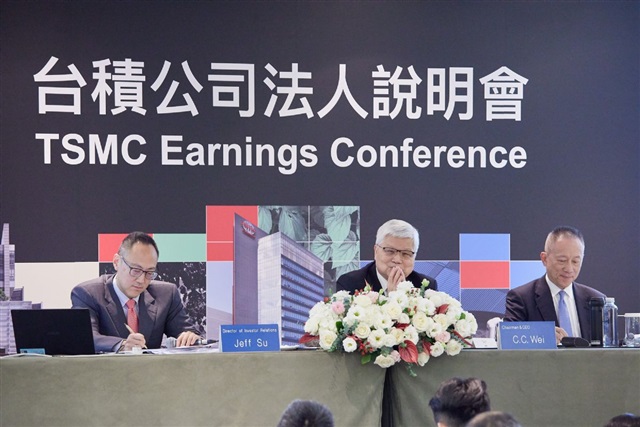
And then, out of the blue, comes Gavin Baker, Chief Investment Officer at Atreides Management, dropping a bombshell at the Sohn Investment Conference. He’s not talking about runaway expansion; he’s talking about TSMC’s restrained capital expenditure. This isn’t just a minor note; it’s a fundamental rethink of the narrative. The expectation was a frantic, all-out build-out, a feeding frenzy of chip manufacturing capacity. Instead, Baker suggests the world’s leading foundry is playing a different game – one that might just be averting a full-blown AI bubble.
It’s like standing on the edge of a volcanic crater, expecting it to erupt in a glorious, if destructive, display of power. We all anticipated TSMC, the undisputed titan of chip manufacturing, would be throwing billions upon billions at new facilities, a direct response to the dizzying demand for AI chips. But Baker’s thesis is that their measured, almost cautious, approach to capacity expansion is the crucial safety valve.
What does this mean? Imagine you’re throwing a massive party, and everyone’s ordering champagne at an alarming rate. You could just keep ordering case after case, risking a warehouse full of unopened bottles when the party eventually winds down. Or, you could strategically order just enough to keep the mood festive, but not so much that you’re drowning in leftovers. TSMC, according to Baker, is that smart party planner.
This isn’t about TSMC being slow; it’s about them being smart. They’re the engine room of the entire AI revolution, the ones who actually make the chips that power our digital dreams. If they were to suddenly churn out an unfathomable amount of capacity, and then demand suddenly cools — say, a new paradigm emerges, or the current AI wave hits a plateau — we’d be left with a massive oversupply. Think of the dot-com bust, but for semiconductors.
Baker’s view is that TSMC’s restrained expansion strategy is helping the global market avoid an AI bubble. This is a stark contrast to the prevailing narrative of unchecked growth and massive capital outlays.
This perspective offers a unique insight: The perceived ‘caution’ in TSMC’s capital expenditure isn’t a sign of weakness or missed opportunity, but rather a sophisticated act of market stabilization. It’s an almost artistic balancing of immediate needs with long-term sustainability. While others might see a missed chance to capitalize on short-term frenzy, Baker sees strategic foresight, a deliberate effort to prevent the boom-and-bust cycle that has historically plagued the tech industry. It’s like a skilled captain steering a massive ship through choppy waters, not by accelerating wildly, but by making precise adjustments to the rudder.
Why Is TSMC’s ‘Caution’ So Important?
The entire AI ecosystem, from the behemoths designing the chips to the startups building the next big thing, relies on TSMC’s production capabilities. If TSMC overbuilds capacity based on current feverish demand, a subsequent downturn could lead to drastically lower chip prices and significant financial strain across the board. This would stifle innovation, making it harder for smaller players to access advanced manufacturing. It’s a delicate dance, and TSMC’s measured steps are, in Baker’s eyes, crucial for maintaining the rhythm.
A Different Kind of AI Boom
We’ve seen cycles of hyper-growth and subsequent crashes before. Think of the internet boom of the late 90s, where valuations soared and then plummeted. The key difference here is that TSMC, as the fundamental enabler, seems to be learning from history. They’re not just building capacity; they’re building it responsibly. This is the difference between a wildfire and a controlled burn – one destroys everything, the other clears the way for new growth.
This also means that the real value might not just be in the sheer volume of chips, but in the efficiency and scalability of the AI applications themselves. If the underlying hardware supply remains disciplined, it forces a greater focus on software and algorithmic improvements to drive further gains. It’s a subtle but profound shift: from hardware-at-all-costs to intelligent optimization.
Baker’s assessment paints a picture of a more mature, more stable AI market than many had predicted. It’s less of a chaotic, uncontrolled explosion and more of a carefully orchestrated, sustainable ascent. This is the kind of forward-thinking that truly defines a platform shift, not just a fleeting trend.
🧬 Related Insights
- Read more: Prebuilt Gaming PC Slashed $500: RTX 5060 Ti, Ryzen 7800X3D for $1599
- Read more: Intel’s Q1 2026 Earnings Call: Another Chapter in the Chip Giant’s Slow Burn
Frequently Asked Questions
What does TSMC’s capital expenditure mean for the AI market? It suggests TSMC’s measured spending is helping to prevent an oversupply of AI chips, fostering a more stable market and encouraging sustainable growth rather than a speculative bubble.
Will this cautious approach slow down AI development? Not necessarily. By avoiding a bubble, TSMC’s strategy ensures a more consistent supply and pricing, allowing for long-term investment and innovation across the AI ecosystem.
Is the AI chip market already in a bubble? According to investor Gavin Baker, TSMC’s cautious approach to expanding manufacturing capacity is actively working to avert a bubble, suggesting the market is not yet in a state of unsustainable inflation.