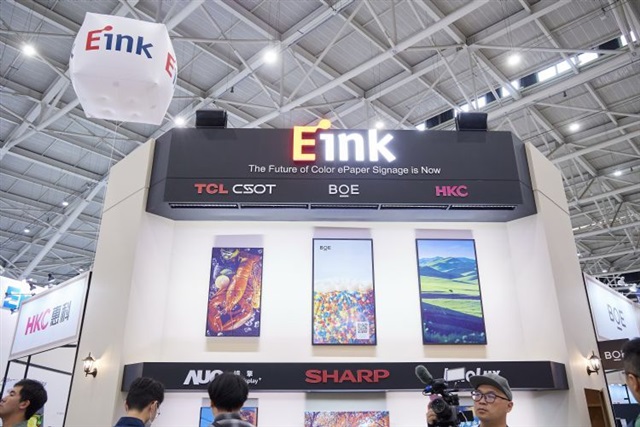
Look, imagine a bustling marketplace. Suddenly, the static ads on the kiosks flicker to life, not with jarring LCD brightness, but with a gentle, paper-like fluidity. That’s the whisper of the future E Ink is making audible with its new T2000 controller architecture. It’s like upgrading a trusty old abacus to a sleek, touch-sensitive tablet—suddenly, a whole new universe of possibility opens up. The T2000, specifically its color e-paper timing controller chip, is the engine powering this transformation, designed from the ground up to wrestle the inherent slowness of e-paper into submission, especially on those sprawling, billboard-sized screens.
For years, e-paper has been the darling of specific niches: e-readers, price tags, those smart parking signs. Its beauty lies in its power efficiency and its eye-pleasing, paper-like reflection. But video? That was akin to asking a tortoise to win a sprint. Now, with the T2000, E Ink is pushing past those limitations. We’re talking about retail advertising screens that can cycle through dynamic promotions with actual smoothness, not just a series of blink-and-you’ll-miss-it slideshows. This is huge. It’s akin to the jump from dial-up to broadband for e-paper.
Why This E Ink Leap Matters
This isn’t just a spec bump; it’s a redefinition of what e-paper is. Think about it: Imagine transit schedules that update in real-time, not just every few minutes. Or digital art installations that can display animated pieces without draining the power grid. The T2000 is the conductor, orchestrating the electrons to paint a picture of motion on a surface that traditionally favored stillness. It’s about bringing the energy and dynamism we associate with digital displays to the calm, eye-friendly world of e-paper.
The sheer scale E Ink is targeting is also mind-boggling. They’re talking about large-format displays, the kind you see on the sides of buildings or as prominent digital signage. To get video performance that feels natural on those surfaces, you need an architecture that’s incredibly intelligent and efficient. The T2000 seems to be exactly that – a highly specialized piece of silicon built for this very specific, yet increasingly important, task.
The T2000 controller architecture is designed to significantly enhance the responsiveness and visual fidelity of large-format color e-paper displays, enabling smoother video playback and a more engaging user experience.
But here’s the real kicker: this move by E Ink isn’t happening in a vacuum. We’re living through an AI-driven renaissance, where the demand for efficient, specialized displays is exploding. AI models need to be trained, inference needs to happen, and the results need to be displayed. While E Ink might not be directly powering AI training chips, their technology can be a vital part of the delivery system for AI-generated content, especially in public spaces or for applications where power and visual comfort are paramount. This controller upgrade is laying the groundwork for AI to communicate its insights and creations in new, more ubiquitous ways.
Is This The Death of the LCD in Retail?
Not entirely, but it’s a serious challenge. Traditional LCDs for signage drink power and can be visually fatiguing. E Ink, with its reflective nature and improved video capabilities, offers a compelling alternative. Imagine retail stores filled with these e-paper displays – they’d be quieter, calmer, and significantly more energy-efficient. The ‘wow’ factor of dynamic content wouldn’t be sacrificed for efficiency anymore. This could fundamentally change the aesthetic and operational landscape of retail environments.
Of course, there will be challenges. Color saturation and refresh rates, while improved, might still lag behind the most cutting-edge LCDs or OLEDs. But for applications where the primary goal is information delivery with minimal distraction and maximum power savings—and now, surprisingly decent motion—E Ink is making a very strong case. This T2000 isn’t just a new chip; it’s a beacon, signaling that the era of static, uninspired displays is rapidly drawing to a close, and a more dynamic, paper-like future is on the horizon.