This isn’t just about faster computers; it’s about understanding life itself. For too long, computational biology has been stuck in a frustrating trade-off: either model a tiny piece of a protein with exquisite detail, or get a blurry, fragmented view of the whole shebang. The culprit? Simple, brutal GPU memory limits. Now, NVIDIA’s BioNeMo team has just dropped a framework that rips that barrier down, promising to let us finally see the entire biological picture, zero-shot.
What does this mean for you, standing at the pharmacy counter or wondering about that new breakthrough medication? It means the path to new drugs could shorten dramatically. Imagine understanding how a virus binds to your cells, not just in isolation, but as part of a larger dance. Or predicting how a new therapeutic protein will fold and interact across an entire cellular pathway. This is the promise – moving from dissected fragments to a living, breathing digital organism.
The Problem: The Fragmented View of Life
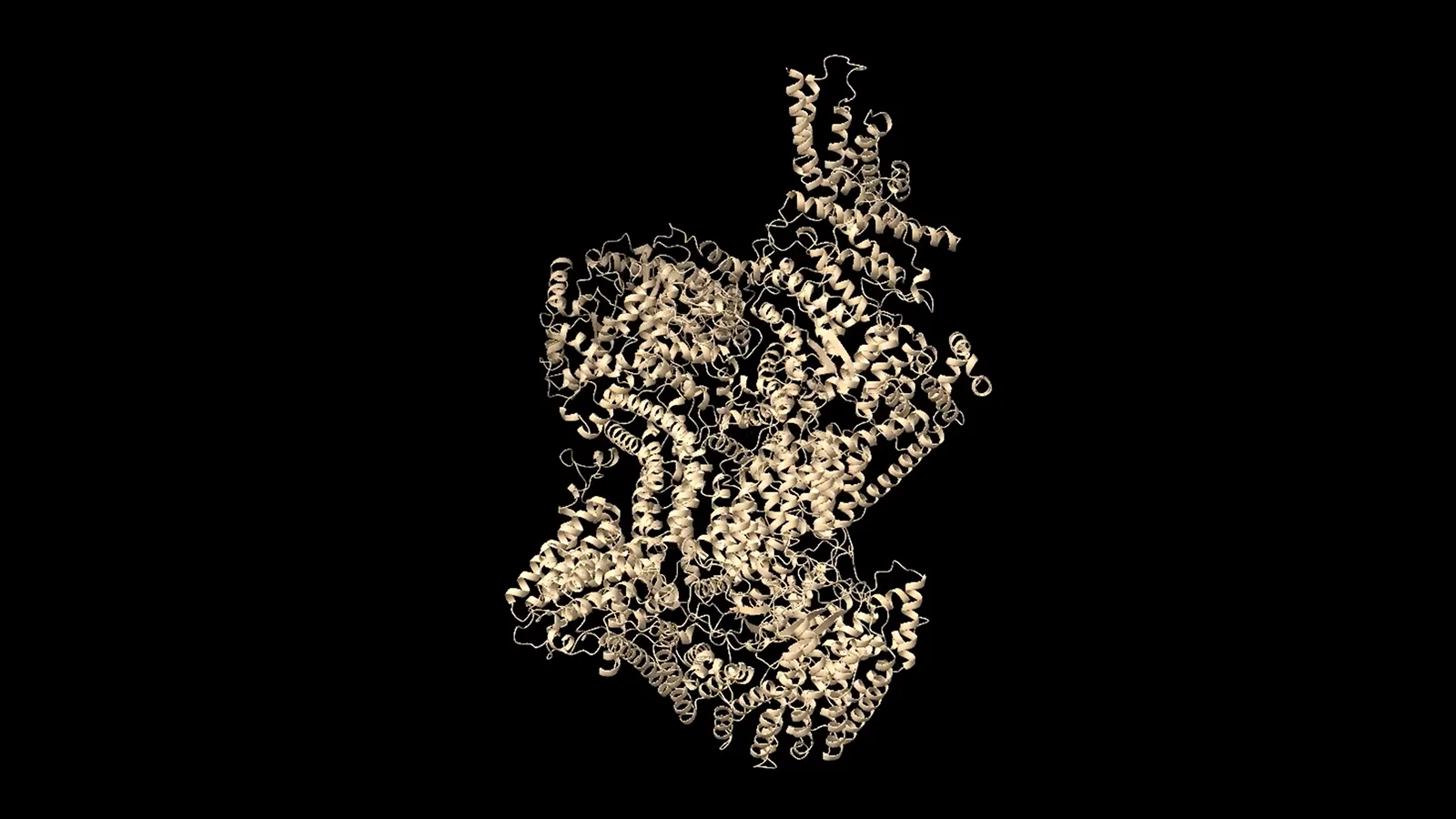
The fundamental problem boils down to scale and complexity. Biological systems aren’t neat, self-contained units. They’re vast, interconnected networks of proteins, RNA, and DNA, all interacting in complex ways. Trying to model these whole systems on current GPUs is like trying to paint the Sistine Chapel with a toothbrush. The memory required to represent all the potential interactions within a large protein complex—say, 10,000 amino acids—explodes exponentially. A single GPU simply can’t hold that much information at once.
Traditionally, researchers have resorted to ‘reductionist’ approaches. You slice the massive protein sequence into smaller, overlapping chunks. Think of it like trying to understand a novel by reading individual sentences, hoping the glue between them holds up. This approach, while necessary to fit within memory constraints, fundamentally destroys crucial long-range information. Allostery—how a binding event at one site affects another distant site—or signal transduction pathways that span entire molecular complexes? Gone, or at best, a guess.
Other methods attempt to do this ‘chunking’ within the model architecture itself, processing huge matrices in smaller tiles. Think of NVIDIA’s own FastFold or models like Boltz. They’re clever workarounds, but they still lead to a deficit in global context, especially during the critical training phases. You’re still training on approximations, not the real thing.
The Solution: Context Parallelism (CP) — Sharding the Universe
NVIDIA’s BioNeMo framework tackles this head-on with context parallelism (CP). The core idea? Instead of giving each GPU a different protein to fold (that’s data parallelism), CP splits a single, massive molecule across multiple GPUs. It’s a radical departure. Each GPU is responsible for a portion of the entire system, communicating with its neighbors to stitch the global picture together.
This isn’t just a simple split. The framework is built from the ground up, leveraging PyTorch Distributed APIs and low-level communication protocols. It implements a multidimensional sharding strategy designed for linear capacity scaling. The goal is that as you add more GPUs, your ability to model larger systems grows proportionally. No single device ever holds the full global state; it’s distributed, like a decentralized ledger for molecular data.
For a 10,000-residue complex, which represents a mind-boggling 100 million potential interactions, each GPU only manages a fraction of that. The memory footprint per device drops from O(N²) to O(N²/P), where P is the number of GPUs. This localization is key. Furthermore, the system orchestrates local computation with asynchronous communication. While one GPU is crunching numbers on its piece of the puzzle, it’s simultaneously sending and receiving data to and from its neighbors. This overlap of computation and communication is what makes it efficient, and crucially, improves its performance as biological problems scale up.
This even extends to the nuanced world of attention mechanisms, like those used in AlphaFold3. These systems have local attention windows. The BioNeMo CP implementation uses halo-exchange primitives to partition atom features, ensuring that these localized computations still work smoothly across GPUs without requiring constant inter-GPU chat. It’s like building with Lego bricks—each piece fits perfectly, even when you’re building a skyscraper.
Why This Matters: Beyond Benchmarks
Sure, NVIDIA’s press releases will tout performance gains and exascale capabilities. But let’s be clear: the real impact isn’t measured in FLOPS or TFLOPS. It’s measured in the discovery rate of new drugs, the precision of disease diagnostics, and the depth of our understanding of fundamental biology. The ability to model protein-protein interactions, enzyme mechanisms, and the dynamics of cellular machinery in their entirety—this is the holy grail of computational biology.
This feels like a genuine architectural shift. We’ve been building more powerful tools—GPUs, AI algorithms—but the bottleneck was always the data representation. By fundamentally changing how we can represent and compute on massive biological systems, NVIDIA isn’t just making a faster tool; they’re enabling a whole new class of scientific inquiry.
Of course, it’s not a magic bullet. This relies on massive GPU clusters (H100s or B200s), implying significant infrastructure investment. And integrating this into existing research workflows will take time and expertise. But the direction of travel is clear: biology is moving from fragmented snapshots to holistic, dynamic simulations, and AI-accelerated hardware is the engine driving it.
The framework implements distributed primitives to orchestrate local computation with asynchronous peer-to-peer transfers. While a GPU is computing a local update, it is simultaneously sending and receiving data to and from its neighbors in the row and column rings.
This quote perfectly encapsulates the core innovation: the simultaneous dance of calculation and communication. It’s not just about processing power; it’s about intelligent distribution and synchronized execution.
The structural biology community has been waiting for this. The reductionist compromise has been a necessary evil for decades. Now, it appears, the era of the holistic biomolecular model has begun.
🧬 Related Insights
- Read more: Broadcom’s 400G/Lane DSP: AI’s Bandwidth Savior or Just More Chip Hype?
- Read more: NVIDIA’s Omniverse Gambit: Selling Simulations to Power the Robot Future
Frequently Asked Questions
What does context parallelism in BioNeMo actually do? Context parallelism (CP) in NVIDIA BioNeMo allows researchers to model entire, large biomolecular systems by splitting a single massive molecule across multiple GPUs, rather than having each GPU process separate molecules or fragments. This overcomes GPU memory limitations and preserves global context.
Will this replace human researchers in biomolecular modeling? No, CP is a tool that augments human researchers. It enables them to tackle problems previously impossible due to computational constraints, leading to faster discoveries and deeper insights, but human expertise in experimental design, interpretation, and hypothesis generation remains critical.
How is this different from traditional data parallelism? Data parallelism assigns each GPU a different complete sample (e.g., a different protein to fold) for processing. Context parallelism, on the other hand, partitions a single, large sample across multiple GPUs, allowing for the modeling of much larger and more complex systems than would be possible on a single device.