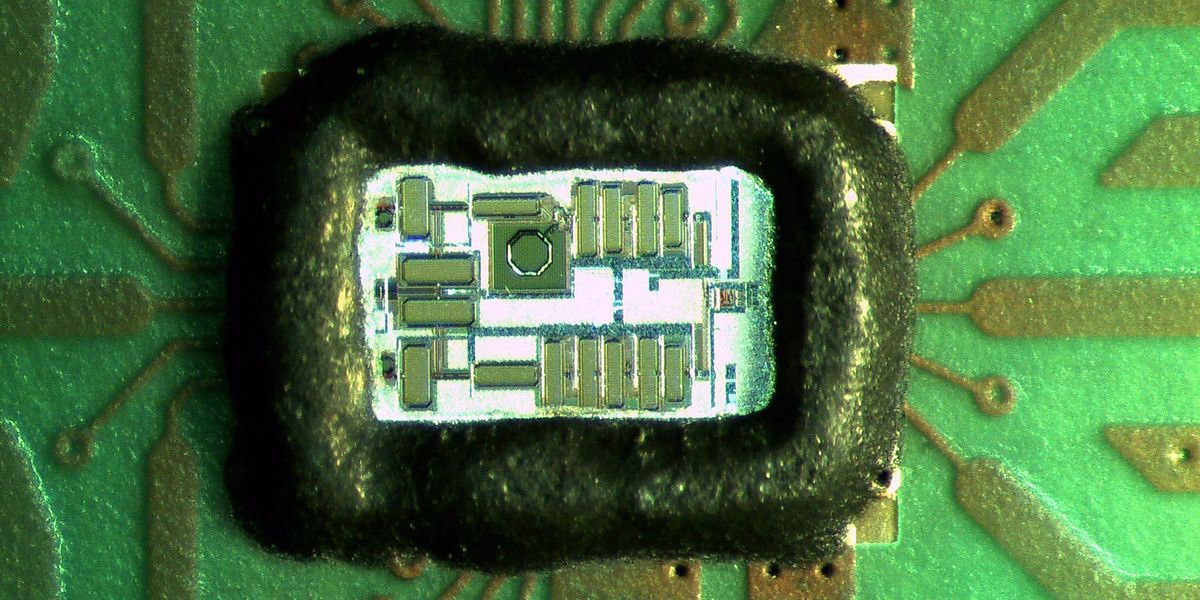
Sweat drips down my back in a Palo Alto boardroom, March 2026, as Broadcom execs beam over slides promising the Broadcom 400G/lane Optical DSP will remake AI data centers.
And here’s the pitch: their new Taurus BCM83640, built on 3nm, cranks out 400G per lane for 1.6T transceivers. Doubles bandwidth density, they say. Paves way for 3.2T modules and monster 204.8T switches. All while sipping less power — or so the press release swears.
Look. I’ve covered bandwidth leaps since the days of 10G Ethernet, when everyone thought it’d solve world hunger for data. Spoiler: it didn’t. But AI’s devouring fibers like candy now, so hyperscalers like Nvidia’s pals at the big clouds need this stuff. Broadcom’s not wrong to chase it.
Does Broadcom’s 400G/Lane Actually Fix AI’s Bottlenecks?
Short answer? Kinda. Taurus packs eight 400G PAM-4 lanes into a monolithic chip, with laser drivers baked in. Best-in-class BER, low power — their words. Plays nice with IEEE standards, even LR links.
But wait. This evolves from 200G/lane, just doubling per lane. Proven trick, per LightCounting’s Vladimir Kozlov: “We expect more than 100 million units of 1.6T and 3.2T optical transceivers to be shipped over the next 5 years with close to half of these using 400G optics.”
High speed optical interconnects are essential for operation of AI clusters. Doubling of the lane rates has been a proven strategy to keep up with the bandwidth growth and it is great to see the first 400G per lane solutions becoming available.
Smart guy, Kozlov. LightCounting’s been nailing forecasts since I first read ‘em in ‘05. Yet Broadcom’s Vijay Janapaty gushes: “Broadcom’s 400G/lane Taurus platform of optical DSPs is laying the foundation for next-generation AI networks… Crucially, Taurus pushes the IMDD technology envelope into 400G/lane, further reducing power…”
Envelope-pushing. Cute. IMDD’s intensity modulation — old-school direct detect, not coherent fancy-pants. Cheaper, sure. But coherent’s lurking for longer reaches.
Punchy fact: 1.6T modules with this beast enable 102.4T switches in a single rack unit. That’s dense. AI clusters — think GPU walls training LLMs — crave it. No more rewiring half the data center every quarter.
My unique take? Remember the 400G Ethernet hype in 2017? Promised Tbps switches, delivered… eventually, after years of interoperability hell. Broadcom learned: they’ve proven it with their 400G EML lasers and PDs. Prediction: by 2028, 70% of new AI builds use this, but only after a 12-month debug slog. Who’s making bank? Broadcom, shipping samples now to Eoptolink and pals.
Who’s Really Profiting from Taurus?
Broadcom, duh. AVGO stock’s been a rocket on AI tailwinds — VMware buyout paid off, now this. But optical transceiver makers like Eoptolink? Their CEO Richard Huang: “Taurus is more than a product milestone — it’s a catalyst… unlocking transformative bandwidth growth.”
Transformative. Eye-roll. They’re already touting 448G/ln prototypes — ahead of the curve? Or just PR spin to snag contracts from hyperscalers?
Here’s the cynicism: end users foot the bill. Google, Meta, Microsoft — they’ll snap up millions, but capex balloons. Power efficiency? Gains on paper, but real-world AI racks hit thermal walls first. And 3nm fab costs? TSMC’s charging a fortune.
Wander with me: back in 2010, 40G/100G was ‘the future.’ Took five years to commoditize. Same here. Broadcom’s roadmap teases 3.2T, but who bets against supply chain snarls? Geopolitics — US chip act or not — Taiwan tensions could spike prices 30%.
Fragment. Skeptical? Yes.
But credit where due. This isn’t vaporware. Sampling now. Compliant. Interoperable. In a Valley drowning in GPU hype, optical plumbing’s the unsexy hero keeping clusters alive.
Why Should AI Builders Care About 400G/Lane DSP?
Scale. Plain. 1RU 102.4T switching? Fits more NVIDIA H100s (or B200s by then) per footprint. Bandwidth density jumps, latency dips slightly. For training GPT-6 equivalents, it’s oxygen.
Downsides? Cost. 1.6T modules won’t be cheap — $10k a pop? Multiplied by millions. Power: even ‘low’ at 400G/lane per lane might strain PSUs already maxed.
Bold call: this locks Broadcom in for the 3.2T era, but watch Marvell and MaxLinear counter with coherent plays. Competition heats up, prices crash by 2030.
And the spin? “Industry’s first.” True, but Eoptolink’s hinting 448G. Race on.
One sentence wonder: Broadcom wins round one.
Dense dive: Transceiver ecosystem — lasers, detectors, packaging — must align. Broadcom controls the stack vertically, unlike fragmented 100G days. That’s their edge. No wonder AVGO’s market cap flirts with $1T. But investors, peek under: gross margins shine on DSPs, software too post-VMware. AI’s printing money, alright — for semis giants.
Historical parallel I love: 1980s fiber boom. AT&T promised gigabits everywhere. Reality? Incremental. Same vibe. Don’t bet the farm on 204.8T tomorrow.
🧬 Related Insights
- Read more: Sony’s PS5 Price Surge: AI Memory Crunch Hits Consoles Hard
- Read more: Broadcom’s 200T AI Backbone: The Chips Lighting Up Gigawatt Superclusters
Frequently Asked Questions
What is Broadcom’s Taurus BCM83640? It’s a 3nm PAM-4 DSP delivering 400G per lane for 1.6T optical transceivers, aimed at AI data center bandwidth crunch.
Will 400G/lane DSPs replace 200G in AI networks soon? Expect 50% adoption by 2028 in new hyperscaler builds, per analyst forecasts, but legacy sticks around for years.
How does Broadcom’s 400G optical DSP impact AI costs? Lowers per-Tb power and density costs long-term, but upfront module prices sting — savings kick in at scale.