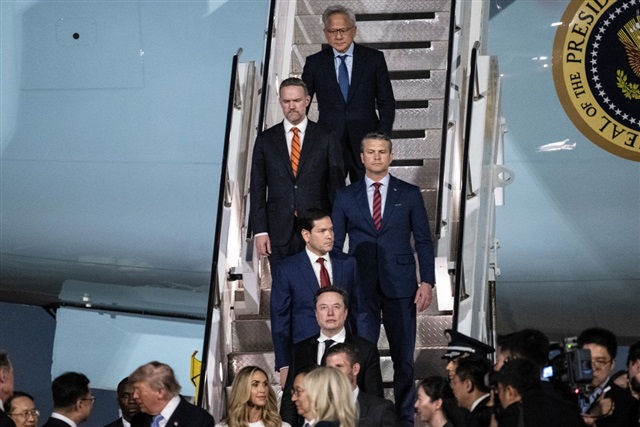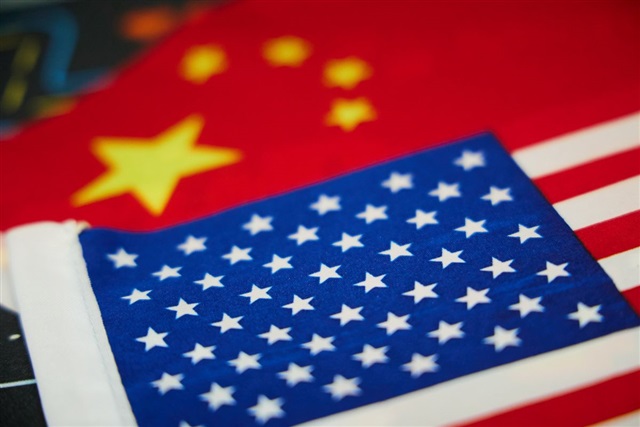
Sunlight glinted off the polished mahogany table in Beijing, a silent proof to the immense power brokers about to convene. For Nvidia, that meeting — the one between Presidents Trump and Xi — isn’t just about trade tariffs or geopolitical posturing; it’s a potential lifeline for its stalled H200 sales in China.
Here’s the thing: Nvidia’s been in a tough spot. Washington’s export controls, designed to curb China’s AI ambitions, have effectively slammed the brakes on the company’s ability to sell its top-tier chips. We’re talking about the kind of silicon that powers the absolute bleeding edge of artificial intelligence, the kind of hardware that turns raw data into brilliant insights and — let’s be honest — potentially formidable capabilities. Yet, despite the US government granting some export approvals, the revenue stream hasn’t materialized. It’s like having a Ferrari parked in your garage with the keys just out of reach.
Is This Summit Nvidia’s Golden Ticket?
This isn’t just a simple business transaction; it’s a high-stakes diplomatic dance. The US government, through its export controls, has wielded significant power over the flow of advanced technology to China. Nvidia, a company that thrives on global markets, has been forced to tread a very careful line. The current situation has seen them pivot to slightly less powerful, but still capable, chips to comply with regulations, a move that has undoubtedly impacted their bottom line.
The current administration’s stance is clear: prevent China from acquiring the most advanced AI hardware. But the reality on the ground is far more complex. China is a massive market, a voracious consumer of technology, and a significant player in the global AI race. To completely cut them off isn’t just a blow to Nvidia; it’s a geopolitical and economic tightrope walk.
The whispers in the corridors of power, and more importantly, the data centers, suggest that any easing of these restrictions hinges on broader trade discussions. That’s where the Trump-Xi summit enters the picture, not as a direct Nvidia board meeting, but as a potential catalyst. Think of it as a master gardener tending to a sprawling orchard; the health of one tree—Nvidia’s China sales—depends on the overall climate and the gardener’s decisions about irrigation and pest control—the trade relations.
“Washington’s export approvals have yet to translate into revenue for the AI chipmaker.”
This quote, stark and to the point, encapsulates the core of the problem. Approvals are one thing; actual, profitable sales are another. The bureaucracy, the geopolitical undercurrents, the very real fear of further sanctions or backlash from either side – these are the unseen forces dictating whether Nvidia’s H200s will ever truly power Chinese AI innovation.
My unique insight here? This isn’t just about Nvidia trying to sell chips. This is a microcosm of the broader technological decoupling debate. Are we heading towards two distinct tech ecosystems, or can a fragile coexistence be maintained? If Nvidia can’t find a way back into China, it signals a more permanent splintering of the global tech landscape, forcing companies to pick sides and innovate in isolation. That’s a future that feels less like boundless progress and more like a zero-sum game.
Why Does This Matter for Developers?
The implications ripple far beyond corporate boardrooms and presidential suites. For developers, this situation directly impacts the tools and platforms they’ll have access to. If the most advanced AI hardware becomes inaccessible in one of the world’s largest tech markets, it bifurcates the development landscape. Imagine two parallel universes: one where cutting-edge AI models are trained on the latest Nvidia hardware, and another where developers must make do with less powerful, or perhaps entirely different, architectures. This could lead to a slower pace of innovation in certain areas and a divergence in the types of AI applications that flourish.
The hope, of course, is that a diplomatic breakthrough allows for a more balanced approach. A scenario where China can still access powerful, yet not militarily-advantageous, AI hardware could foster a more collaborative global AI ecosystem. It would mean continued access to diverse datasets, a broader range of research initiatives, and ultimately, faster progress for all.
So, while the world watches the presidents’ every word, the semiconductor industry—and the developers who rely on its output—will be listening for the subtle shifts, the diplomatic nuances, the tiny tremors that could signal a seismic change in how artificial intelligence is built and deployed across the globe.
🧬 Related Insights
- Read more: NVIDIA’s Slurm-Kubernetes Hack Powers 8,000-GPU AI Beasts
- Read more: AMD Boost Clocks: OS Stops Guessing [Ryzen Performance Leap]
Frequently Asked Questions
What are Nvidia’s H200 chips? Nvidia’s H200 is a high-performance graphics processing unit (GPU) designed for advanced artificial intelligence and high-performance computing workloads. It’s an upgrade to previous models, offering significantly enhanced memory bandwidth and capacity crucial for training and deploying large AI models.
Why are US export controls affecting Nvidia’s China sales? The US government has implemented export controls to prevent China from acquiring advanced semiconductor technology that could be used for military purposes or to advance its AI capabilities beyond what the US deems acceptable. These controls restrict the sale of certain high-end chips, like Nvidia’s H200, to Chinese companies.
Could a Trump-Xi meeting actually change export policy? While a presidential meeting can address broad trade and geopolitical issues, specific changes to complex export control policies are typically the result of detailed interagency deliberations and diplomatic negotiations, rather than a single summit decision. However, the summit could signal a willingness to discuss or adjust certain aspects of these policies if both sides see mutual benefit.