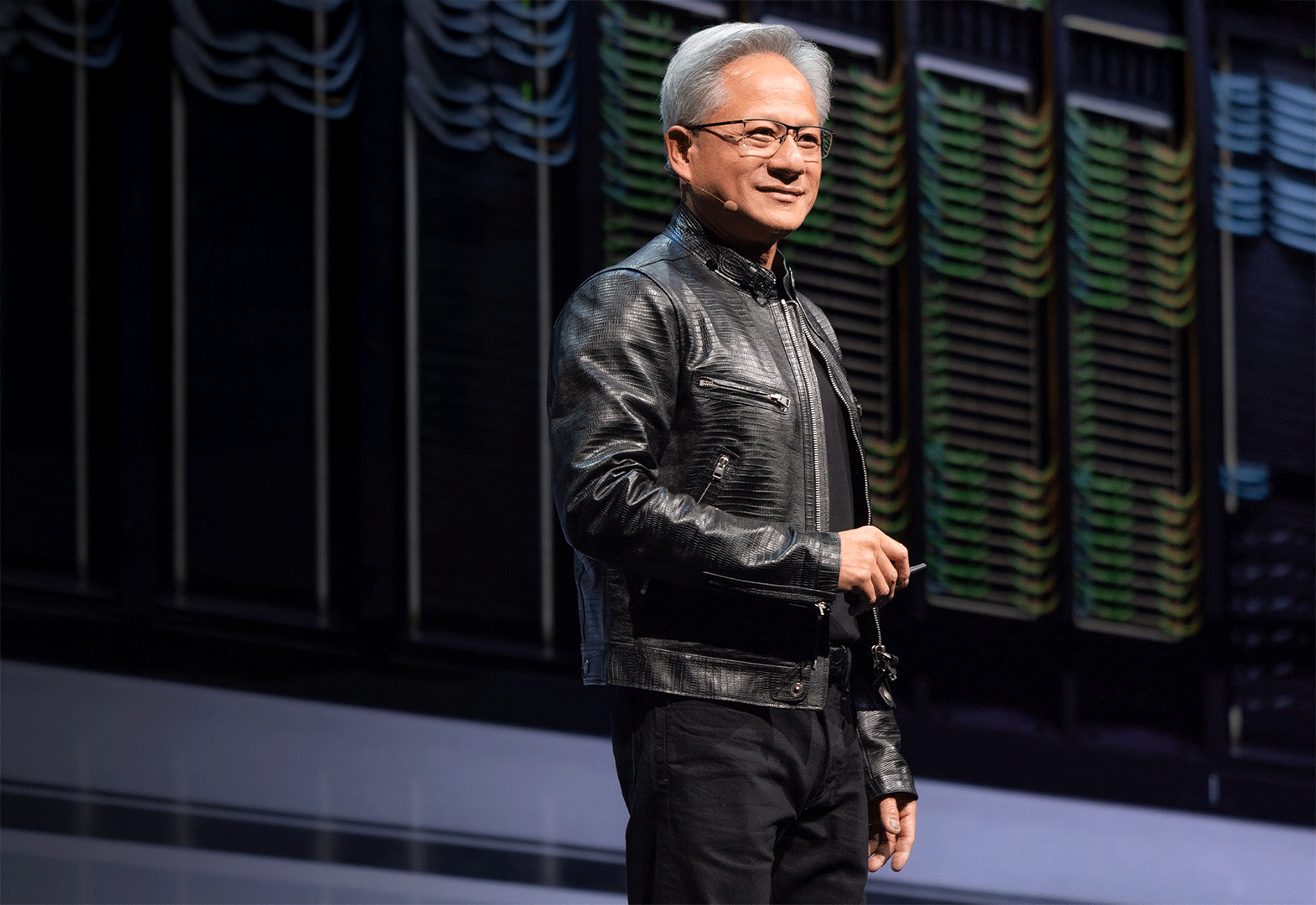
It’s official. Nvidia’s market share for AI accelerators in China? Zero. Zilch. Nada. Jensen Huang, the man himself, dropped this bombshell, and frankly, it’s a stunning admission. Just two years ago, Nvidia was practically king of the hill in China’s AI hardware scene. Now? Ghost town.
Huang, speaking with the Special Competitive Studies Project, didn’t mince words. “In China, we have now dropped to zero,” he stated. He’s calling the US export policy out, calling it a strategic blunder. Conceding an entire market the size of China? That’s not exactly a masterstroke of geopolitical chess. Huang’s point is simple: policies need to be adaptable, not rigid. Sticking to outdated strategies when the ground is shifting beneath your feet is a recipe for disaster. And for American chip companies to not be in China? It makes little sense, he argues.
Earlier this year, Bernstein analysts were already predicting Nvidia’s China AI GPU market share to plummet. From a healthy 66% in 2024, they foresaw it dropping to a mere 8%. This wasn’t just about US restrictions; it was also about domestic players stepping up. Huang confirms this happened, though perhaps later than some predicted. This is solely about Nvidia’s direct sales, mind you. The ripple effects are undoubtedly wider.
China’s Silent March: Talent and Energy
Don’t get any ideas that China’s AI ambitions are crippled. Huang himself warns that even without leading AI GPUs and US software, China remains a formidable competitor in frontier AI models. They’ve got the raw materials: cheaper energy, and an abundance of incredibly talented people. The sheer number of science and math experts translates directly into a vast pool of AI researchers. It’s a national asset, and they’re using it.
So, what’s the consequence of these export controls? Huang argues they’re counterproductive. By pushing China towards self-sufficiency, the US inadvertently accelerates their progress. Meanwhile, if American companies were still in the market, they could extend the reach of the American AI technology stack globally. It’s a classic case of cutting off your nose to spite your face, only on a global scale.
And it’s not just talk. Chinese developers are indeed increasingly turning to local hardware. Companies like Huawei, Cambricon, Moore Threads, and MetaX are making strides in both silicon and software. The one major hurdle? The so-called CUDA moat. This remains the primary frontier where US AI technology holds its ground in China. Local companies haven’t quite cracked that code yet.
Huang warns that fear-driven narratives and export controls could slow the deployment of AI more broadly as China and other regions embrace it more aggressively as an economic tool. Long-term leadership will depend less on restricting global rivals and more on ensuring that the American AI ecosystem dominates globally, according to Huang.
This is the core of Huang’s argument. Instead of building walls, the focus should be on building a superior ecosystem that naturally attracts global adoption. Trying to hobble rivals often just encourages them to innovate faster, fueled by a sense of national imperative.
Why Did This Happen So Fast?
It’s easy to point fingers at government policy. And yes, US export controls played a significant role. But to believe they are the sole reason for Nvidia’s sudden 0% market share is naive. The rapid advancement of Chinese domestic chip designers is a force that cannot be ignored. Companies like Huawei, which was hit hard by sanctions itself, have pivoted and accelerated their R&D. They’re not just catching up; they’re innovating in areas where the US has perhaps become complacent. The reliance on a single software stack like CUDA, while a strength for Nvidia, also presented a clear target for localization efforts by Chinese firms. They saw the dependency and worked to build alternatives, much like the US companies are now trying to build alternatives for components sourced from China.
Is the US Losing the AI Chip War?
Losing is a strong word. But Nvidia’s admission certainly indicates a significant strategic setback. The US government’s approach, aiming to curb China’s AI capabilities, seems to have backfired spectacularly by forcing China to rapidly develop its own indigenous solutions. This creates a more strong, diversified competitor in the long run, rather than a dependent market. The question isn’t whether the US is losing, but whether its current strategy is conducive to winning. Huang’s comments suggest the current strategy is, at best, suboptimal. The real “war” will be won by whoever can innovate faster and build the most attractive and pervasive AI ecosystem, not by who can build the most walls.
**
🧬 Related Insights
- Read more: UK Drops £45M on AI Supercomputer for Fusion Breakthrough
- Read more: Semiconductor Startup Ecosystem: How New Chip Companies Get Built
Frequently Asked Questions**
What does Nvidia’s 0% market share in China mean?
It means Nvidia is not selling any of its AI accelerators directly to Chinese customers due to US export restrictions and increased domestic competition. This represents a significant loss of revenue and market presence.
Will this affect Nvidia’s global AI dominance?
Potentially. While Nvidia still holds a dominant position globally, losing China’s massive market accelerates China’s push for self-sufficiency and strengthens its domestic competitors, which could eventually challenge Nvidia elsewhere.
What are US export policies’ impact on Nvidia?
The US export policies restrict Nvidia from selling its most advanced AI chips to China, aiming to slow China’s military and technological advancement. However, Huang argues these policies have pushed China to develop its own capabilities, thus backfiring on the intended outcome.