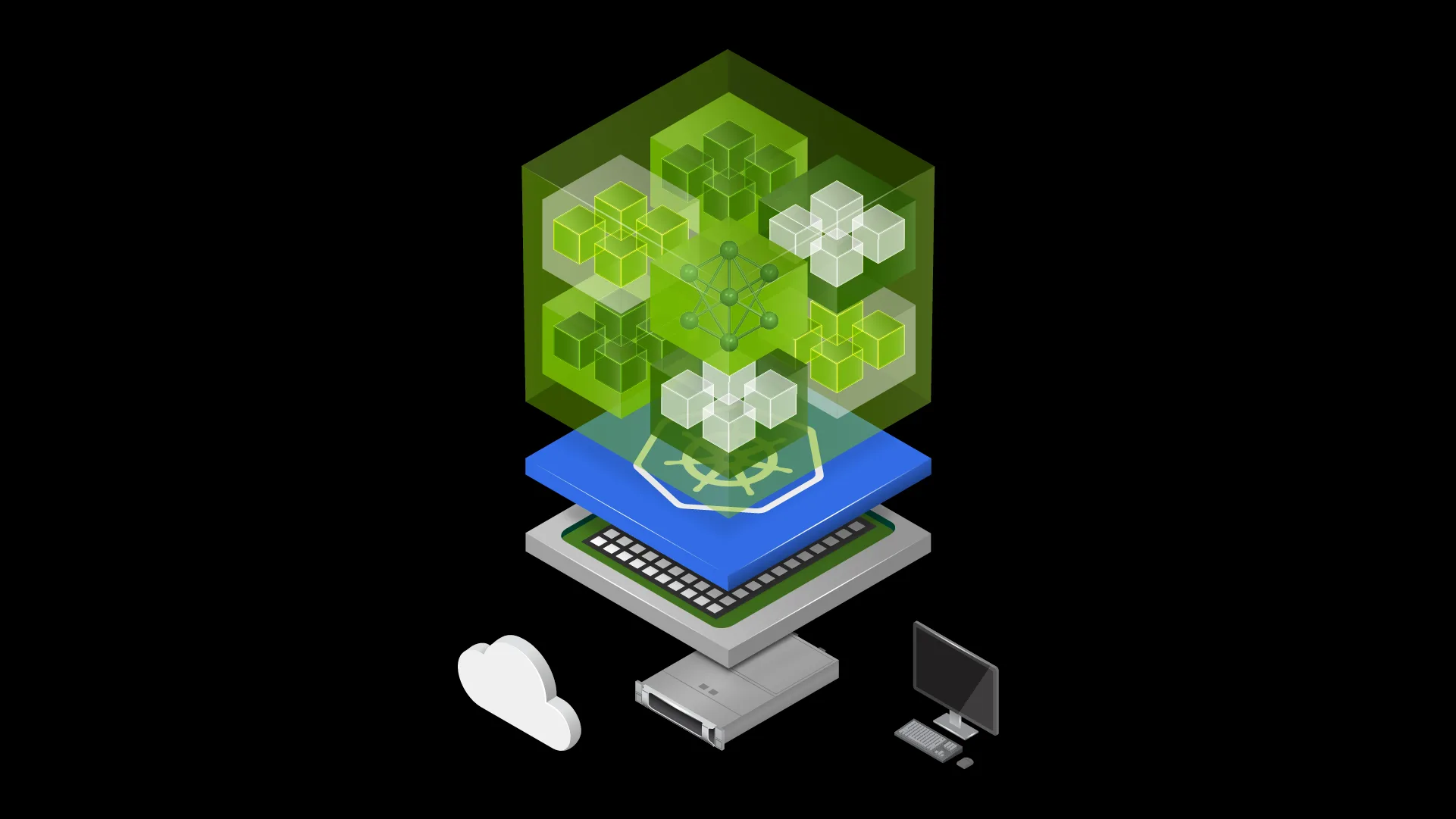
NVIDIA just flipped the script on massive AI training. They’re cranking out workloads across 8,000 GPUs — all inside Kubernetes clusters — with Slurm calling the shots.
Slurm? Yeah, that battle-tested scheduler ruling 65% of the world’s top supercomputers. Organizations have sunk years into its scripts, fair-share policies, accounting setups. But Kubernetes owns the GPU cloud game now. The rub: how do you weld Slurm’s precision onto K8s without a Frankenstein mess of dual environments?
Enter Slinky. SchedMD — fresh under NVIDIA’s wing — cooked up this open-source gem. It splits into slurm-bridge for lightweight scheduling and slurm-operator for full-blown Slurm clusters on K8s. We’re zeroing in on the operator, NVIDIA’s production weapon for thousand-node GPU herds.
Slurm’s Ghost in the Kubernetes Machine
Slinky’s slurm-operator turns Slurm daemons into Kubernetes natives. Slurmctld for scheduling, slurmdbd for billing, slurmd for workers, slurmrestd for APIs — each a Custom Resource Definition. Define your cluster in CRs, and boom: pods spin up, configured tight.
High availability? Baked in. No fiddly Slurm HA configs — Kubernetes just regenerates control plane pods. Tweak configs via ConfigMaps or Secrets, and they ripple out zero-downtime to workers. It’s elegant. Brutally so.
And scaling. Slurm’s OpenMetrics feed Prometheus; HorizontalPodAutoscaler kicks in. Ramp from one pod to every node. Scale-in? Slinky drains nodes smartly — prioritizes quick-finish jobs, lets ‘em wrap before axing pods. Same drill for upgrades: roll new images, no job murders.
Slurm is an open source cluster management and job scheduling system for Linux. It manages job scheduling for over 65% of TOP500 systems.
That’s no fluff. This stat underscores why ditching Slurm’s folly — even as Kubernetes flexes.
Can Slurm Truly Thrive on Kubernetes?
Short answer: Hell yes, in production. NVIDIA’s running it on 1,000+ GPU worker nodes. But here’s the architecture magic: Slinky flips on Slurm’s container-friendly modes out the gate. Configless for no-shared-filesystem configs. Dynamic nodes — workers register on boot, no slurm.conf babysitting. Auth with client IDs for cluster-wide users, skipping per-node hassles.
Your backend stays yours. Slurmdbd hooks any MySQL/MariaDB, in-cluster or cloud-managed. Identity? SSSD glues Active Directory, LDAP, whatever. Slurm 25.11 even enforces cgroups v2 inside worker containers — true multi-tenant isolation on shared GPUs.
Custom images? Reference ones ship ready; tweak or rebuild. It’s flexible without being a nightmare.
One killer payoff: Kubernetes ecosystem. Ditch bespoke HPC tools. YAML deploys, Helm charts, rolling updates, Prometheus/Grafana stacks. NVIDIA’s GPU Operator auto-installs drivers, runtimes, device plugins — GPUs hot in every pod.
DCGM Exporter? Deploys too. Slinky’s integration tags metrics per Slurm job ID. Workload-level GPU telemetry, cluster-wide. Add a Helm value, done.
Why Chase Slurm in Kubernetes’ Shadow?
Market dynamics scream it. AI training’s exploding — hyperscalers bet billions on GPU fleets. Kubernetes standardizes management at 100k+ node scales. But Slurm? It’s the HPC kingpin, with fair-share smarts tuned over decades. Enterprises won’t torch that IP.
Slinky’s the bridge. And my unique take: this echoes Kubernetes’ own origin story. Born from Borg at Google, it ate schedulers alive by layering portability. Slurm on K8s does the inverse — ports HPC muscle to cloud-native. Bold prediction: NVIDIA locks in AI infra dominance here. Competitors scrambling on Ray or custom K8s schedulers? They’ll bleed talent migrating Slurm workflows.
NVIDIA’s PR spins it as smoothly. Fair — but don’t sleep on the ops win. Platform teams unify tooling; no more Kubernetes-for-infra, Slurm-for-jobs silos. Cost? Slashes dual ops overhead. At 8,000 GPUs, that’s real dollars.
Skeptical? Test it. Slinky’s open-source; Dockerfiles galore. But production at NVIDIA scale? That’s the validator. They’ve ironed kinks — drain logic, HA propagation, metric flows.
Look, AI’s arms race favors incumbents who hybridize smart. Pure K8s schedulers falter on HPC fairness. Slurm purists resist containers. Slinky? Wins both.
The Roadblocks — And Fixes
Not flawless. Early days mean edge cases — like mega-clusters with funky networks. NVIDIA shares lessons: integrate early with GPU Operator, tune HPA on Slurm metrics, watch slurmdbd latency.
But ecosystem pull’s magnetic. Multus for multi-net, Volcano for advanced scheduling — layer atop. It’s not Slurm replacement; augmentation.
🧬 Related Insights
- Read more: Optical Metamaterials Swap Cloaks for AI Data Center Speed Demons
- Read more: Amazon’s Secret $50B Chip Beast: Poised to Eclipse Intel?
Frequently Asked Questions
What is Slinky slurm-operator?
Slinky’s open-source tool from NVIDIA/SchedMD that deploys full Slurm clusters as Kubernetes pods, mapping daemons to CRDs for smoothly GPU workload management.
How does Slurm on Kubernetes handle GPU scaling?
Uses Prometheus metrics from Slurm/OpenMetrics, HPA for auto-scale, smart draining on scale-in to finish jobs without interruption.
Is Slinky production-ready for large GPU clusters?
Yes — NVIDIA runs it on 1,000+ worker nodes with 8,000+ GPUs, with HA, upgrades, and integrations like GPU Operator.