Look, most of us just want our internet to load faster and our phones to stop dying. We don’t spend our days poring over trade restrictions or worrying about Nvidia’s latest Hopper architecture. But for those of us who’ve been watching this chip circus for two decades, this latest Bloomberg report about Supermicro executives is less a bombshell and more a predictable, if rather theatrical, act in a long-running play. It means that the already strained geopolitical tech tensions just got a little more complicated, and for the companies trying to play both sides, the tightrope just got a lot thinner.
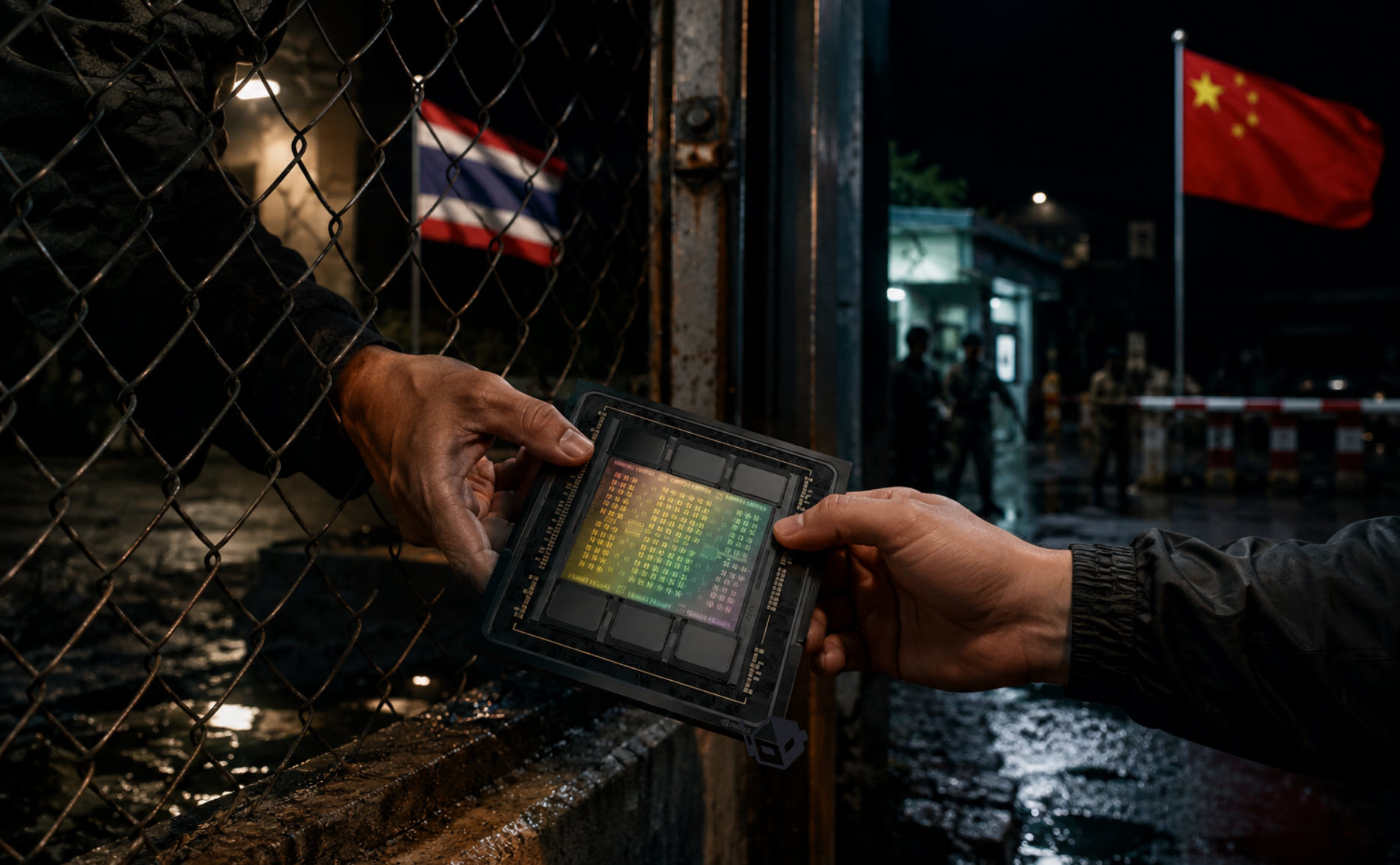
The core allegation? That a group connected to Supermicro, a company whose business model is essentially building the racks that house all the computing power you’ve ever heard of, cooked up a scheme to get some seriously restricted Nvidia AI GPUs into China. And how did they do it? By allegedly routing them through a Thai government-affiliated entity. This isn’t just about a few boxes missing from a warehouse; we’re talking about $2.5 billion worth of hardware, allegedly finding its way to a Chinese tech giant, Alibaba, which, let’s be honest, can always use more firepower for its AI ambitions.
A Thai Twist in the Tale
Previously, court documents just referred to a nebulous ‘Company-1’ as the Southeast Asian intermediary. Now, the Bloomberg report points to Obon Corp., a Bangkok-based outfit with ties to Thailand’s sovereign AI initiatives. Sovereign AI initiatives. Think about that for a second. While Uncle Sam is busy slapping export controls on the bleeding edge of AI tech, trying to slow down rivals, it appears a government-related entity in Thailand was allegedly happy to facilitate the movement of that very same restricted hardware. It’s a stunning display of how global supply chains, and particularly those involving sensitive technology, can be navigated—or perhaps, circumvented—with a little creative paperwork and the right connections. And of course, Alibaba, the alleged end-user, denies any knowledge, saying they’ve never deployed such prohibited hardware. Convenient.
Prosecutors alleged that the group used a Southeast Asian front company, falsified documentation, and maintained inventories of dummy servers to conceal actual shipments of systems containing advanced Nvidia GPUs into China. The alleged perpetrators used hair dryers to transfer serial-number labels from legitimate servers onto empty chassis to deceive inspectors and install the restricted hardware afterward, according to the allegations.
The sheer audacity of the alleged methods is almost comical. Using hair dryers to swap serial numbers? It sounds like something out of a low-budget spy flick, not a multi-billion dollar tech smuggling operation. It underscores a fundamental truth: where there’s a massive market and immense demand, someone will find a way to supply it, often through the cracks in regulations. And let’s not forget, Nvidia’s H200 GPUs are the prize here – top-tier AI compute hardware that countries like China are desperate to get their hands on, despite U.S. restrictions.
Who’s Actually Making Bank?
This whole saga, however, boils down to a very simple question that’s been around since Silicon Valley was just a patch of orchards: who is making money here? Supermicro, a company that’s always played a crucial role in the hardware backbone of the tech world, is now staring down the barrel of serious legal trouble. The individuals named in the indictment, co-founder Yih-Shyan ‘Wally’ Liaw and sales manager Ruei-Tsang ‘Steven’ Chang, along with a third-party broker, Ting-Wei ‘Willy’ Sun, were allegedly orchestrating this elaborate diversion. If true, the profits from $2.5 billion in illicit sales would be staggering. And then there’s the demand side – Alibaba, needing the compute power for its AI ventures, and presumably willing to pay handsomely, albeit perhaps indirectly, for access to it. It’s a classic case of supply and demand, with a side of alleged criminal enterprise.
The broader implication? U.S. export controls, while a necessary tool in the geopolitical chessboard, are only as effective as their enforcement. And as this report suggests, the enforcement mechanisms across regions like Southeast Asia might have some significant blind spots. The market for AI hardware is simply too lucrative, too essential for national ambitions, for a few regulations to be an insurmountable barrier. It’s a cat-and-mouse game, and right now, it feels like the mice are finding some rather ingenious escape routes.
Is This Just the Tip of the Iceberg?
This isn’t the first time Supermicro has been entangled in U.S. export control issues, and if the past is any indication, it likely won’t be the last. The company has historically been a major supplier to data centers globally, including those in China. The sheer volume of hardware they move makes them a tempting target for those looking to skirt restrictions. The question isn’t if this kind of activity happens, but how widespread it is and how effective regulators can be in policing it. The alleged use of a government entity adds a layer of complexity, potentially implicating more than just corporate actors.
Ultimately, this news serves as a stark reminder that the gleaming future of AI we’re often sold is built on a foundation of incredibly complex, often opaque, and increasingly politicized global supply chains. For the real people, the ones who just want their tech to work, it means more uncertainty. For the industry, it means more scrutiny, more compliance headaches, and for some, a lot more risk.
🧬 Related Insights
- Read more: Terahertz Peeping Toms: Now We Can Spy on Chips Without Even Tickling Them
- Read more: NVIDIA’s Slurm-Kubernetes Hack Powers 8,000-GPU AI Beasts
Frequently Asked Questions
What exactly is Supermicro accused of doing? Supermicro-tied executives are accused of orchestrating a $2.5 billion scheme to smuggle restricted Nvidia AI GPUs to China, allegedly using a Thai government-related entity as an intermediary.
Did Alibaba receive the restricted hardware? Alibaba has denied any involvement, stating it has never deployed prohibited Nvidia hardware in its data centers, though the report alleges some systems may have gone to the Chinese web giant.
Are Nvidia H200 GPUs still restricted for export to China? While H200 GPUs fall under U.S. export restrictions, the report notes that they have been approved for export, though official sales to China have not been reported.