History. Made.
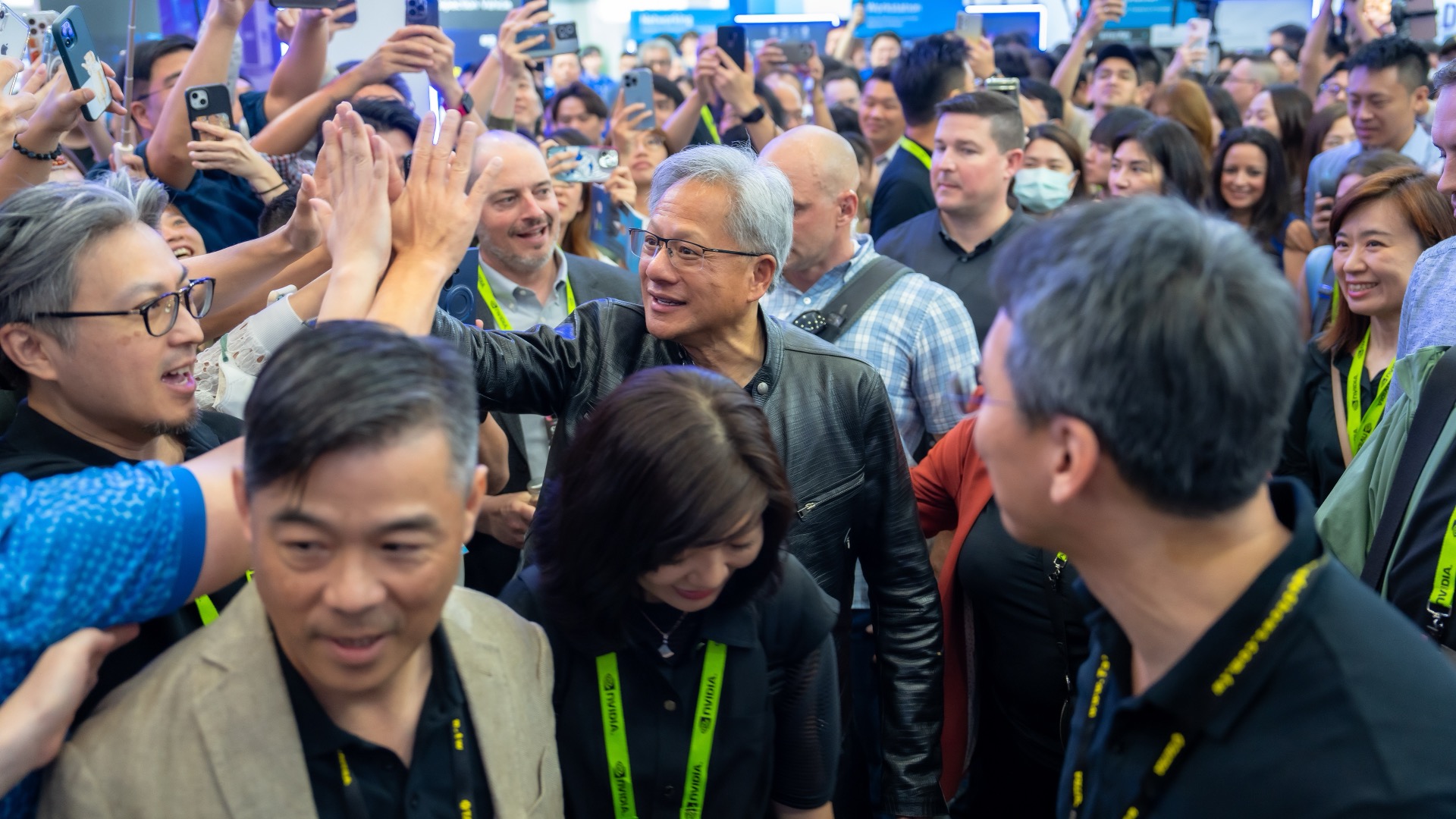
That’s the audacious claim Jensen Huang, Nvidia’s overlord, dropped on reporters in Taiwan. Vera Rubin, the company’s upcoming AI server platform, isn’t just going to be big; it’s going to be the biggest product ramp in computer history. And if you think that’s hyperbole, well, you clearly haven’t been paying attention to Nvidia’s relentless march. He landed there ahead of COMPUTEX, a show that’s become less about consumer gadgets and more about the actual plumbing of the digital universe. Vera Rubin, apparently, is the next faucet in that plumbing.
Now, let’s be clear: Nvidia doesn’t do ‘small.’ Their business model is built on scaling the unscalable, cramming more compute power into silicon until our brains ache trying to keep up. Huang’s pronouncements, while delivered with the flair of a showman, often have a solid foundation of silicon and market dominance. But ‘biggest ever’? That’s a tall order, even for Nvidia. This isn’t just about selling more chips; it’s about orchestrating an entire ecosystem, from the hardware to the software, to support a future that runs on AI. And that’s a massive undertaking.
Is This Just PR Spin?
It’s always fair game to ask. Huang’s job is to project confidence, to inspire investors and partners, and to, frankly, intimidate competitors. Declaring something the ‘biggest ever’ before it’s even fully deployed is textbook corporate hype. Yet, consider their track record. The Hopper architecture, powering their current H100 GPUs, was already a beast. Vera Rubin is supposed to be its successor, meaning we’re talking about another leap forward. The sheer demand for AI training and inference hardware has been insatiable. If Nvidia can actually deliver on the promised performance and scale, the ‘biggest ramp’ title might not be so outlandish. It’s less about a single product launch and more about a seismic shift in computing capability being rapidly industrialized.
“The Vera Rubin generation will be the most successful product generation in Nvidia’s history and potentially the biggest product ramp in the history of the computer industry.”
There it is. The money quote. The one that will be plastered on every Nvidia investor deck for the foreseeable future. The audacity. It makes you wonder what they’re packing into these new chips. Enhanced AI performance is a given. But the scale of the ramp itself implies a level of manufacturing and supply chain mastery that few companies can even dream of. It also suggests a significant expansion of their customer base, or at least a deepening of their existing relationships.
The Vera Rubin Enigma
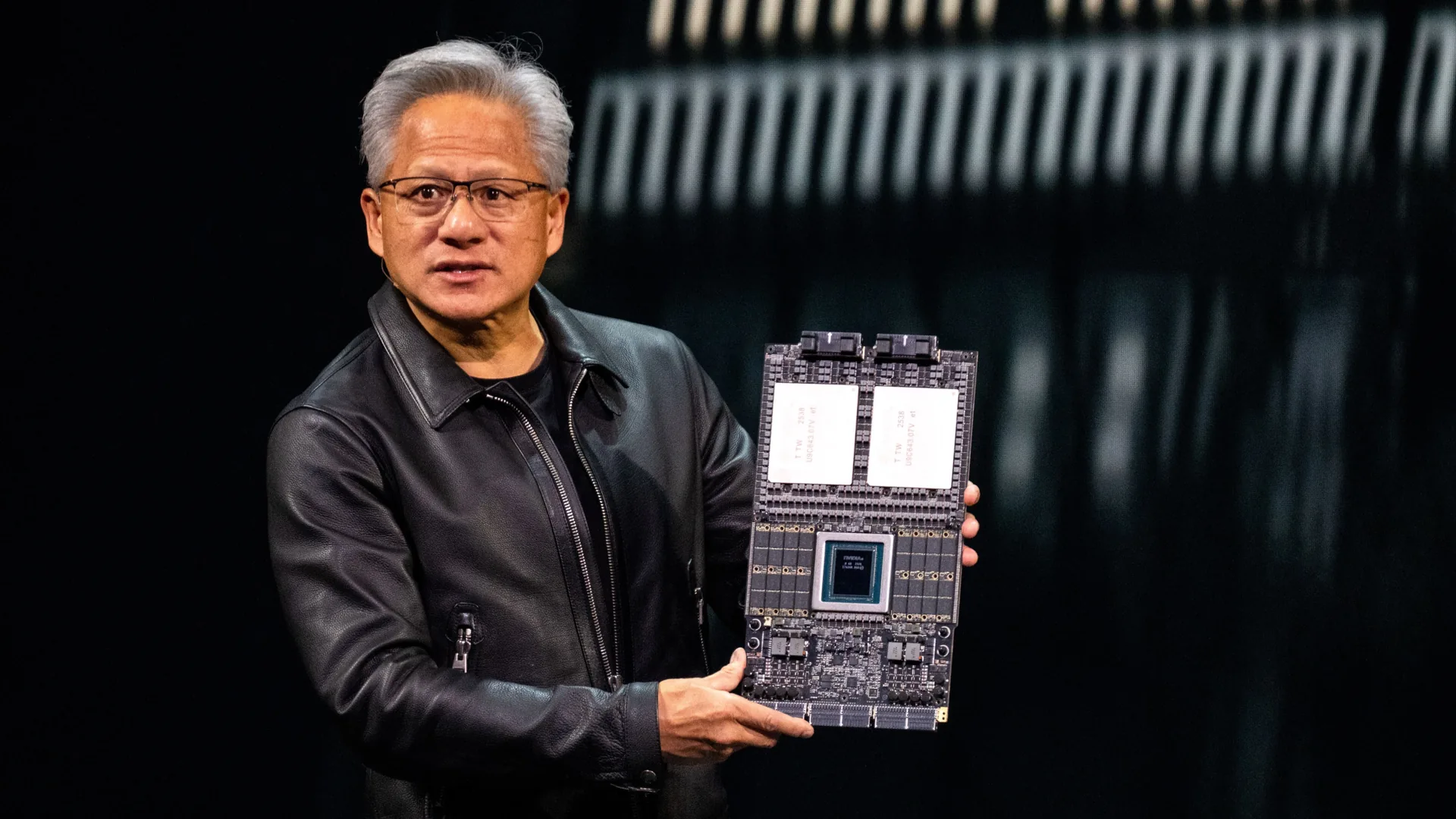
What exactly is Vera Rubin? Details are scarce, as is Nvidia’s way until they’re ready for the grand reveal. We know it’s a next-generation AI server platform. This implies more than just a new GPU. It’s likely a tightly integrated system designed to optimize AI workloads. Think faster interconnects, specialized processing units, and software optimized to squeeze every last drop of performance. The name itself—Vera Rubin, the astronomer who discovered dark matter—hints at something profound, something that unlocks unseen forces. In Nvidia’s context, those unseen forces are the immense computational demands of advanced AI.
My unique insight here is looking beyond the immediate chip announcement. Huang’s statement isn’t just about hardware. It’s about a declared intent to solidify Nvidia’s stranglehold on the AI infrastructure market for the next wave of innovation. They’re not just building a better chip; they’re building the next iteration of the global AI factory. This is akin to Intel’s dominance in the PC era, but with the added complexity of a far more dynamic and rapidly evolving software landscape. The ‘ramp’ isn’t just about manufacturing volume; it’s about establishing an ecosystem so pervasive that switching becomes nearly impossible.
Why Does This Matter for Developers?
For developers, this means more powerful tools. It means the ability to train larger, more complex models. It means faster inference for real-time AI applications. But it also means a continued reliance on Nvidia’s architecture and CUDA platform. While the demand for AI talent is soaring, so is the need for engineers who can effectively utilize these increasingly powerful, and often proprietary, systems. The efficiency gains are crucial, but understanding the underlying architecture and the software stack will be paramount to unlocking Vera Rubin’s full potential. We’re talking about pushing the boundaries of what’s computationally feasible, and that requires a deep understanding, not just a superficial one.
The implications for the broader tech landscape are also immense. This aggressive ramp-up suggests Nvidia anticipates an explosion in AI adoption across virtually every sector. From healthcare to autonomous vehicles, the demand for sophisticated AI processing is only going to grow. Huang’s confidence signals that Nvidia believes it has the capacity to meet that demand head-on, potentially leaving competitors scrambling to catch up. It’s a gamble, a big one, but one that feels increasingly calculated based on market trajectories.
Look, the computer industry has seen monumental product launches. The IBM PC. The Macintosh. The iPhone. Each redefined what was possible. Huang is positioning Vera Rubin in that pantheon, not as a single device, but as the foundation for an entirely new era of computing. If they pull it off, and given Nvidia’s track record, it’s a significant ‘if,’ then the definition of ‘big’ in tech product ramps will need a serious revision.