The cacophony of COMPUTEX Taipei has a way of drowning out the signal. But even amidst the din, NVIDIA’s recent haul of Best Choice Awards — three top honors for its Vera Rubin NVL72 AI supercomputer, Jetson Thor platform, and Alpamayo open platform — whispers a potent story about where the bleeding edge of AI infrastructure is headed.
It’s easy to get lost in the hype cycle, especially around AI. But look past the buzzwords, and you see NVIDIA meticulously engineering the silicon and systems that will underpin an entirely new generation of computation. This isn’t just about faster chips; it’s about a fundamental rearchitecting of how we build and deploy intelligence at scale.
The Vera Rubin NVL72, a rack-scale AI behemoth, didn’t just win awards; it snagged two — a Golden Award and the Sustainable Tech Special Award. This is a critical distinction. For years, the narrative around AI’s environmental cost has been a thorny one. NVIDIA’s design, with its cable-free, hose-free, fanless modular tray and 100% liquid-cooled architecture operating at a cool 45 degrees Celsius, attempts to directly address this. It’s not just about performance; it’s about performance per watt and per dollar, aiming for a 10x improvement in inference performance per watt and a 10x lower cost per token. The implications for building truly massive AI deployments — what NVIDIA terms ‘AI factories’ — are profound. They’re talking about scaling intelligence, yes, but doing so with a nod to sustainability that feels less like an afterthought and more like a core architectural principle.
The NVIDIA Vera Rubin NVL72 rack-scale AI supercomputer won a Golden Award and the Sustainable Tech Special Award; the NVIDIA Jetson Thor platform for edge AI and robotics won a Golden Award; and the NVIDIA Alpamayo open platform for AV development won the Vehicle Technology and Smart Cockpit Category Award.
This isn’t just about massive data centers, either. The NVIDIA Jetson Thor platform, another Golden Award winner, highlights the expanding reach of AI into the physical world. Built on the Blackwell GPU architecture, it’s engineered for edge AI and robotics. Think smart robots, industrial automation, and advanced medical devices. The key here is bringing generative AI capabilities to devices that operate in the real world, demanding both significant processing power and energy efficiency. We’re talking about robots that can reason, learn, and adapt in real-time, a significant leap from their pre-programmed ancestors.
And then there’s Alpamayo, the platform targeting autonomous vehicles. Its win in the Vehicle Technology and Smart Cockpit Category isn’t just another hardware accolade. Alpamayo is focused on solving the ‘long-tail’ problem in AV development – those rare, complex scenarios that are notoriously difficult to train for. By providing open reasoning-based models, simulation frameworks, and extensive driving data, NVIDIA is attempting to accelerate the development of AVs capable of handling ambiguity, contradictory road signals, and the unpredictable nature of real-world driving. This is a crucial piece of the puzzle for anyone still betting on widespread autonomous driving.
The architecture underlying these wins is noteworthy. The Vera Rubin NVL72, for instance, integrates 36 NVIDIA Vera CPUs and 72 NVIDIA Rubin GPUs, all linked by the sixth-generation NVLink Switch. Add in ConnectX-9 SuperNICs and Spectrum-X Ethernet switches, along with BlueField-4 DPUs, and you’re looking at a deeply integrated system designed for both scale-up and scale-out. This kind of holistic approach—where networking, compute, and data processing are engineered in concert—is what allows for the kind of performance gains NVIDIA is touting.
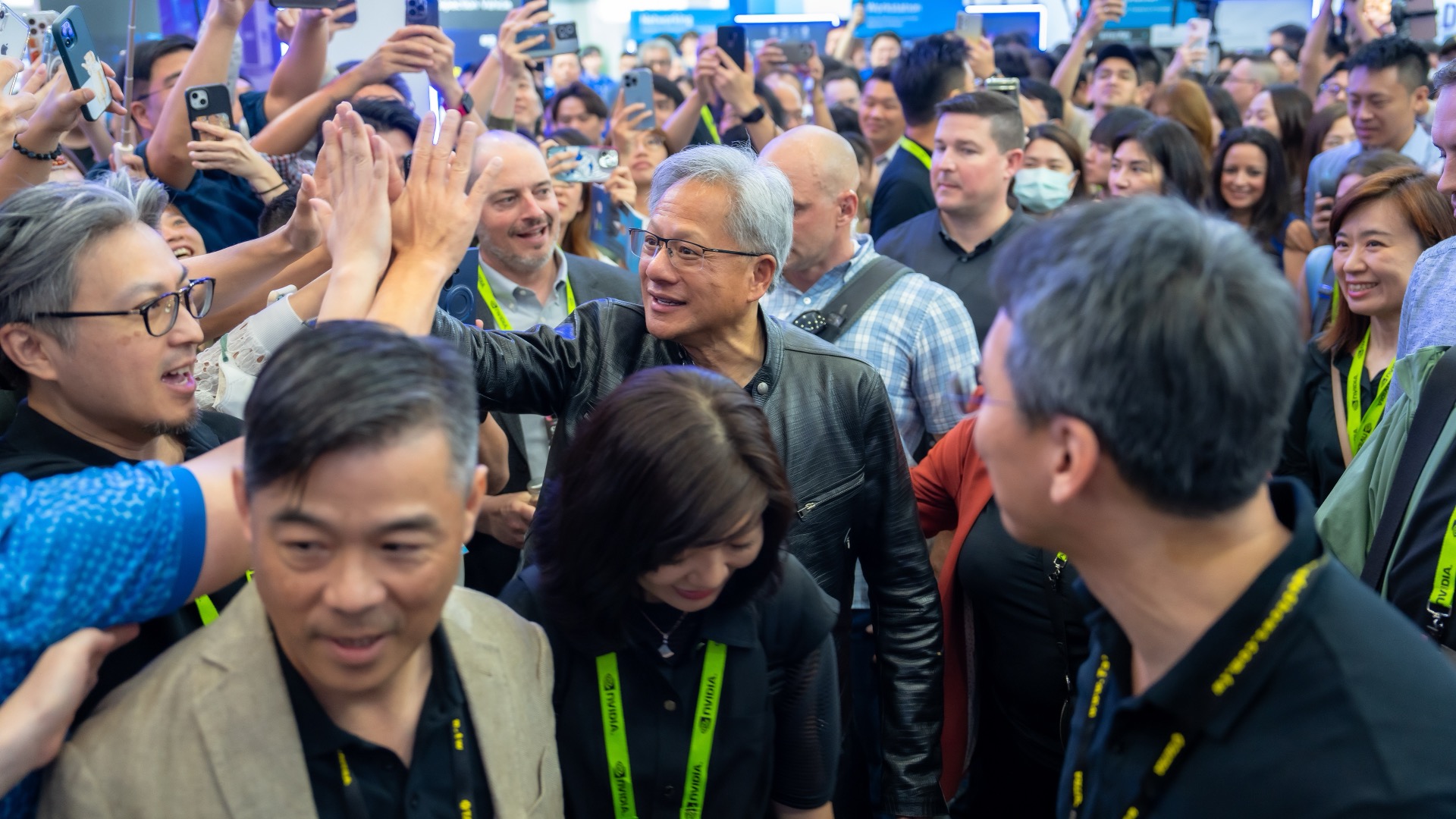
Is this the future of AI infrastructure? The awards at COMPUTEX suggest NVIDIA is betting heavily on a future where AI is built within highly integrated, scalable, and increasingly efficient systems. The focus on sustainability alongside raw power is particularly telling. It’s a necessary evolution, but also a stark reminder that as AI becomes more pervasive, its physical footprint and energy demands can no longer be ignored. Jensen Huang’s keynote is slated for June 1st, and you can bet the details will drill down into how these systems are not just powerful, but practical for the next decade of AI development.
Why Does This Matter for AI Factories?
NVIDIA’s vision of “AI factories” posits a future where AI models are built, trained, and deployed at an industrial scale. The Vera Rubin NVL72 is the physical embodiment of this concept. Its rack-scale design, high-density compute, and sophisticated interconnects are engineered to streamline the process of creating and iterating on massive AI models. By achieving significant gains in performance per watt and cost per token, NVIDIA is aiming to make these AI factories economically viable and environmentally more responsible. This shift from isolated GPU clusters to integrated, modular systems is architecturally significant, allowing for easier scaling and maintenance, crucial for the continuous operation demanded by industrial-scale AI development.
What’s the ‘Sustainable Tech’ angle?
Winning the Sustainable Tech Special Award for the Vera Rubin NVL72 isn’t just marketing fluff. It points to concrete design choices aimed at reducing the environmental impact of AI hardware. The 100% liquid-cooled architecture operating at a lower temperature (45°C) reduces the energy typically consumed by cooling systems in traditional air-cooled data centers. Furthermore, the power shelves with onboard energy storage are designed to smooth out steep load swings, protecting both the AI infrastructure and the broader power grid from destabilizing spikes. This focus on efficiency and grid stability is becoming increasingly important as AI computing demands skyrocket, making the ‘green’ aspect of high-performance computing a competitive differentiator.
🧬 Related Insights
- Read more: How Are Semiconductors Made?
- Read more: Wafer Economics: Understanding the Cost Structure of Chip Manufacturing
Frequently Asked Questions
What is the NVIDIA Vera Rubin NVL72?
The NVIDIA Vera Rubin NVL72 is a rack-scale AI supercomputer designed for high-density AI inference and training workloads, emphasizing performance, efficiency, and sustainability.
Will Jetson Thor replace my job in robotics?
Jetson Thor is designed to enhance robotic capabilities with advanced AI, potentially automating certain tasks but also creating new opportunities for skilled professionals in programming, maintenance, and oversight of AI-powered robotic systems.
How does Alpamayo help autonomous vehicles?
Alpamayo provides developers with reasoning-based AI models, simulation tools, and datasets to help autonomous vehicles better handle complex and unpredictable driving scenarios, aiming to accelerate their safe deployment.