Did you ever stop and wonder what the true price of raw intelligence will cost? It’s a question that’s suddenly become a lot less philosophical and a lot more… material.
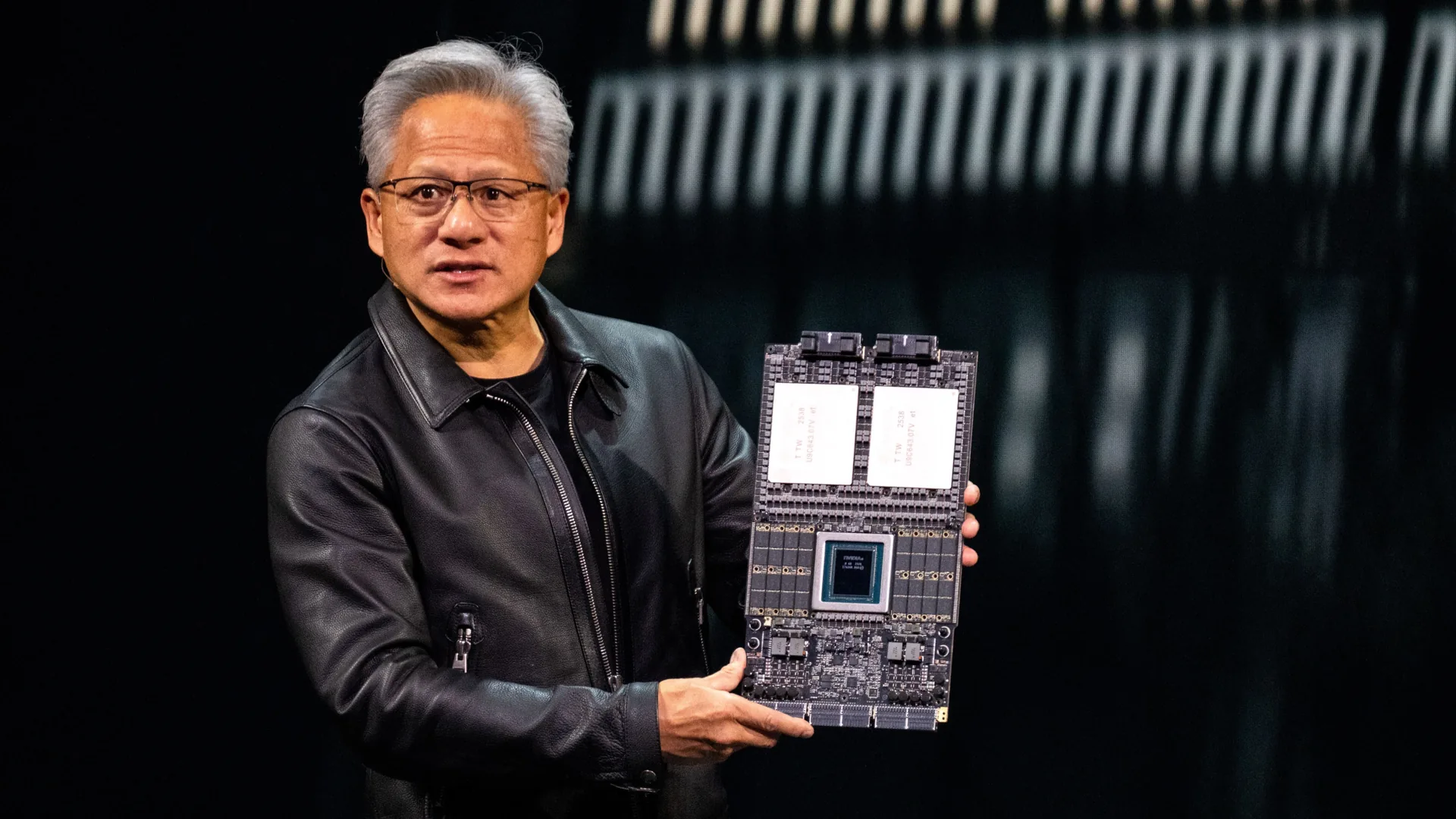
NVIDIA’s forthcoming Vera Rubin “NVL72” rack isn’t just another iteration of their AI behemoths; it’s a glimpse into a future where the very building blocks of AI are becoming astronomically expensive. We’re talking about a single component – memory – ballooning to consume nearly a third of the entire system’s price tag. This isn’t just a price hike; it’s a full-blown market realignment.
The Memory Avalanche
Morgan Stanley’s deep dive into the Bill of Materials (BoM) for the Vera Rubin rack paints a stark picture. Forget the GPUs, which are already a colossal expense – the real story here is the memory. We’re looking at a staggering 435% surge, pushing memory costs alone to over $2 million. This isn’t just an increase; it’s a tidal wave that now represents 26% of the rack’s eye-watering $7.8 million total estimated cost. To put that in perspective, memory on the previous Grace Blackwell racks was a mere 9% of the total.
Each Rubin GPU is slated to pack a whopping 288 GB of HBM4 memory, while the accompanying Vera CPUs will come equipped with 1.5 TB of LPDDR5X. Sum it all up for an NVL72 rack housing 72 of these GPUs, and you’re staring at over 20 TB of HBM4 and a colossal 54 TB of LPDDR5X. It’s like trying to fill an Olympic swimming pool with a teacup – the demand is simply outstripping the supply by an astronomical margin.
Beyond the Memory Mania: Where Else is the Cash Going?
The GPUs themselves are no slouches in the cost department, mind you. They’re projected to hit nearly $4 million for the rack, a substantial 57% jump over their Blackwell predecessors. That’s roughly $55,000 per GPU, a price tag that used to buy you a high-end sports car. The Vera CPUs add another $180,000 to the tab, each coming in at around $5,000.
But the story doesn’t end with the silicon. The humble Printed Circuit Board (PCB), the unsung hero that connects everything, is also seeing a dramatic price escalation – a 233% increase from the Grace Blackwell era, now hitting $116,730. All these components, from the GPUs and CPUs to the networking gear, cooling systems, and power supplies, contribute to the staggering final figure.
Is This the New Normal for AI?
This isn’t just about NVIDIA. This is a bellwether for the entire AI industry. The insatiable hunger for more powerful AI models, trained on ever-larger datasets, is directly translating into an unprecedented demand for cutting-edge memory technology. HBM (High Bandwidth Memory) and advanced LPDDR variants are becoming the bottleneck, the critical choke point in the AI supply chain.
We’re witnessing the birth of a new computing paradigm, where AI isn’t just a piece of software; it’s an entire physical infrastructure that’s incredibly expensive to build and operate. Think of it like building an entire city to house a single, incredibly brilliant (and hungry) mind. The land, the materials, the construction – it all adds up.
This price surge underscores a fundamental truth: AI is entering its “infrastructure phase.” We’ve moved past the experimental stages and into the era of mass deployment, and the cost of that deployment is becoming the primary differentiator. Companies that can secure and afford this cutting-edge hardware will be the ones leading the AI revolution, while others might find themselves priced out of the future.
NVIDIA’s Vera Rubin rack, with its sky-high memory costs, isn’t just a product launch; it’s a statement. It’s a declaration that the era of cheap, abundant AI compute is over. The cost of intelligence is now inextricably linked to the cost of its physical foundation, and that foundation is becoming very, very expensive.
The memory alone sees a bump of 435%, jumping from $373,939 in Grace Blackwell to over $2 Million on the Vera Rubin platform.
This is the price of progress, folks. And it’s a price that’s only going to go up as AI continues its relentless march forward. The question isn’t whether we can afford it, but whether we can afford not to.
Why Does Memory Cost So Much for AI?
The astronomical price surge for HBM4 and LPDDR5X memory in AI accelerators like NVIDIA’s Vera Rubin is driven by several factors. Primarily, the sheer bandwidth and capacity requirements of modern AI models are immense. These models need to access vast amounts of data incredibly quickly to train and infer effectively. HBM, with its stacked DRAM dies and wide interface, is designed for this high-bandwidth, low-latency access. However, its complex manufacturing process and the limited number of foundries capable of producing it lead to high costs and tight supply. LPDDR5X, while often used for system memory, is also being integrated into AI chips for its power efficiency and speed. The combination of advanced technology, specialized manufacturing, and skyrocketing demand from AI development creates a perfect storm for price inflation and supply constraints.
When Will Vera Rubin Ship?
NVIDIA’s Vera Rubin NVL72 rack is slated for initial production and first shipments in the third quarter of 2026, with a volume ramp expected in the fourth quarter of the same year.
What is HBM4?
HBM4 is the next generation of High Bandwidth Memory, building upon the advancements of HBM3 and HBM3e. It’s designed to offer even greater memory bandwidth and capacity, crucial for powering the most demanding AI and high-performance computing applications. Key improvements are expected in areas like stacking technology, interconnect efficiency, and potentially new memory cell architectures, all aimed at delivering a significant leap in performance and efficiency over its predecessors. While specific details are still emerging as the technology matures, HBM4 represents the cutting edge of memory technology needed for future AI hardware.