Look, the racks are already groaning. Sumit Vishwakarma at Synopsys isn’t just talking about stuffing more cores into existing boxes; he’s diagnosing an existential crisis for server architecture itself, driven by the sheer, unadulterated voracity of AI model training and inference. It’s a fundamental shift, a deep dive into how we even begin to build the machines that will power the next generation of intelligent systems.
This isn’t about just slapping in a few more GPUs. It’s about re-architecting from the ground up. The old paradigms—how much compute fits, how it’s connected, how it’s cooled—are being tossed out. We’re talking about a complete transformation of computing infrastructure, and it’s happening now.
Is This Just About More Power?
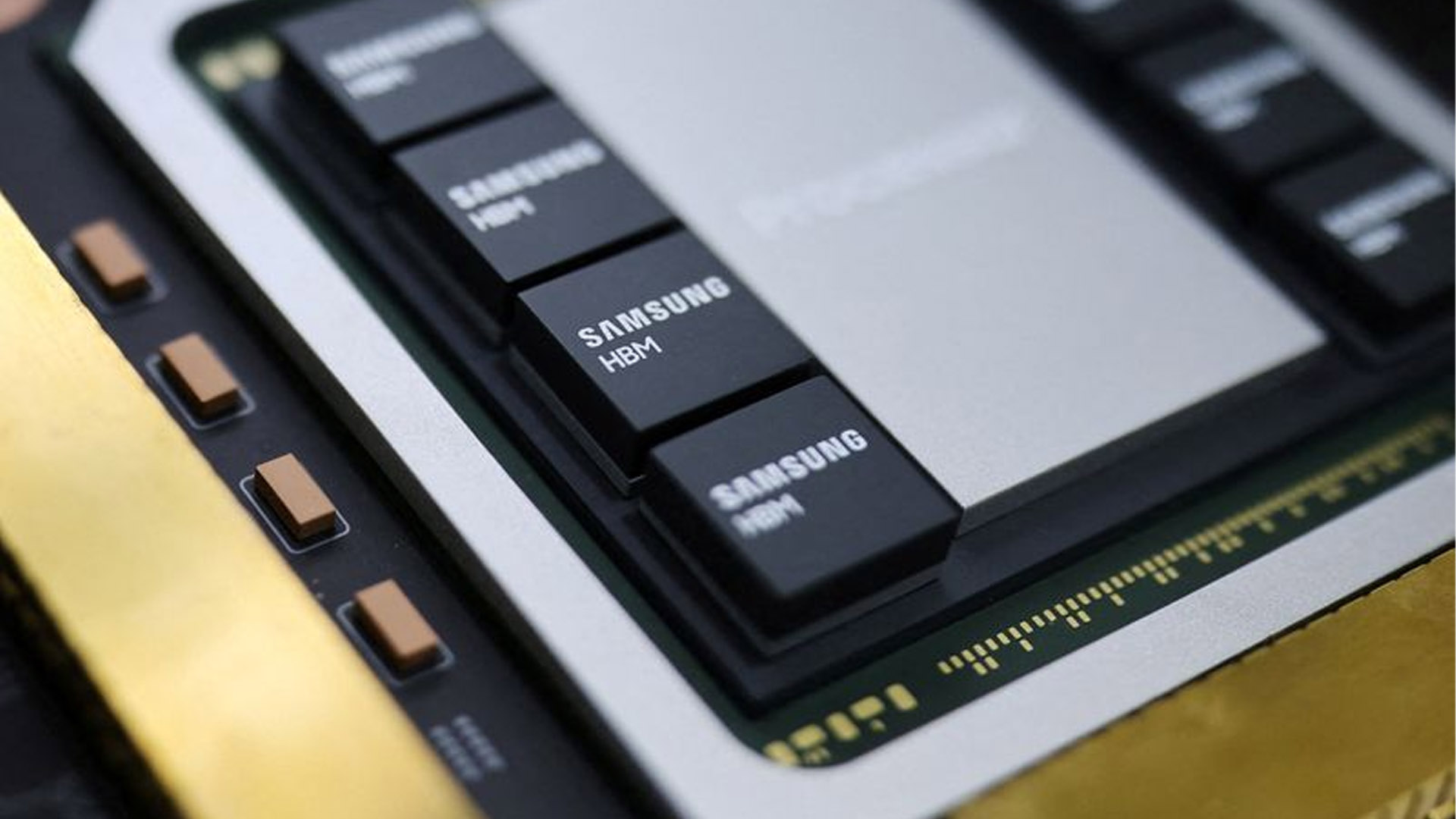
No. Not entirely. While raw processing power is a piece of the puzzle, the real story is in the design. Think about signal integrity. Emily Yan at Siemens is grappling with HBM3e and the looming HBM4, which means tighter tolerances, more data zipping around at higher speeds, and a much trickier battle against noise and heat. These aren’t abstract engineering problems; they’re the friction points that dictate how fast and how reliably our AI systems can operate.
And then there’s Intel Foundry’s Ravi Mahajan, pointing out that while heterogeneous integration is the practical path forward for AI growth, we’re still starving for detailed roadmaps. How do we stack these disparate components? How do we connect them without creating bottlenecks? How do we power and cool them effectively? The industry needs a clearer blueprint before we’re just building a tangled mess of the most advanced silicon imaginable.
While heterogeneous integration is emerging as the most practical path to sustaining AI growth, more detailed roadmaps are needed to guide how the industry stacks, connects, powers, and cools tomorrow’s chips.
This lack of a clear roadmap is precisely where we see the potential for architectural innovation. It’s why Chris Armstrong at Arm is pushing the envelope with open-source projects for sparse linear algebra. These aren’t glamorous, headline-grabbing technologies, but they’re the bedrock. Optimized functions, efficient solvers—they’re the quiet heroes that make massive computations feasible.
Meanwhile, Keysight’s Muhammad Umar Khan is reminding us that the physical layer matters, especially with high-performance Ethernet. End-to-end electrical-optical-electrical simulation isn’t just a technical nicety; it’s about building reliable systems that can handle the torrent of data AI generates. We’re talking about the plumbing, and it needs to be flawless.
Beyond the Core: Edge AI and Efficiency
But the AI revolution isn’t confined to massive data centers. Down at the edge, the same pressures are at play, albeit with different constraints. Expedera’s Athish Rahul Rao highlights that peak TOPS (Trillions of Operations Per Second) is a vanishingly weak proxy for actual edge performance. It’s like judging a car by its theoretical top speed on a drag strip, when what you really need is fuel efficiency and reliability in stop-and-go traffic. The focus is shifting to actual performance in real-world scenarios.
Rambus is tackling the LPDDR energy efficiency conundrum, trying to balance modularity for server systems with the power-sipping needs of edge devices. And Quadric? They’re detailing an AI architecture specifically for embedded autonomy that promises improved edge efficiency. These are all pieces of a much larger mosaic, each contributing to a more distributed, more capable, and hopefully, more manageable AI future.
Even something as seemingly niche as meshing workflows, as detailed by Cadence’s Veena Parthan, or Siemens EDA’s Carey Robertson explaining how AI can speed up design sign-off—these are all part of the grand re-engineering. It’s about making the design and manufacturing process itself more intelligent, more efficient, and ultimately, more strong.
This isn’t just a technological update; it’s a philosophical one. The relentless march of AI is forcing us to question fundamental assumptions about how we build and deploy computing. The server architecture of tomorrow won’t look much like the server architecture of today, and that’s precisely the point.