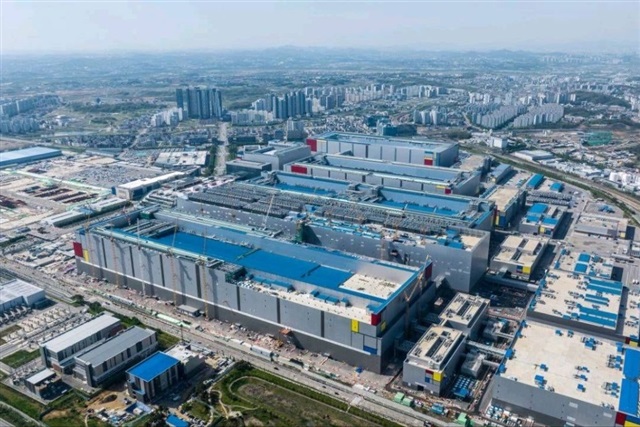
Samsung is apparently kicking its Pyeongtaek semiconductor campus into overdrive. We’re talking about fast-tracking construction of the final production line, an acceleration that smells less like a well-oiled machine and more like a company trying to get ahead of… well, something. The official line? Demand for AI-fueled memory chips. Naturally.
Look, I’ve been covering this circus for two decades, and the drumbeat of ‘supercycle’ is about as reliable as a politician’s promise. But this time, there’s a genuine hum. AI isn’t just a buzzword anymore; it’s a silicon-guzzling monster that actually requires oodles of high-bandwidth memory (HBM). So, when Samsung, the undisputed king of memory, decides to spend big and fast, it’s hard to dismiss.
What does this mean for you and me, the folks actually paying for this stuff? Simpler terms: maybe, just maybe, your next laptop or phone won’t be crippled by a painfully slow hard drive or a memory bottleneck. And for the gamers out there clutching their expensive GPUs – HBM is a big deal. If Samsung can churn it out, that could trickle down to better performance, assuming they don’t price it into the stratosphere.
Who’s Actually Making the Dough?
This is the million-dollar question, isn’t it? Samsung is betting its considerable chips on HBM, specifically the HBM3 and HBM3e variants that are the current darlings of the AI hardware world. They’re playing catch-up to SK Hynix in this particular race, which, frankly, is fascinating. Samsung usually leads, but here they are, playing the accelerator card. This expansion isn’t just about more memory; it’s about strategically grabbing market share in the most profitable segment of the memory market right now.
They’re pouring resources into what’s essentially the high-octane fuel for AI training and inference. The inference I’m drawing is that the AI gold rush is real, and Samsung wants its piece of that ridiculously lucrative pie. It’s not just about building more chips; it’s about building the right chips at the right time. And right now, the right chips are the ones that power those massive AI models.
Samsung is reportedly moving up construction of the final production line at its Pyeongtaek semiconductor campus, accelerating one of its largest capacity-expansion projects as demand for memory chips tied to artificial intelligence continues to surge.
This isn’t some minor tweak. This is a significant acceleration. It signals a clear intent to dominate. Whether this translates into actual price drops for consumers down the line is another matter entirely. Corporations rarely pass on savings unless their back is against the wall, and right now, Samsung’s back is firmly against a wall of opportunity.
Why Does This Matter for Developers?
For the coders and engineers out there, this means more accessible, potentially faster memory. If HBM becomes more readily available and cheaper to integrate, it could unlock new possibilities in model training and deployment. Imagine being able to experiment with larger, more complex AI models without hitting immediate memory constraints. It’s the kind of infrastructure investment that can quietly catalyze a wave of innovation. Less time waiting for data to shuffle, more time crunching numbers. It’s the dream, right? Though knowing the industry, they’ll likely just make the models bigger and more computationally demanding to soak up that newfound capacity.
It also means keeping an eye on the supply chain. When one giant like Samsung shifts its focus and accelerates production, it ripples. Suppliers of raw materials, equipment manufacturers, even the logistics companies – they all feel the tremors. For those working in the chip ecosystem, understanding Samsung’s strategic moves is paramount to predicting market shifts and securing resources.
This whole Pyeongtaek acceleration is a classic Silicon Valley move: see a trend, anticipate massive profit, and then go all-in. The question remains: will the AI demand continue to be as insatiable as they predict, or will we see another boom-and-bust cycle? My money’s on a bit of both, with Samsung strategically positioned to weather the storm and profit from the gale.
A Different Kind of Memory Race
It’s a far cry from the days when a gigabyte of RAM was a luxury. Now, we’re talking about specialized, high-performance memory designed for AI workloads. This isn’t your grandpa’s DRAM. This is bleeding-edge tech. And Samsung, despite some stumbles in specific areas, has always had a knack for playing the long game. Their Pyeongtaek investment is a massive bet on that long game paying off. It’s a bet that AI is here to stay and that its appetite for memory will only grow.
Frankly, it’s a bit refreshing to see a company acting decisively rather than just issuing press releases filled with meaningless jargon. They’re putting their money where their mouth is. The speed of this expansion suggests a level of conviction—or perhaps urgency—that’s hard to ignore. We’ll see if the market rewards their haste.
FAQs
What is Samsung’s Pyeongtaek campus?
Samsung’s Pyeongtaek campus is its largest and most advanced semiconductor manufacturing facility, located in South Korea. It’s a critical hub for producing a wide range of chips, including memory and logic processors.
What is HBM and why is it important for AI?
HBM stands for High Bandwidth Memory. It’s a type of RAM that offers much higher data transfer speeds and efficiency compared to traditional DRAM, making it essential for the massive data processing demands of AI workloads like training large language models.
Will this expansion lower the price of memory chips?
While increased production capacity can eventually lead to lower prices, the immediate impact is often driven by demand. If AI demand remains exceptionally high, prices might stabilize or increase initially before any potential drops occur. Samsung’s primary goal is to capture market share in a high-demand, high-margin segment.