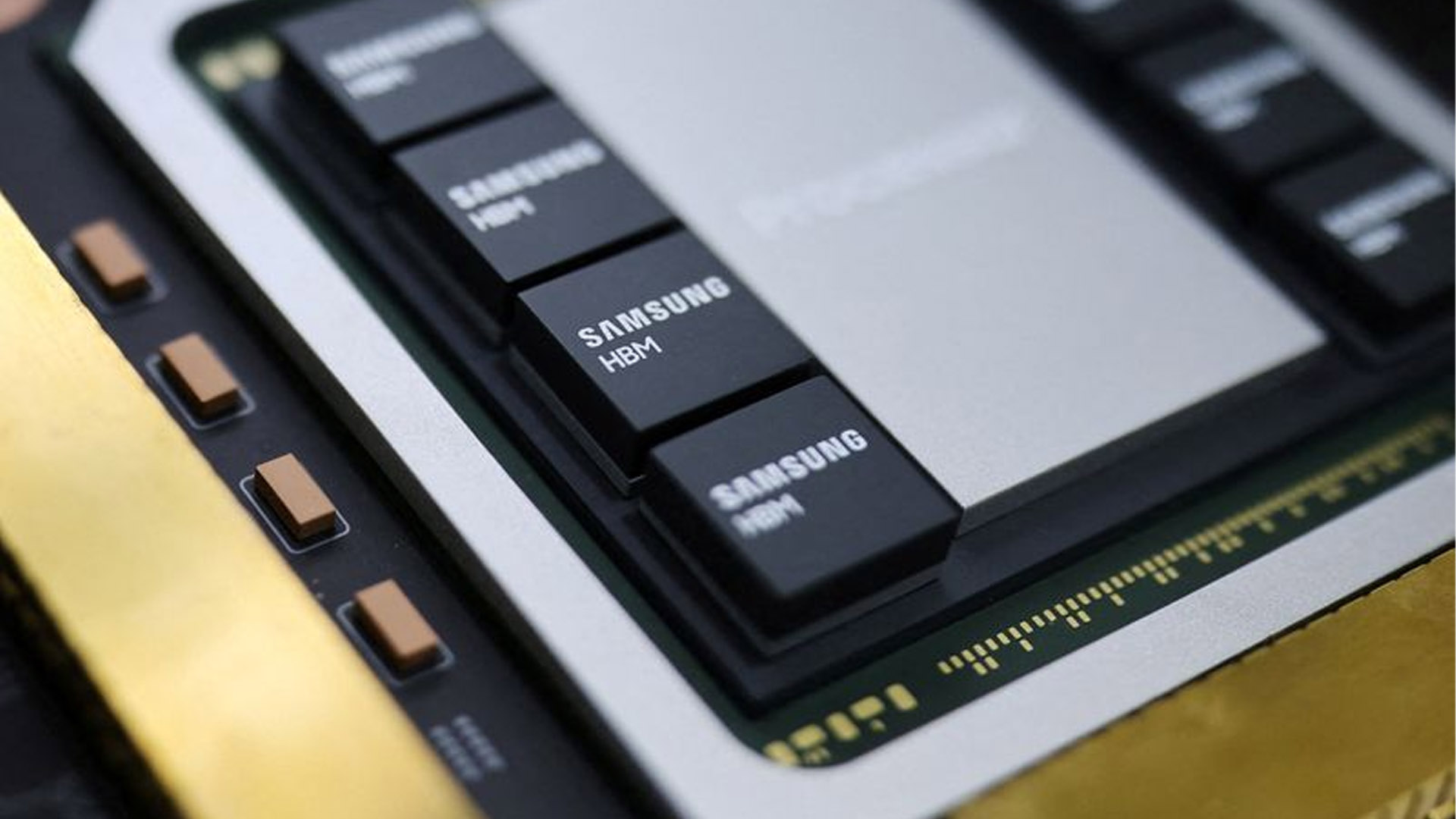
Hold onto your hats. Samsung is reportedly plotting to cram High-Bandwidth Memory (HBM) — the kind of super-speedy DRAM usually reserved for AI-crunching servers — into your smartphone and tablet. This isn’t just an iterative upgrade; we’re talking about a fundamental platform shift, turning our everyday devices into on-device AI powerhouses. Think of it like fitting a Formula 1 engine into a go-kart; suddenly, the possibilities explode.
Pocket-Sized Powerhouses
The core idea, as detailed by ETNews, is to overcome the space and power limitations that have historically kept HBM out of the mobile realm. Traditional mobile DRAM uses copper wire bonding, which has its limits. Samsung, however, is reportedly eyeing an ambitious approach: ultra-high aspect ratio copper pillars combined with Fan-Out Wafer Level Packaging (FOWLP). This is the same fancy tech found in high-end SoCs like the Exynos 2600, promising better heat resistance and sustained performance. It’s akin to using advanced structural engineering to build a skyscraper on a tiny plot of land.
Samsung’s advancements in Vertical Copper Post Stack (VCS) technology are key here. They’re stacking DRAM dies in a ‘staircase’ configuration, filling the gaps with these copper pillars. The aspect ratio is getting a massive bump, from a modest 3-5:1 to a staggering 15:1–20:1. This is where the bandwidth gets a serious kick. But here’s the rub: those copper pillars will need to get thinner. If they dip below 10 micrometers, they risk bending or snapping. That’s where FOWLP steps in, extending the wiring outward to provide crucial structural integrity and, as a bonus, increasing the number of I/O terminals by a good margin—pushing bandwidth up by another 30 percent. It’s a delicate dance of miniaturization and reinforcement.
The AI Awakening: Beyond the Cloud
This push for mobile HBM is all about enabling truly sophisticated on-device AI. We’re not just talking about better photo filters; imagine complex machine learning models running locally, offering personalized experiences, enhanced privacy, and lightning-fast responses without ever needing a constant cloud connection. This is the kind of leap that changes how we interact with technology daily, making our devices feel less like tools and more like intelligent partners.
Samsung intends to equip smartphones and tablets with HBM using ultra-high aspect ratio copper pillars with Fan-Out Wafer Level Packaging (FOWLP), the same packaging used on SoCs like the Exynos 2600 to improve heat resistance and increase sustained workload performance.
It’s fascinating to see Samsung, a behemoth in memory manufacturing, proactively shaping the future of mobile computing. While the report is light on a definitive timeline, the Exynos 2800 or 2900 chips are potential candidates for this next-gen memory. And the whispers of Apple exploring similar avenues suggest this isn’t just a Samsung pipe dream; the entire industry is sensing a seismic shift.
Economic Headwinds and Future Prospects
Here’s the thing, though: HBM, even in its current server-grade form, is astronomically expensive. The current DRAM shortage isn’t helping matters. Until prices stabilize, the widespread adoption of HBM in mobile devices might be a distant dream. If RAM remains prohibitively costly for the next few years, the immediate AI enhancements on smartphones and tablets might be capped by chipset and storage improvements rather than this radical memory upgrade. It’s a classic case of innovation bumping up against economic reality. Samsung is clearly playing the long game, but the immediate future of mobile AI might still be tethered to more conventional, albeit still impressive, advancements.
This move by Samsung, if successful, would be a masterstroke. It consolidates their position not just as a memory giant but as a key architect of future computing platforms. The days of mobile devices being second-class citizens in the AI race might be numbered.
🧬 Related Insights
- Read more: Samsung Foundry Flips to Profit: 4nm Demand Surges
- Read more: ZSNES reborn: GPU powers ultimate accuracy
Frequently Asked Questions
What exactly is High-Bandwidth Memory (HBM)? HBM is a type of DRAM designed for high-performance computing, offering significantly greater bandwidth and lower power consumption compared to traditional DDR memory by stacking DRAM dies vertically.
Will this technology make my current phone faster? Not directly. This is a new technology being developed for future smartphone and tablet generations. Your current device’s performance will be limited by its existing hardware.
When can I expect phones with HBM to be available? It’s uncertain. While Samsung is developing the technology, widespread adoption depends on cost stabilization and further development, likely meaning it’s at least a few years away.Samsung is reportedly developing High-Bandwidth Memory (HBM) chips for smartphones and tablets.