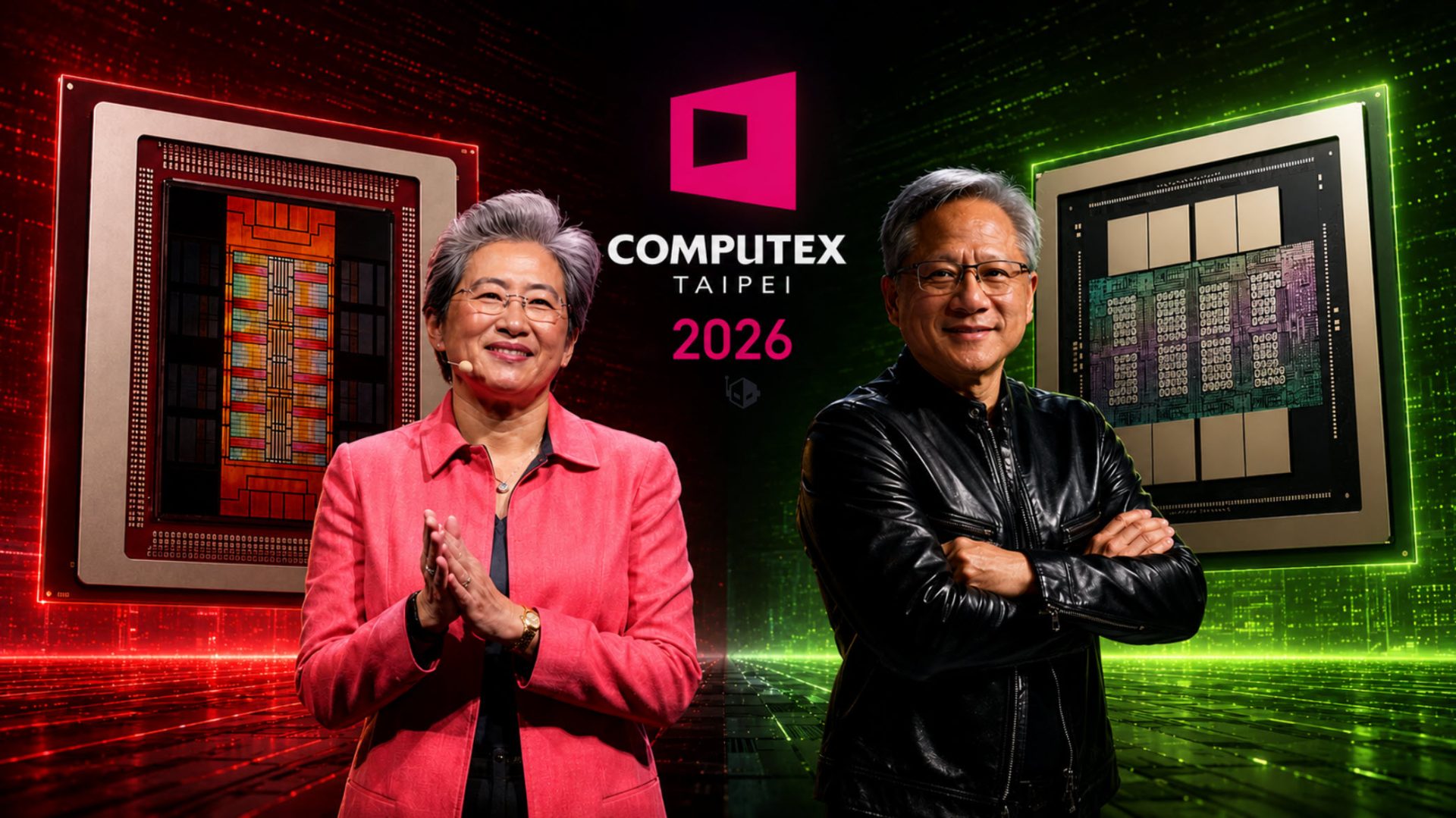
Look, the tech world is awash in breathless pronouncements about who’s ‘winning’ and ‘losing,’ especially when China enters the chat. We’ve got Lisa Su, the ever-composed CEO of AMD, reportedly making moves to capitalize on… well, what exactly? The whispers are that with Nvidia tripping over export restrictions, AMD sees a crack in the door to sell its wares in the Middle Kingdom.
But let’s pump the brakes on the confetti cannons, shall we? After two decades of watching these narratives unfold, my default setting is a healthy dose of skepticism. Every company, especially one trying to steal market share from a near-monopolist like Nvidia, wants you to believe they have a secret sauce. Especially when that secret sauce involves a massive, lucrative market like China.
Nvidia’s high-end chips, the ones that are supposed to be powering AI across the globe, have run smack into U.S. export controls. CEO Jensen Huang himself admitted this not too long ago. This is the ‘opening’ everyone’s talking about. It’s an opening that AMD, with its own lineup of AI-accelerating silicon, is seemingly poised to exploit. The idea is simple: if Nvidia can’t play ball in China, maybe AMD can step in and pick up the pieces.
Can AMD Really Disrupt Nvidia’s CUDA Fortress?
This is where my cynical journalist alarm starts blaring. Nvidia didn’t build its dominance on hardware alone. They built it on an ecosystem. Specifically, on CUDA. For years, developers have poured their energy, their code, their very livelihoods into optimizing for Nvidia’s proprietary parallel computing platform. It’s sticky. It’s deeply entrenched. It’s the technological equivalent of quicksand for anyone trying to switch.
AMD has its own alternative, ROCm, but let’s be honest, it’s been playing catch-up. Has it suddenly become so compelling, so strong, that a Chinese market — heavily reliant on the very AI technologies that CUDA enables — will abandon ship? Unlikely, at least not overnight. The cost, in terms of developer time, retooling, and potential performance hits, is immense.
Nvidia’s CUDA has created a moat so deep and so wide that it requires more than just slightly better hardware specs to breach. It requires a fundamental shift in developer allegiance.
So, who’s actually making money here? Nvidia, despite its self-imposed export limitations, is still raking it in. The demand for its AI chips globally is astronomical. They’re navigating restrictions, reconfiguring chips, and finding ways to comply while still selling their bleeding-edge tech. It’s a headache, sure, but hardly a death knell. For AMD, this is a chance to gain some traction, maybe secure a few more deals, and certainly get some positive PR out of it. But a wholesale takeover of Nvidia’s AI dominance in China? That’s a tall order, and frankly, I’ll believe it when I see the quarterly earnings reports, not just the press releases.
Geopolitics and the Chip War: A Familiar Dance
This whole situation is a classic geopolitical chip dance. The U.S. government wants to slow down China’s technological advancement, particularly in AI. Nvidia, as the leader in AI chips, is caught in the crossfire. And AMD, like any smart competitor, sees an opportunity. It’s the same playbook we’ve seen with other technological battlegrounds. Remember the early days of 5G, or even the scramble for semiconductor manufacturing capacity? Companies jockey for position, governments play their hand, and the rest of us are left to parse the actual business implications from the inevitable hype.
My bet? Nvidia will continue to innovate and find ways to adapt. They’ll offer more compliant versions of their chips, or focus on less restricted markets. And AMD will make some inroads in China, perhaps picking up deals for less cutting-edge applications or specific enterprise solutions. But the CUDA moat? That’s a formidable barrier, and building a competitive ecosystem is a marathon, not a sprint. For now, it’s more about strategic positioning and market maneuvering than a seismic shift in power. Keep an eye on those earnings, folks. That’s where the real story is.