The relentless march of graphical enhancement continues. This week, NVIDIA’s DLSS 4.5, complete with its touted Multi-Frame Generation capabilities, is slithering its way into a handful of new titles. For the real people out there — the ones actually staring at their monitors, not just the quarterly earnings reports — this means a potential bump in frame rates, a smoother visual experience, and maybe, just maybe, the ability to crank those settings up without turning your gaming PC into a space heater.
Let’s get real. DLSS, in its various iterations, has become less of a novelty and more of a de facto standard for performance-conscious gamers on Team Green. This latest iteration, DLSS 4.5, promises to build upon the existing Super Resolution and Frame Generation features, aiming for even better image quality and, critically, more frames per second. The question isn’t if it’s coming to more games, but how effectively it’s being implemented and what the underlying architectural shifts are.
The Big New Toy: 007 First Light
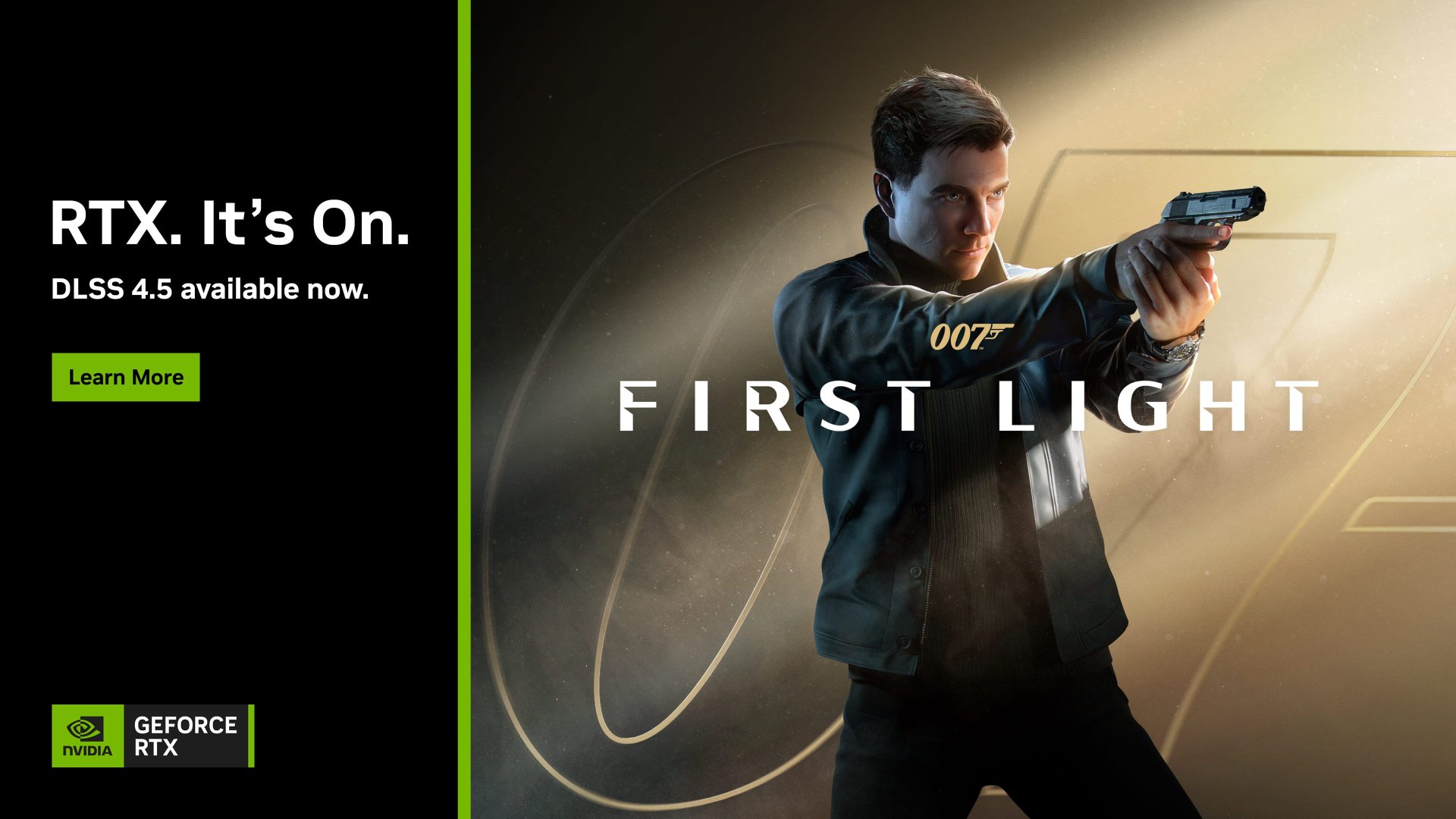
Unquestionably, the star of this week’s DLSS parade is 007 First Light. IO Interactive’s new take on James Bond is already garnering significant praise, with whispers of it being “one of the greatest James Bond games ever made.” High praise indeed. For those wielding NVIDIA’s top-tier RTX 50 Series cards, NVIDIA is throwing around some pretty wild numbers – think 4K resolution at a staggering 563 FPS. That’s frankly absurd, and while I’d take such figures with a grain of salt (NVIDIA’s marketing often paints a rosy picture), it hints at the sheer horsepower these new GPUs, when paired with advanced upscaling, are capable of.
What this really signifies is the increasing symbiotic relationship between cutting-edge hardware and sophisticated software. DLSS 4.5 isn’t just a post-processing filter; it’s a deep integration that analyzes game frames and intelligently generates intermediate ones, aiming to create a smoother visual flow without the prohibitive computational cost of rendering every single frame at native resolution. The ‘Multi-Frame Generation’ aspect suggests an evolution in how it analyzes temporal data, potentially leading to better handling of motion and fewer visual artifacts.
The Rest of the Pack
Beyond the Bond adventure, we’re also seeing DLSS 4.5 land in World of Tanks: HEAT. This free-to-play vehicular combat game is getting DLSS Super Resolution and Multi-Frame Generation, alongside NVIDIA Reflex for reduced input lag. It’s a solid addition, bringing the benefits of NVIDIA’s tech to a popular, long-running franchise.
Then there’s Starminer, a title that’s not only launching with DLSS support but also marks a symbolic passing of the torch: the NVIDIA App officially replaces the venerable NVIDIA Control Panel after two decades. This transition is more than just a UI refresh; it hints at a more unified and potentially AI-driven approach to driver and software management for NVIDIA hardware. It’s fascinating to watch how these foundational software layers evolve alongside the silicon.
We also have F1 25 slated to receive Multi-Frame Generation support on its June 3rd release, a title that’s already confirmed to be using DLSS Super Resolution and Reflex. And in a move that’s perhaps long overdue, Helldivers 2, which curiously skipped most upscaling technologies at launch, is finally getting DLSS support this week. This move acknowledges the massive player base and the performance demands of its chaotic, cooperative gameplay.
Why Does This Matter for Your Rig?
The integration of DLSS 4.5 with Multi-Frame Generation is an architectural shift for game rendering. It’s not merely about making games look prettier; it’s about redefining what’s possible in terms of performance-per-watt and performance-per-dollar. For gamers with compatible NVIDIA hardware, particularly those eyeing the latest RTX cards, this means the ability to enjoy visually demanding titles at higher resolutions and refresh rates than would otherwise be feasible. It’s a form of computational offloading, allowing the GPU to focus its raw power where it counts most, while DLSS handles the heavy lifting of frame synthesis.
This trend, however, also raises questions about the long-term reliance on upscaling technologies. Are we entering an era where native rendering becomes increasingly rare for high-end gaming? And what are the subtle compromises — motion clarity, temporal stability — that users might be making, even if they’re not immediately apparent? The goalposts for ‘good enough’ visuals are constantly being nudged by these technologies.
“DLSS 4.5 with Multi-Frame Generation is designed to deliver an unprecedented leap in visual fidelity and responsiveness, especially for demanding titles that push the boundaries of current hardware.”
That’s the official line, of course. The real test, as always, will be in the trenches, with real players and real hardware. The sheer speed at which these updates are rolling out suggests a maturing ecosystem for AI-driven graphics, where software is just as critical as silicon. It’s a compelling, if occasionally dizzying, evolution.
What About AMD and Intel?
It’s impossible to discuss DLSS without acknowledging the competition. AMD has its FidelityFX Super Resolution (FSR), and Intel has Xe Super Sampling (XeSS). While DLSS often boasts superior image quality due to its AI and machine learning foundation, FSR and XeSS are crucial for broader hardware compatibility. The ongoing arms race in upscaling technology is benefiting everyone, pushing innovation across the board, even if NVIDIA is currently setting the pace in AI-driven frame generation.
This constant iteration means that gamers, regardless of their preferred GPU manufacturer, are likely to see improved performance and visual fidelity in future titles. The underlying principle is the same: smarter rendering techniques to extract more visual magic from existing hardware. The question is whether these AI-assisted methods will ever truly surpass the fidelity of native rendering or if they will forever be a necessary compromise for pushing the envelope.
🧬 Related Insights
- Read more: Huawei Eyes China AI Chip Crown as Nvidia Stalls
- Read more: Devil May Cry 5 PC: Is Special Edition Content Finally Coming?
Frequently Asked Questions
What does NVIDIA DLSS 4.5 with Multi-Frame Generation actually do? NVIDIA DLSS 4.5 uses AI and machine learning to upscale lower-resolution game frames to a higher resolution, while Multi-Frame Generation generates intermediate frames between rendered ones to create a smoother visual experience and higher overall frame rates.
Will this make my current GPU obsolete? Not necessarily. While DLSS 4.5 is optimized for newer NVIDIA RTX cards, older compatible RTX cards can still benefit from DLSS Super Resolution. Multi-Frame Generation typically requires more recent hardware.
Can I use DLSS 4.5 on non-NVIDIA graphics cards? No, DLSS is a proprietary NVIDIA technology and requires an NVIDIA RTX graphics card to function.