This isn’t just another spec bump. AMD’s latest Gorgon Halo chips, a subtle refresh of their Strix Halo predecessors, are shouting one thing from the rooftops: memory, lots of it. We’re talking up to 192GB of unified memory. For the average Joe? That means your next workstation or high-end laptop could potentially chew through AI models that previously only lived on beefy, enterprise-grade servers. Think local LLM inference that doesn’t require a constant, expensive cloud connection.
It’s a bold play, especially with global DRAM shortages still causing headaches and price hikes. Remember how Apple had to scale back memory options on their Mac Studio? AMD is essentially rolling the dice, betting that they can secure and integrate this much RAM reliably. If they pull it off, it’s a significant win for anyone pushing the boundaries of on-device AI, from developers fine-tuning complex neural nets to creatives working with generative models that demand copious amounts of VRAM.
But here’s the rub, and it’s a big one: Can they actually deliver it consistently? The original Strix Halo topped out at 128GB. Now, we’re seeing a near 50% jump to 192GB. This is where the investigative deep-dive kicks in, and frankly, the whispers in the supply chain aren’t exactly rosy. If you’re a business looking to outfit a fleet or a consumer saving up for that ultimate AI machine, the question of actual availability is paramount. AMD’s own PR mentions enterprise-grade security and manageability for the ‘Pro’ versions, suggesting a primary focus on the commercial sector, which is often less susceptible to the fickle winds of consumer DRAM availability. Still, the consumer market is where the buzz is, and it’s here that shortages bite hardest.
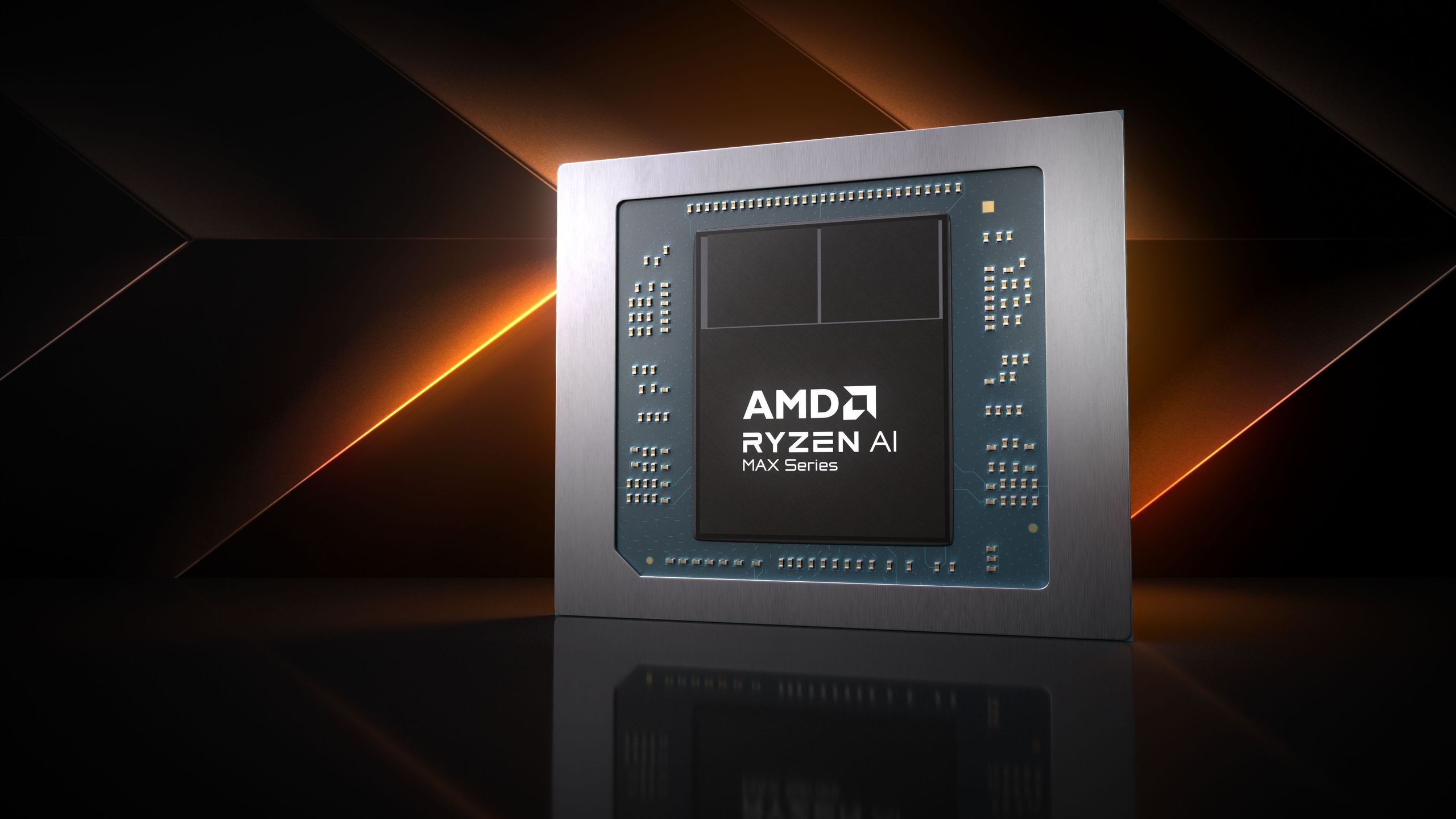
The architecture itself remains familiar: Zen 5 CPU cores, RDNA 3.5 graphics, and the all-important XDNA 2 Neural Processing Unit. The flagship, the Ryzen AI Max+ Pro 495, sees a modest clock speed increase to 5.2 GHz. The GPU configurations are also a bit of a head-scratcher. AMD stuck with 32 Compute Units for the higher-end Pro 490 and 485, even though they offered 40 CUs in refreshed Strix Halo parts. Is this a sign of cost-saving, or are they prioritizing memory bandwidth above all else for these particular SKUs? It smells like a pragmatic decision born from silicon wafer realities rather than a pure architectural leap.
Here’s the breakdown of the Gorgon Halo stack:
| Cores (CPU/GPU) | Architecture | Max Boost Clock | Cache | TDP | Integrated GPU | Unified Memory |
|---|---|---|---|---|---|---|
| 16 / 32 | Zen 5 / RDNA 3.5 | 5.2 GHz | 80 MB | 55 | Radeon 8065S (40) | Up to 192 GB (160 GB) |
| 12 / 24 | Zen 5 / RDNA 3.5 | 5 GHz | 76 MB | 50 | Radeon 8050S (32) | Up to 192 GB (160 GB) |
| 8 / 16 | Zen 5 / RDNA 3.5 | 5 GHz | 40 MB | 50 | Radeon 8050S (32) | Up to 192 GB (160 GB) |
This massive memory pool is the headline act, and AMD isn’t shy about it. They’re touting it as the first x86 client processor capable of running a 300B+ parameter LLM. That’s a watershed moment for local AI. No other x86 competitor is even in the same ballpark for this kind of integrated memory capacity. Apple’s ARM-based silicon offers impressive unified memory, but it’s a different ISA and a different ecosystem.
Why Does All That Memory Actually Matter?
For anyone dabbling in large language models or complex generative AI, memory is the bottleneck. Historically, to run models with hundreds of billions of parameters, you’ve needed clusters of high-end GPUs with massive VRAM pools, or relied on heavily quantized (and thus, potentially degraded) versions. AMD’s promise is to bring that capability to a single chip. Imagine running something like Llama 3 400B locally, with full fidelity, without the network latency or the per-token cost of cloud services. It’s not just about performance; it’s about accessibility and autonomy.
AMD says these chips are ‘coming soon,’ with OEM partners expected to announce systems in Q3 2026. That’s a surprisingly distant target for something presented now, fueling speculation that supply chain integration is indeed the primary hurdle. The initial launch seems to be centered around the Ryzen AI Halo box, with pre-orders starting in June for a machine starting at a hefty $3,999. That configuration bundles a Ryzen AI Max+ 395 with 128GB of memory and 2TB of storage, placing it squarely against Nvidia’s DGX Spark, which clocks in around $4,700 with similar memory but an Nvidia GB10 chip.
AMD is claiming significant performance advantages over the DGX Spark on certain LLM benchmarks, particularly with Linux. They also showed impressive scaling against Apple’s M4 Pro, though a Mac Studio is a more direct comparison. The fact that they’re even bringing up Mac Studio suggests they see their halo product as a direct competitor to Apple’s high-end workstation offerings, albeit with a different architectural approach and a far greater emphasis on raw memory capacity.
It’s easy to get caught up in the raw gigabytes. But the real story here is AMD’s aggressive push into the AI PC and workstation space. They’re not just offering a chip; they’re offering a vision for how AI can be integrated into computing at a much more fundamental level. The question remains: can they execute on the memory front without stumbling?
This feels like a chess match where the opponent is a global commodity market. AMD is making a massive bet. If it pays off, they’ll have not only a hardware advantage but a narrative: the company that put truly powerful, on-device AI into everyone’s hands. If it falters, it’s a cautionary tale about ambition outrunning silicon reality.
🧬 Related Insights
- Read more: 3D Stacking HBM on GPUs: Imec’s Thermal Wake-Up Call
- Read more: Broken RTX 5090s for AI Pros: A Half-Price Gamble
Frequently Asked Questions
What does the Ryzen AI Max 400 series actually do? The Ryzen AI Max 400 series, codenamed Gorgon Halo, are advanced APUs (Accelerated Processing Units) from AMD designed for AI workloads. Their key differentiator is offering up to 192GB of unified memory, enabling them to run very large AI models locally.
Will this new AMD chip replace my current computer? Not directly. These are high-end chips, likely to appear in specialized workstations and potentially future premium laptops or desktop systems. They are designed for demanding AI tasks, not as a general replacement for everyday consumer PCs, though they will power systems that could.
When will systems with Gorgon Halo be available? AMD has indicated that OEM partners are expected to announce systems featuring the Ryzen AI Max Pro 400 series starting in Q3 2026. This means actual consumer or commercial systems won’t be widely available until sometime after that date.