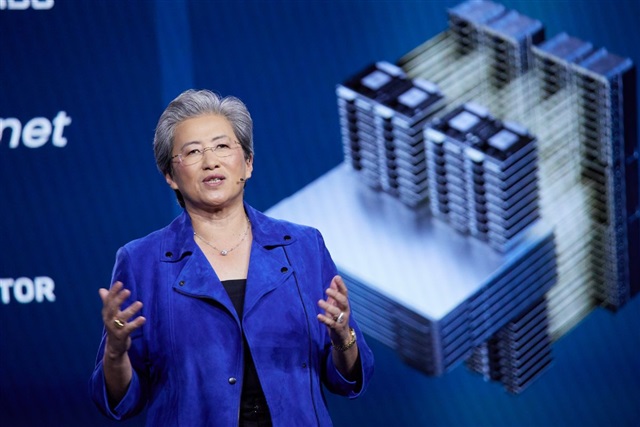
When we talk about artificial intelligence, one acronym typically dominates the conversation: GPU. NVIDIA’s dominance in this space has been so absolute, so pervasive, it’s easy to forget that the foundational architecture of computing—the Central Processing Unit, or CPU—might still have a significant role to play. But here’s the thing: AMD, under CEO Lisa Su, is making a bold, almost defiant, play for that very role.
Forget the simplistic ‘CPU vs. GPU’ dichotomy. AMD isn’t just slapping more cores onto a chip and hoping for the best. Their strategy runs deeper, weaving AI capabilities directly into the fabric of their x86 processors, aiming to create a more distributed, efficient AI ecosystem. This isn’t just about raw power; it’s about rethinking where and how AI inference and even training occur. It’s a profound architectural shift, and one that Nvidia, for all its CUDA evangelism, might be slow to counter.
Why Is AMD Doubling Down on CPUs for AI?
The narrative has been hammered home: GPUs are the undisputed kings of parallel processing, the very engine of modern AI. And sure, for massive, data-center-scale model training, they still hold a significant edge. But what about the ever-growing need for AI inference at the edge? Or the localized processing of sensitive data? Or even just making existing server workloads smarter without entirely overhauling infrastructure? That’s where AMD sees its opening. They’re touting new architectures like Zen 5, embedding specialized AI acceleration units directly onto their Ryzen and EPYC processors. This isn’t just a bit of clever marketing; it’s a strategic decision to democratize AI processing, making it accessible on a wider range of hardware.
Consider the implications for cost and efficiency. Deploying thousands of high-end GPUs for inference tasks can be prohibitively expensive and power-hungry. AMD’s approach suggests a future where everyday CPUs are sufficiently AI-capable for many common applications. Think about laptops performing on-device natural language processing, smartphones handling complex image recognition without sending data to the cloud, or enterprise servers optimizing their own operations in real-time. This distributed model, powered by ubiquitous CPUs, could fundamentally change the economics of AI deployment.
“Our strategy is to deliver a broad portfolio of leadership products that address the diverse needs of the AI market, from the data center to the edge. We believe that CPUs, with integrated AI acceleration, will play a critical role in enabling the next wave of AI innovation.”
This statement, while corporate speak, hints at a strategic vision. It’s about extending AMD’s existing dominance in server and client markets by infusing them with AI prowess. It’s not about replacing GPUs entirely, but about creating a more complementary — and for many use cases, more practical — solution.
The Architectural Underpinnings of AMD’s AI CPU Ambitions
At the heart of AMD’s push are architectural enhancements designed to boost AI workloads. Their latest CPU generations are increasingly incorporating specialized instructions and dedicated hardware blocks—akin to NPUs (Neural Processing Units) but built directly into the CPU core—that are optimized for the matrix multiplications and vector operations that are the bread and butter of AI computations. This isn’t just about brute force; it’s about microarchitectural tweaks that allow these operations to be performed much more efficiently on a CPU.
Furthermore, AMD is heavily invested in its software ecosystem, an area where Nvidia has traditionally held a stranglehold with CUDA. While challenging Nvidia’s CUDA dominance is a Herculean task, AMD is working on improving its ROCm platform and ensuring compatibility with popular AI frameworks like TensorFlow and PyTorch. The success of their CPU-centric AI strategy hinges not just on hardware, but on making that hardware programmable and accessible to developers.
This move also positions AMD to capitalize on potential shifts in how AI models are developed and deployed. As models become more efficient and optimized for inference, the need for the sheer raw horsepower of top-tier GPUs might diminish for certain applications, making the cost-effectiveness and accessibility of AI-accelerated CPUs far more attractive. It’s a long game, certainly, but one that AMD seems determined to play.
AI is no longer a niche pursuit; it’s becoming an integral part of virtually every computing task. By embedding AI capabilities directly into its CPUs, AMD is not just iterating on existing technology; it’s attempting to redefine the fundamental architecture of AI deployment. Whether this bet pays off remains to be seen, but it certainly adds a fascinating new dimension to the ongoing chip wars.