Everyone figured 3D stacking was the next big leap for GPUs. Stack that high-bandwidth memory right on top of the compute beast, slash latency, cram in more power per square inch—Nvidia and AMD execs probably doodled it on napkins at investor dinners. But Imec’s thermal sims dropped a cold bucket: it’d cook future GPUs alive.
Peak temps hitting 140°C. Yeah, that’s inoperable territory for silicon that starts sweating at 80°C. Changes everything—or does it? Here’s the cynical vet take: we’ve heard this song before, back when Intel promised 3D transistors would solve all our power woes in 2011. Spoiler: they didn’t.
Why 3D Stacking HBM on GPUs Sounded Perfect
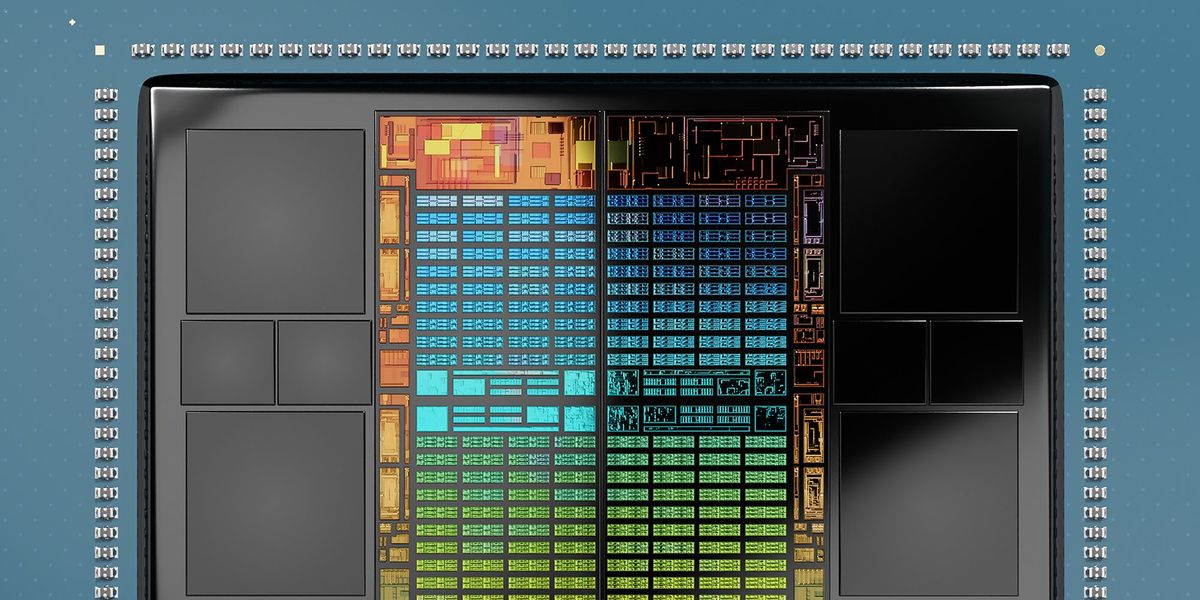
Look. Today’s 2.5D setups—GPU parked next to four HBM stacks on an interposer—already guzzle 414 watts, peaking at 70°C with liquid cooling. Fine for now. But Yukai Chen from Imec nailed it at IEDM:
“While this approach is currently used, it does not scale well for the future—especially as it blocks two sides of the GPU, limiting future GPU-to-GPU connections inside the package.”
3D? Smaller footprint. Quadruple bandwidth. Direct data firehose, no side-channel bottlenecks. AI workloads—those memory-hungry LLMs—would lap it up. Footprint shrinks, so you pack more chips per server rack. Data center density explodes. Who’s complaining?
Except the heat. Stack HBM atop the GPU, fill the middle with dummy silicon, and boom—GPU’s a radiator. 140°C. Dead.
But Imec didn’t bail. They iterated. Hard.
First fix: ditch the base die. HBM’s a skinny stack of DRAM dies—up to 12, vertical vias galore, soldered tight. Normally, a logic base die multiplexes data across the tiny edge gap to the GPU. Stack on top? No gap. Data pours straight in. Move those circuits to the GPU floorplan—plenty of room now, since no demux junk needed.
Drop: almost 4°C. Meh. But bandwidth soars.
Can We Actually Make 3D GPUs Not Melt?
Next: throttle the GPU clock. Counterintuitive? Sure. But LLMs are memory-bound. Fourfold bandwidth means you can slow clocks 50%, still outperform 2.5D, and shed 20°C+. Myers says 70% clock nets just 1.7°C warmer. Trade speed for cool—net win.
Then, HBM tweaks. Merge four stacks into two fat ones—bye, heat-trapped middle zone. Thin the top die (usually beefier for handling). Boost thermal conductivity everywhere: fancier molds, better TIM (thermal interface material). Package-level voodoo.
Result? Temp delta near zero. GPU sips at 70°C again, HBM follows. Viable.
Here’s my unique spin, absent from Imec’s slides: this reeks of the PowerPC era. Remember IBM’s RS/6000 in the ’90s? Stacked modules promised it all, but heat killed scalability—pushed everyone to x86 flatlands. Today? Nvidia’s raking billions on 2.5D behemoths like Blackwell. 3D forces clock-downs, evens the field for cheaper inference chips. Prediction: TSMC pushes this by 2028, but Nvidia drags feet—why shrink margins when hyperscalers foot the cooling bill?
Skeptical? Damn right. Sims aren’t silicon. Real packages—TSV yields, warpage, cost—bite harder. Imec’s James Myers admits floorplan shifts, but who’s redesigning MI300s overnight?
Still. If it lands, AI racks halve in size. Power walls crack. But who profits? Not the GPU giants sitting pretty.
And liquid cooling? Already de rigueur in AI sheds. 3D demands immersion next—think Submer tanks, $10k a pop per rack.
The Real Bandwidth Boom—and Tradeoffs
Bandwidth quadruples. Latency craters. Memory-bound AI? Solved. But training? Those compute-heavy behemoths might still crave flat speed demons.
Imec’s co-optimization mantra—system tech tweaks, not just process nods—feels right. Throw hardware at software limits, watch perf flatline. Nah. Clock management, floorplans, stack geometry: holistic or bust.
Cynic’s question: who’s bankrolling this? Imec’s got TSMC, Samsung, Intel cash. Nvidia? Silent. Smells like foundry play to claw GPU turf.
We’ve chased 3D dreams since MCMs in the ’80s. Monolithic ruled then. Now monolithic’s toast—too big to yield. 3D’s revenge?
Maybe. But expect hype cycles. IEDM buzz fades; prototypes emerge 2026. Ship? 2029, if lucky.
🧬 Related Insights
- Read more: Tower’s Laser Chip Promises DWDM Magic for AI Racks—Hype or Hardware Hero?
- Read more: Broadcom’s Tomahawk 6: 102.4 Tbps Beast Ships — But Who’s Really Cashing In?
Frequently Asked Questions
What is 3D stacking for GPUs?
It’s piling HBM memory dies directly on the GPU chip, shrinking footprint and boosting bandwidth over today’s side-by-side 2.5D setups.
Will 3D stacked GPUs replace current AI chips?
Not soon—thermal fixes need validation, redesigns take years. 2.5D dominates through 2027.
Does this fix AI power hunger?
Partially. Better bandwidth means efficiency gains, but clocks slow, cooling ramps up. No free lunch.