Here’s the thing: 80% of AI professionals surveyed reported that their organizations have already adopted AI, or are planning to within the next 12 months. That statistic, from a recent industry survey, tells us one thing loud and clear: AI isn’t just coming; it’s already here, woven into the fabric of how we work and, increasingly, how we live.
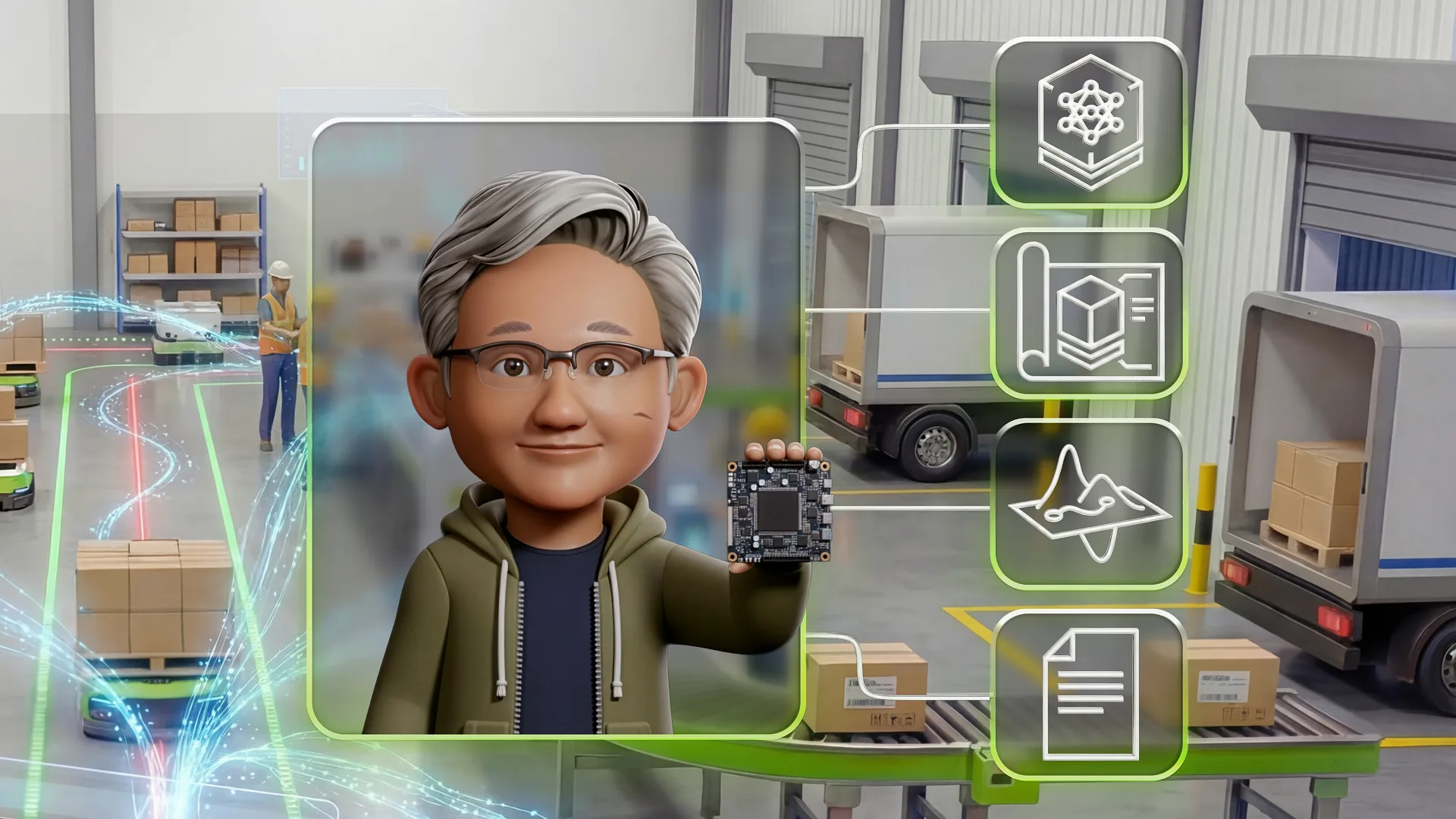
And who better to illustrate this seismic shift than Jensen Huang, the maestro of silicon himself? During a recent visit to Taiwan, Huang dropped a detail that’s far more telling than any product spec sheet or market forecast: he uses Claude at work. Claude! The very kind of advanced AI that Nvidia’s chips power is now a daily tool for the man at the helm of the company building the engine for this AI revolution.
This isn’t just a CEO dabbling in the latest tech trend. It’s a powerful signal. Think of it like Henry Ford talking about driving his own Model T around the farm – it legitimizes the technology, bringing it down from the abstract to the tangible, the everyday.
But the Huang family’s AI journey doesn’t stop there. Huang also shared that his son is actively running AI agents at home to manage family affairs. Imagine that. A teenager, not just playing video games, but orchestrating household logistics with AI. It’s a glimpse into a future where these intelligent systems aren’t just for developers and data scientists, but are integrated into the very rhythm of family life, acting as digital butlers, schedulers, and problem-solvers.
This domestic application of AI agents is particularly fascinating. We’re talking about systems that could potentially book appointments, manage grocery lists, coordinate schedules, and even handle minor troubleshooting – all without explicit human command for every single step. It’s the AI assistant concept cranked up to eleven, moving beyond simple voice commands to proactive, agent-based management.
Why does this matter? Because it democratizes the experience of AI. When the leader of the world’s most influential AI hardware company is using these tools personally, and his family is integrating them into their daily routines, it underscores that AI is evolving into a fundamental platform shift, much like the internet or mobile phones before it. It’s not just about building more powerful chips; it’s about how those chips enable entirely new ways of interacting with the world.
The implications for developers and businesses are immense. Huang’s personal endorsement of Claude, even if for specific tasks, validates the capabilities of large language models and their integration into professional workflows. For Nvidia, this is the ultimate proof point for their strategy: they’re not just selling hardware; they’re enabling this entire ecosystem of intelligent applications and agents that are becoming indispensable.
We’re witnessing the birth of a new paradigm where AI agents, powered by sophisticated models, become extensions of our own capabilities. Huang’s anecdote is a powerful reminder that the future isn’t a distant concept; it’s being built and tested in real-time, in executive offices and suburban homes alike. The age of AI agents managing our lives, from professional tasks to family chores, is dawning.
The Homefront AI Revolution
Huang’s admission about his son managing family affairs with AI agents is perhaps the most telling part of his recent statements. It paints a picture of AI moving beyond specialized professional applications into the realm of everyday domestic utility. This isn’t just about convenience; it’s about building a generation that grows up smoothly interacting with and directing artificial intelligence to manage practical aspects of life. Think of it as a digital co-pilot for the household, capable of understanding context, making decisions, and executing tasks with increasing autonomy.
Why Is Jensen Huang Using Claude?
Jensen Huang’s use of Claude at work signifies a practical endorsement of advanced AI language models for professional tasks. It suggests that even for the architect of AI hardware, dedicated AI tools offer tangible benefits in productivity and problem-solving. This personal adoption by a leader in the field lends significant weight to the capabilities and reliability of current AI offerings, moving them from experimental tools to essential components of modern work.
What Does This Mean for Nvidia’s Future?
This personal adoption of AI tools by Jensen Huang, coupled with his son’s use of AI agents at home, strongly suggests that Nvidia’s future roadmap is deeply intertwined with the proliferation of AI agents and sophisticated AI applications. It reinforces their commitment to providing the underlying computational power while also encouraging the development of the software and agent-based systems that will run on it, ensuring Nvidia remains at the epicenter of the AI ecosystem as it moves from specialized tasks to comprehensive life management.
🧬 Related Insights
- Read more: Edge AI Agents Rewrite Chip Rules [Industry Experts Weigh In]
- Read more: RTX 5090 Humiliates $30K AI GPUs in Password-Cracking Showdown
Frequently Asked Questions
What AI models does Jensen Huang use? Jensen Huang stated he uses Claude at work for professional tasks. His son also uses AI agents at home to manage family affairs.
How is AI being used in homes now? Currently, AI is used in homes for smart assistants, home automation, and increasingly, for AI agents that can manage schedules, tasks, and information proactively.
Will AI agents replace human jobs? While AI agents are automating certain tasks, they are also creating new job opportunities in AI development, maintenance, and oversight. The impact on employment is expected to be a transformation rather than a simple replacement.