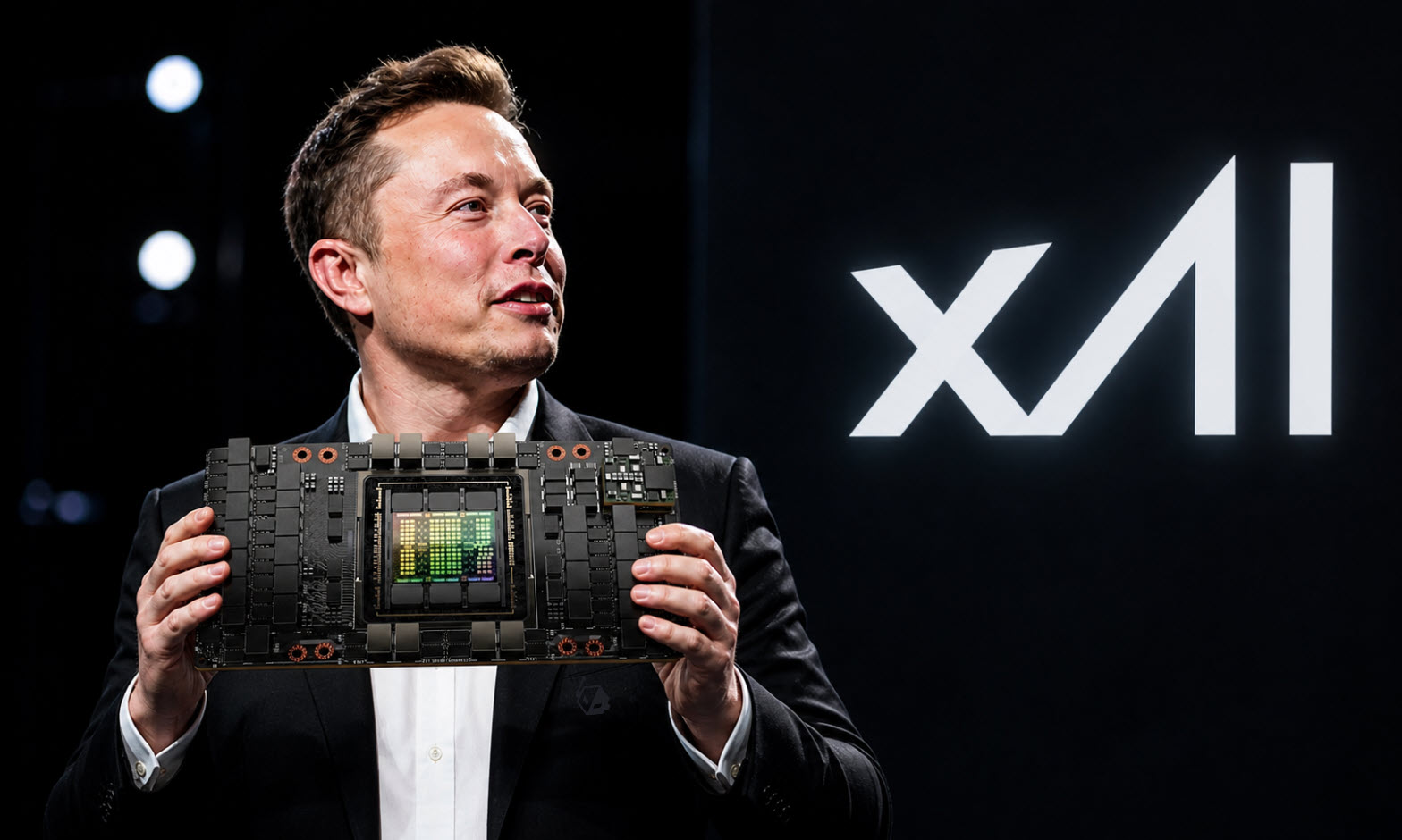
For anyone betting on Elon Musk’s xAI to rapidly disrupt the AI landscape, the latest whispers from the silicon trenches should give pause. It appears that despite amassing a truly gargantuan fleet of some 550,000 NVIDIA GPUs – a mix of cutting-edge H100s and H200s, no less – the company is only managing to wring out a paltry 11% utilization. That’s right, for all the talk of computational power and agentic AI, a full 89% of that half-million-plus GPU army is apparently collecting digital dust, at least according to reports from The Information.
This isn’t just an anecdote; it’s a glaring data point suggesting a fundamental disconnect between hardware acquisition and effective deployment. While the sheer scale of xAI’s GPU investment is undeniable, its inability to meaningfully utilize that hardware puts it starkly at odds with industry leaders. Meta and Google, for instance, are reportedly squeezing an impressive 43% and 46% out of their respective GPU fleets, a proof to sophisticated software stack optimization.
The Cost of Idle Silicon
What does this staggering underutilization mean for real people? It means that the promise of rapid AI advancement, the kind that fuels everything from more helpful chatbots to scientific breakthroughs, is being hampered. It means that the massive capital expenditure Musk has sunk into this hardware – hardware that is notoriously expensive and in high demand – is yielding disproportionately low returns. Think of it like owning a fleet of supercars but only having one mechanic who knows how to tune them up; the potential is immense, but the reality is frustratingly constrained.
The core of the problem, as outlined, appears to be a software stack that isn’t mature enough to handle the complexities of managing and orchestrating hundreds of thousands of GPUs at scale. While smaller setups can often fly under the radar, the inefficiencies and bottlenecks in distributed training networks become acutely apparent as the hardware count balloons into the hundreds of thousands. This isn’t a unique xAI failing, mind you. It’s a systemic challenge plaguing the entire AI industry, a proof to just how difficult achieving true efficiency at hyperscale truly is.
The Information has reported that Elon Musk’s xAI, the software firm behind Gorq and other key AI-based components, is only able to utilize a small chunk of its total installed GPU capacity.
For xAI, this translates directly into longer GPU idle times, cascading failures in the data pipeline, and significant delays in analysis stages. The company has reportedly set an ambitious target of reaching 50% utilization, but there’s no concrete timeline for when this might materialize. The path forward, unsurprisingly, involves significant overhauls to both their infrastructure and software stack.
Is This Just Bad Management or a Systemic Flaw?
The narrative emerging here is that xAI, much like some of Musk’s other ventures, is aggressively pushing the envelope on hardware acquisition, perhaps with less emphasis on the complex, often less glamorous, software engineering required to make it sing. This isn’t entirely unexpected. Building cutting-edge AI infrastructure isn’t just about buying the best chips; it’s about the invisible architecture that makes them work in concert, a feat that requires deep expertise in distributed systems, network optimization, and highly specialized software libraries. Companies like Meta and Google have spent years, if not decades, refining these systems.
This raises a critical question: Is xAI’s situation a temporary growing pain, or does it point to a more fundamental issue with their approach to AI development? If it’s the former, a concerted effort on software optimization could indeed unlock that massive GPU potential. If it’s the latter, then a significant strategic rethink might be in order. The potential for xAI to eventually use its hardware for AI-driven gaming or other ambitious projects, as hinted, hinges entirely on overcoming this utilization hurdle.
What Does This Mean for the AI Arms Race?
At a macro level, xAI’s struggle underscores the delicate balance in the AI industry: the relentless pursuit of more powerful hardware is only half the battle. The other, arguably more difficult, half is the software optimization required to actually deploy that hardware effectively and efficiently. The fact that xAI is trailing behind competitors who have focused more on this foundational layer — Meta and Google being prime examples — is a significant competitive disadvantage. It suggests that while Musk’s ventures may excel at acquiring resources, the operational mastery to maximize their impact is still a work in progress. This could very well become a defining factor in the ongoing AI arms race, where raw compute power alone is no longer the sole arbiter of success.
🧬 Related Insights
- Read more: NousCoder-14B: Open-Source Beast Trained in Four Days Challenges Claude Code’s Reign
- Read more: [2026 Forecast] Taiwan’s AI Cooling Boom Accelerates
Frequently Asked Questions
What does xAI do? xAI is Elon Musk’s artificial intelligence company, focused on developing AI models and tools, including the Gorq AI service. Its stated mission is to “understand the true nature of the universe” through artificial intelligence.
How many GPUs does xAI have? Reports indicate xAI has amassed approximately 550,000 NVIDIA GPUs, including H100 and H200 models.
Why is GPU utilization important? High GPU utilization is critical for AI development and deployment as it directly impacts the speed and efficiency of training large AI models. Low utilization means significant investment in hardware is not being effectively used, leading to wasted resources and slower progress.