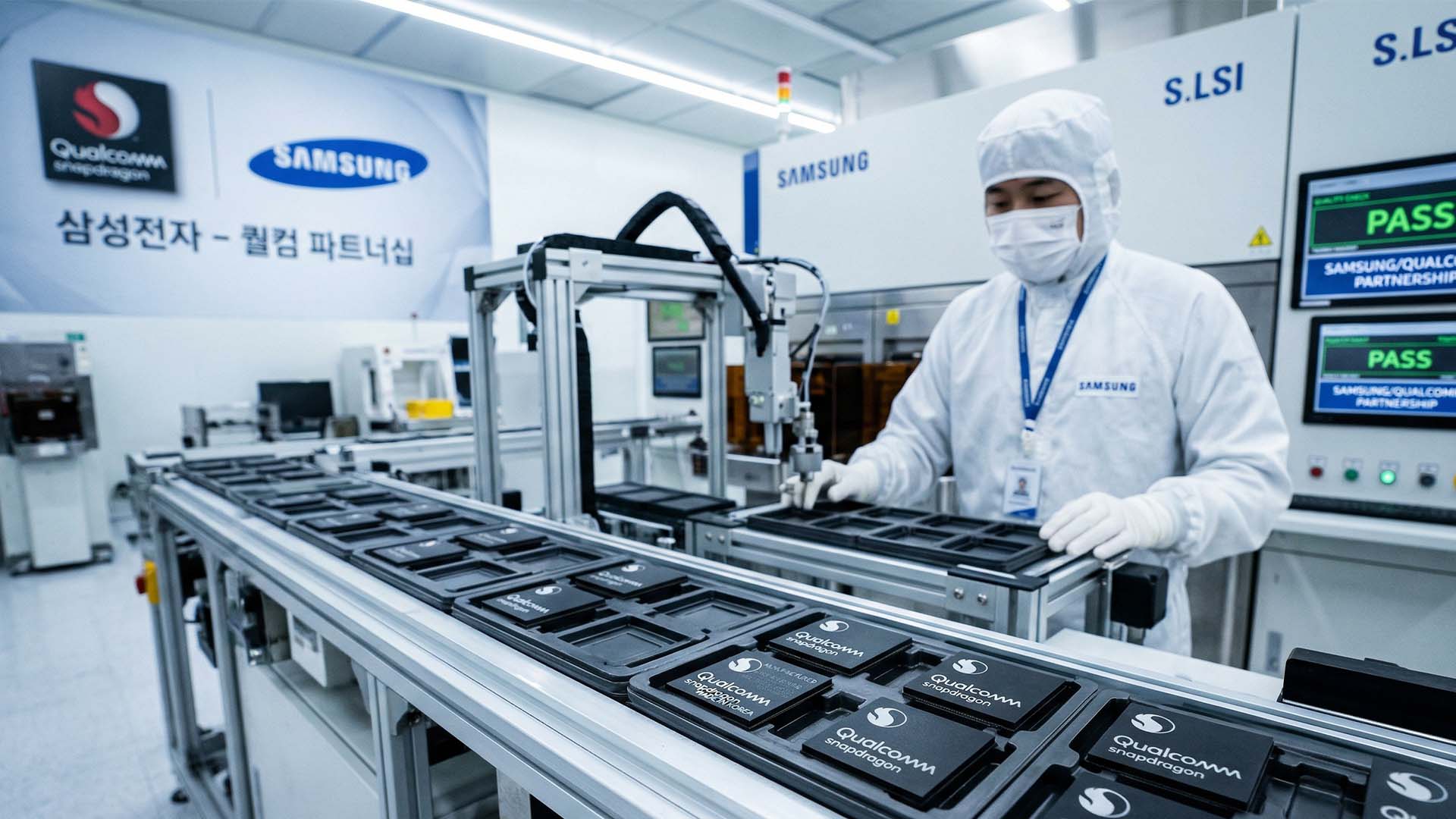
Qualcomm just ghosted Samsung’s 2nm process. Yields? A measly 60%. That’s below the 70% bar the chip designer demands. No deal.
Snap back a bit. Samsung’s been hyping its 2nm GAA node like it’s the next big thing—gate-all-around transistors, promises of power efficiency, the works. But here’s the rub: stability issues are tanking it. Business Korea drops the bomb: Samsung’s Samsung’s 2nm Process can’t reach Qualcomm’s required benchmark, forcing another Snapdragon generation on TSMC’s pricier 2nm ‘N2P’.
“With the 2nm GAA yields at 60 percent, Qualcomm’s benchmark of 70 percent isn’t an impossible goal for Samsung, but can it be achieved?”
That’s the polite way of saying, ‘Not yet, folks.’ And it’s not just talk. We’ve seen this movie before—Samsung’s 3nm GAA debuted with yields in the 20-30% range back in 2022. Took them ages to climb. History rhymes, doesn’t it?
Short answer? Doubtful. Samsung’s got months, maybe, before tape-outs lock in. But TSMC? Their trial 2nm yields also hovered at 60% early on. They scaled it. Samsung? Still grinding.
Why Qualcomm’s Benchmark Matters More Than Samsung’s Spin
Look, Qualcomm isn’t being picky for fun. They’re finalizing Snapdragon 8 Elite Gen 6 and Pro—massive flagships for next year’s Android phones. Switch foundries mid-stream? Chaos. Delays. Exploding costs.
Sticking with TSMC means premium pricing—wafers ain’t cheap at 2nm. But reliability trumps savings. MediaTek flirted with Samsung rumors too. Same story. Everyone’s burned by yield roulette.
Samsung’s pitching dual-sourcing. Smart on paper—diversify from Taiwan’s quake-prone island (geopolitics wink). But words are cheap. Yields don’t lie.
And that Exynos 2700? Samsung’s own 2nm bet for later this year. If they can’t nail it for themselves, good luck snagging Qualcomm.
Punchy truth: This rift exposes Samsung’s foundry Achilles’ heel. They’ve chased TSMC for years—3nm, now 2nm. Always a yield gap.
Can Samsung’s 2nm Actually Hit 70% Yields Before It’s Too Late?
Here’s my bold call, absent from the chatter: No. Not for Qualcomm’s timeline. Remember Intel’s 10nm fiasco? Promised the moon, delivered duds for years. Samsung’s echoing that—overpromise, underdeliver on process tech.
60% yields mean defects everywhere. Chips fail tests. Production crawls. Qualcomm’s not risking a flagship flop because Samsung’s PR says ‘soon.’
TSMC’s N2P? Locked, loaded. Customers flock. Samsung? Demo lines only. A few months to scale? Optimistic. Try quarters.
But wait—TSMC started at 60% too. Why can’t Samsung mirror? Competition’s fierce. Samsung juggles memory fabs, logic, displays. Divided focus kills yields.
Prediction: Qualcomm stays TSMC-exclusive through 2026. Samsung grabs scraps—maybe budget chips. Dual-sourcing? Pipe dream.
Why Does Qualcomm Stick with TSMC Despite the Price Tag?
Premium hurts. But certainty pays dividends.
TSMC’s ecosystem? Unbeatable. Tools, IP, engineers synced. Samsung? Still playing catch-up.
Qualcomm pays up for on-time shipments. No surprises. Samsung’s instability? Russian roulette with billions on the line.
Broader narrative? South Korea’s tech push. Government cash flows to Samsung. But yields don’t care about subsidies.
Dry humor aside: Samsung’s foundry dreams keep getting yield-blocked. Like that friend who swears they’ll quit smoking—next week.
Unique angle—think back to 2018. Samsung poached some Apple orders on 7nm. Yields tanked. Apple bailed to TSMC. Déjà vu.
The Real Cost of Samsung’s 2nm Stumble
Qualcomm’s locked in. MediaTek too, probably. Samsung’s 2nm GAA? Internal use only, for now.
Long-term? Hurts Korea’s chip ambitions. TSMC dominance grows. Geopolitics simmers—US pushes ‘friendshoring,’ but Samsung can’t deliver.
Effort could snag future customers. But Qualcomm? Nah. They’re done waiting.
Wall of hype crumbles. Reality: 60%. Benchmark: 70%. Gap: Fatal.
🧬 Related Insights
- Read more: Gemma 4’s Edge Push: NVIDIA’s Bid to Own Your Local AI
- Read more: AMD’s Ryzen 9 9950X3D2 Dual Edition: 208MB Cache Monster Redefines Gaming Silicon
Frequently Asked Questions
What are Samsung’s current 2nm GAA yields?
Stuck at 60%, per reports. Needs 70% for big clients like Qualcomm.
Will Qualcomm switch Snapdragon production to Samsung?
Unlikely soon. TSMC’s reliability wins, despite higher costs.
How does TSMC’s 2nm compare to Samsung’s?
TSMC’s N2P scaling better; Samsung trails on stability for high-volume chips.