Since the invention of the transistor, computing has been fundamentally electronic, processing information by controlling the flow of electrons through semiconductor circuits. But electrons have limitations: they generate heat, suffer from signal degradation over distance, and face bandwidth constraints in densely packed chips. Photonic computing, which processes information using photons (particles of light) instead of electrons, offers a radically different approach that could overcome these limitations for certain classes of computation. While still in its early stages, photonic computing is attracting significant investment and yielding impressive early results.
Why Light Could Be Better Than Electricity
Photons possess several properties that make them attractive for computation. They travel at the speed of light, obviously, but more importantly, they can carry information across multiple wavelengths simultaneously without interference, a property called wavelength-division multiplexing (WDM). In a single optical waveguide, dozens of independent data channels can operate in parallel using different colors of light, achieving aggregate bandwidths that would require many separate electrical wires.
Photons also consume no static energy when traveling through a waveguide, unlike electrons flowing through a resistive wire. The energy cost of photonic processing is dominated by the light sources and detectors at the endpoints, not by the interconnect itself. For computation tasks that involve moving large amounts of data, this property translates into significant energy savings.
Perhaps most importantly for AI applications, certain mathematical operations that are computationally expensive in electronic circuits can be performed "for free" in the optical domain. Matrix-vector multiplication, the core operation in neural network inference, can be implemented using networks of optical interference devices that compute the result as light propagates through them, consuming minimal energy and completing the operation at the speed of light.
Silicon Photonics: Building Optical Circuits on Chips
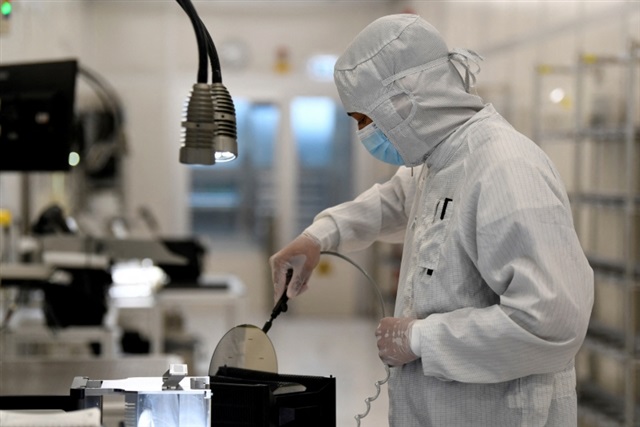
Silicon photonics is the technology that makes integrated photonic circuits practical. By fabricating optical components, waveguides, modulators, photodetectors, and filters, on the same silicon substrates used for electronic chips, silicon photonics leverages the semiconductor industry's existing manufacturing infrastructure. This compatibility with established fabrication processes has been crucial for making photonic devices commercially viable.
The key components of a silicon photonic circuit include optical waveguides (channels that guide light on the chip), ring resonators (circular waveguides that filter specific wavelengths), Mach-Zehnder interferometers (devices that split and recombine light to perform modulation or computation), photodetectors (components that convert optical signals back to electrical signals), and optical modulators (devices that encode data onto light beams).
Intel, a pioneer in silicon photonics, has been shipping silicon photonic transceivers for data center interconnects for several years. These devices convert electrical signals from processors into optical signals for transmission over fiber optic cables, then back to electrical signals at the other end. While this application uses photonics only for communication, it has proven the manufacturability of photonic circuits at scale.
Photonic AI Accelerators
The most exciting application of photonic computing is in AI acceleration, where several startups are building processors that perform neural network inference using light. The fundamental insight is that a matrix-vector multiplication can be implemented using a mesh of optical interferometers, where the matrix values are encoded in the settings of the interferometers and the input vector is encoded as light intensities.
Lightmatter, one of the most prominent photonic computing startups, has developed the Envise chip, which performs AI inference using photonic matrix computation units. The company claims its technology can achieve 10 to 100 times better energy efficiency than electronic AI accelerators for certain workloads. Lightmatter's Passage interconnect technology uses photonic links to connect multiple chips, addressing the bandwidth bottleneck that limits the scaling of electronic AI systems.
Lightelligence, based in Boston, has developed a photonic AI accelerator called Hummingbird that combines photonic matrix computation with electronic digital logic. This hybrid approach uses photonics for the compute-intensive matrix operations while relying on electronics for control logic, memory access, and nonlinear activation functions that are difficult to implement optically.
Luminous Computing and Celestial AI are pursuing related approaches, using photonic technology to address the memory bandwidth bottleneck in AI systems. By using optical interconnects to move data between processing elements and memory at much higher bandwidths and lower energy than electrical interconnects, these companies aim to improve overall system performance even if the core computation remains electronic.
Advantages of Photonic AI Processing
- Energy efficiency: Matrix multiplications consume minimal energy in the optical domain
- Speed: Optical computations complete at the speed of light, with essentially zero latency
- Bandwidth: Wavelength-division multiplexing enables massive parallelism in a single waveguide
- Low heat generation: Photonic circuits produce far less heat than electronic equivalents at high throughput
Current Limitations
- Precision: Optical analog computation typically achieves 4-8 bits of precision, limiting applicability
- Nonlinear operations: Neural network activation functions require conversion to electrical domain
- Memory integration: Photonic circuits cannot easily store data, requiring hybrid approaches
- Manufacturing maturity: Photonic circuit fabrication is less mature than electronic CMOS
- Cost: Low production volumes make current photonic chips expensive
Photonic Interconnects: A Nearer-Term Opportunity
While photonic computing processors remain experimental, photonic interconnects are already entering production. The opportunity here is enormous: data movement between chips, between racks, and between data centers consumes a growing share of total system power and limits the performance of distributed computing systems.
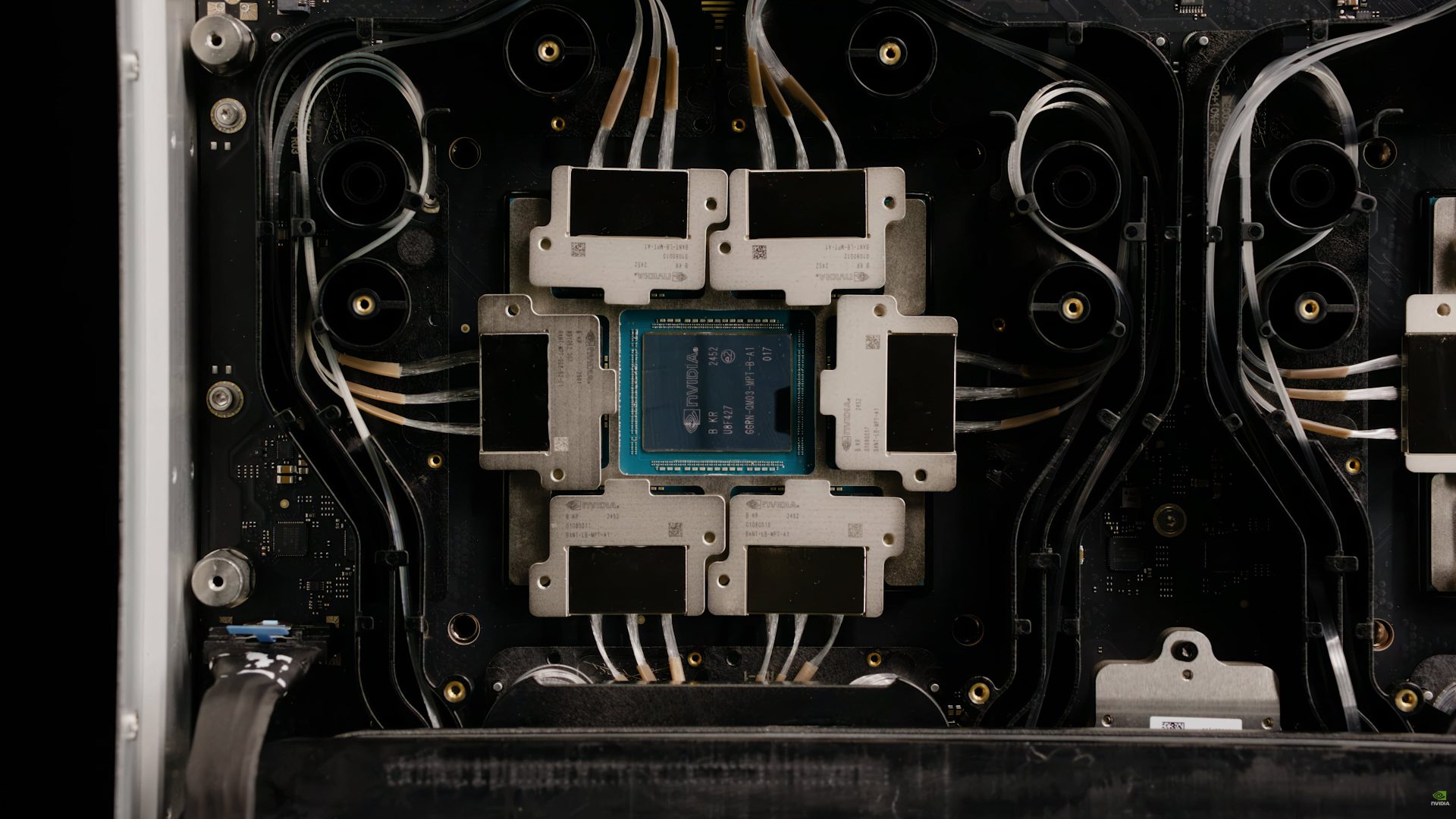
Co-packaged optics (CPO) integrates photonic transceivers directly into the same package as the processor or switch chip, eliminating the energy-hungry electrical connections between the chip and separate optical modules. Companies like Broadcom, Intel, and Marvell are developing CPO solutions for data center switches and AI accelerators. NVIDIA has discussed plans to incorporate photonic interconnects into future GPU platforms.
Ayar Labs, a startup that has attracted investment from Intel, NVIDIA, and other industry leaders, develops optical I/O chiplets that can be integrated into multi-chip packages. These chiplets use silicon photonics to provide chip-to-chip communication at bandwidths exceeding what electrical interconnects can achieve, with lower power consumption and longer reach.
The Road Ahead
Photonic computing faces a classic chicken-and-egg problem. Without volume production, photonic chips remain expensive. Without competitive pricing, volume production is difficult to achieve. Breaking this cycle will likely require a "killer application" where photonic technology's advantages are so compelling that customers accept higher costs for superior performance.
AI inference may be that application. The relentless growth of AI model sizes is straining the energy budgets and bandwidth limitations of electronic systems. If photonic processors can demonstrate a 10x or greater efficiency advantage at acceptable precision levels, the economic case for adoption becomes strong regardless of the manufacturing cost premium.
The integration of photonics and electronics is likely to be gradual rather than revolutionary. Rather than replacing electronic processors entirely, photonic technology will first supplement them, handling data movement and specific compute-intensive operations while electronics manages general-purpose processing, memory, and control. Over time, as fabrication matures and the component library expands, the boundary between photonic and electronic processing may shift further toward light.
Computing with light remains one of the most promising and challenging frontiers in semiconductor technology. The physics is compelling, the early results are encouraging, and the market need is real. Whether photonic computing fulfills its transformative potential will depend on engineering execution, manufacturing scale-up, and the development of software tools that make photonic processors accessible to the broader computing community.