The hum of servers in a hyperscale data center, a silent proof to the insatiable demand for AI processing power. Now, whispers from the supply chain suggest a potential shift in how that power is assembled.
Intel, long playing catch-up in the AI chip race, is reportedly marketing its EMIB-T packaging technology with fervor, aiming to position itself as a viable alternative to TSMC’s dominant CoWoS. The latest intel, courtesy of a UBS analyst note, hints that NVIDIA, a titan in the AI GPU arena, might be a key customer for this nascent Intel offering, specifically for a potential four-chip variant of its forthcoming Rubin Ultra accelerator.
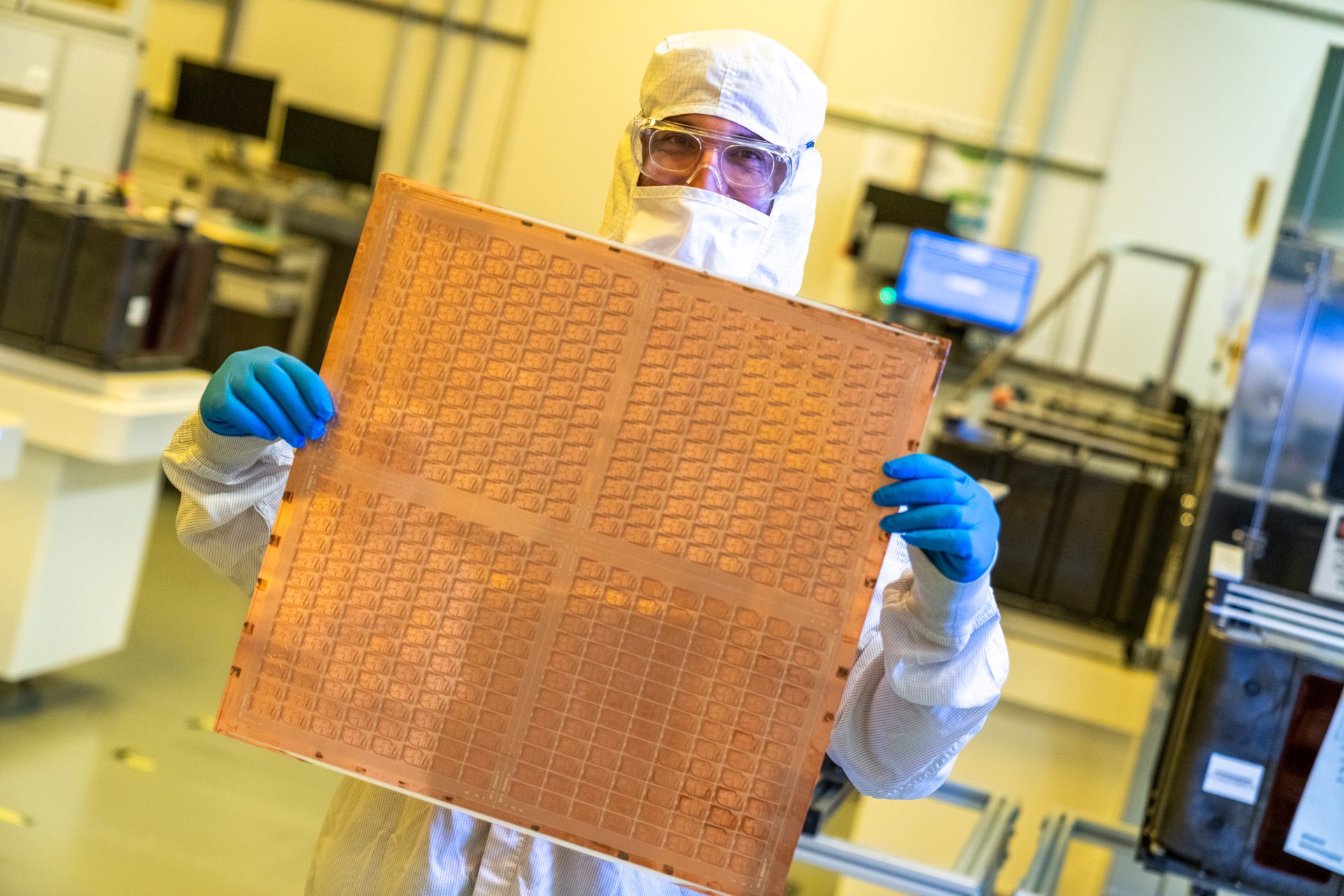
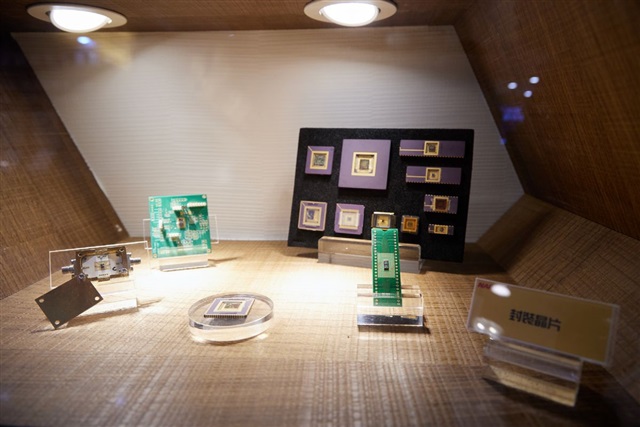
This isn’t just about Intel finding a niche; it’s about a fundamental battleground in semiconductor manufacturing: advanced packaging. Traditionally, TSMC’s CoWoS has been the go-to solution for high-performance, multi-chip designs, enabling complex systems like NVIDIA’s Hopper and Blackwell architectures. But CoWoS isn’t without its challenges, and Intel’s EMIB-T, which utilizes substrates rather than interposers to link chiplets, offers a potential edge. The absence of interposer size constraints means the possibility of fabricating larger, more integrated chip configurations without the usual complexities of stitching together smaller dies.
And that’s where NVIDIA’s strategic calculus enters the picture. UBS points to the critical role of the Rubin AI chips—expected to span into calendar year 2027—in sustaining NVIDIA’s formidable profit margins. The specific SKU mix for the Rubin Ultra, particularly whether NVIDIA opts for two-chip or four-chip versions, could be a deciding factor.
Will Intel’s EMIB-T Secure NVIDIA’s Next-Gen GPUs?
The UBS note outlines this dependency starkly:
We assume gross margin to remain in the ~75% range at least through C2027 (e.g. the Rubin generation) with out-year margins depending to some degree on whether NVDA opts to offer two SKUs for Rubin Ultra (2 chip and 4 chip versions (the 4 chip version likely using INTC’s EMIB-T)).
This isn’t a done deal, mind you. UBS acknowledges this is a speculative play, and broader substrate production capacity will undoubtedly play a role in the scalability of EMIB-T. Yet, the mere consideration underscores the intense competition and innovation swirling around how AI chips are physically constructed.
Furthermore, it’s not just NVIDIA that’s eyeing Intel’s packaging prowess. Google, another major AI hardware player, is reportedly interested in EMIB-T for its Tensor Processing Units (TPUs), provided yield targets can be met, according to analyst Ming-Chi Kuo. This paints a picture of Intel strategically attempting to diversify its customer base beyond its traditional CPU dominance and into the heart of the AI infrastructure supply chain.
My read on this? Intel desperately needs a win outside its core CPU business, and the AI accelerator market is the most lucrative frontier. By offering a compelling alternative packaging solution, they’re not just selling a service; they’re trying to re-engineer their relevance. The EMIB-T gambit, while nascent, represents a tangible strategic pivot. If they can indeed capture a significant portion of NVIDIA’s next-generation packaging needs—especially for the higher-margin, more complex four-chip designs—it could provide Intel with a crucial lifeline and a more substantial stake in the red-hot AI hardware ecosystem. It’s a high-stakes poker game where packaging is suddenly the ante.
The sheer complexity of modern AI chips, demanding ever-increasing density and interconnectivity, forces these design choices. Relying solely on advancements in silicon fabrication (the ‘fabs’) is no longer enough; how those individual silicon pieces—the chiplets—are connected and integrated is becoming just as, if not more, critical. Intel’s move here is less about designing the next killer AI processor and more about controlling the complex ballet of putting the best processors together.
Why Does This Matter for the AI Supply Chain?
This potential partnership between Intel and NVIDIA, if it materializes, has significant implications. For NVIDIA, it offers a potential path to enhanced product differentiation and perhaps even cost efficiencies, depending on EMIB-T’s long-term economics. For Intel, it’s a monumental opportunity to prove its mettle in advanced packaging and insert itself deeper into a market segment dominated by TSMC. The ripple effects could influence pricing, innovation cycles, and even geopolitical considerations related to semiconductor manufacturing dependencies.
The dependency of NVIDIA’s margins on the Rubin Ultra, specifically its configuration, is a stark reminder of how crucial these underlying manufacturing technologies are. It’s not just about the billions of transistors; it’s about the plumbing that connects them.
FAQ
What is EMIB-T packaging? EMIB-T is Intel’s advanced packaging technology that uses substrates to connect chip dies, offering advantages in size flexibility compared to traditional interposer-based methods.
Could this partnership affect NVIDIA’s market dominance? While a partnership could offer NVIDIA manufacturing alternatives and potentially cost benefits, its overall market dominance is driven by its AI software ecosystem and chip architecture, which are unlikely to be immediately disrupted by a packaging shift alone.
Is Intel’s EMIB-T competitive with TSMC’s CoWoS? UBS suggests EMIB-T could be a competitive alternative for specific applications like NVIDIA’s four-chip Rubin variant, but the scalability and yield of EMIB-T remain key factors in its broader competitiveness against TSMC’s established CoWoS technology.