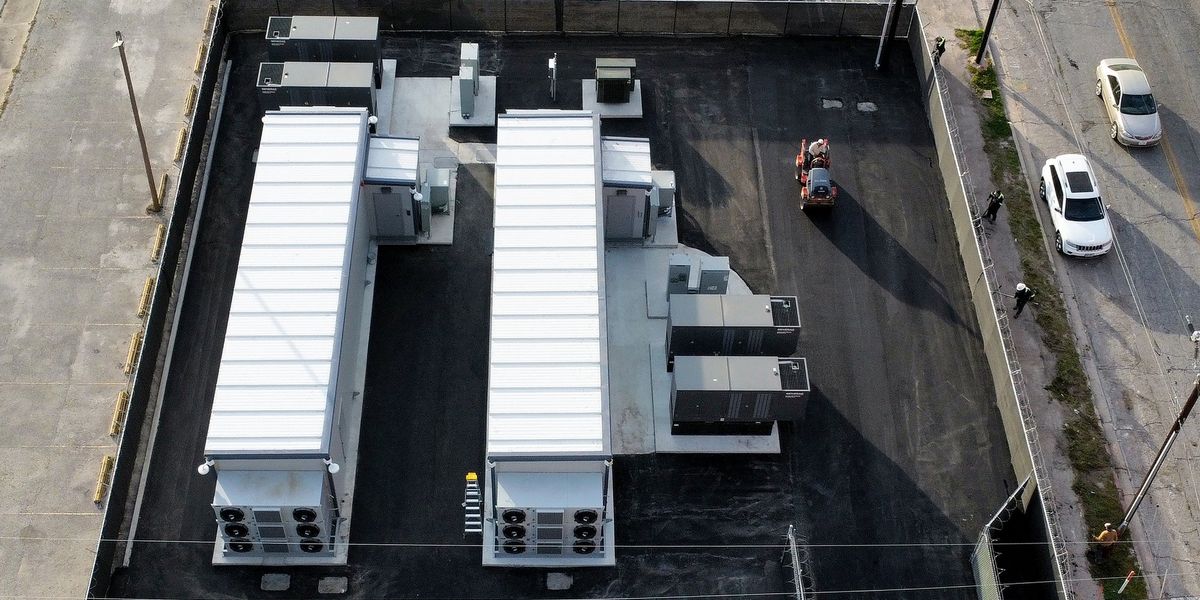
Doug Recker steps off the plane from Nvidia’s GTC, shaking his head at the chatter: everyone’s got GPUs coming, but no place to put them.
These modular AI data centers—truck-sized pods crammed with Nvidia’s hottest GPUs—promise to fix that. Duos Edge AI and LG CNS aren’t waiting for architects or zoning boards. They’re prefab factories churning out self-contained compute beasts that roll up via semi-truck, drop onto a slab, and fire up in months. Facts first: traditional data centers gobble two to three years from blueprint to boot-up, per industry norms. These? Six months, tops. And with AI training workloads exploding—Nvidia shipped over 3.7 million data center GPUs last year alone—the timing couldn’t be sharper.
But here’s the thing. Market dynamics scream urgency. Grand View Research pegs modular data centers doubling to $30 billion-plus by 2030. Why? GPU scarcity’s over; deployment bottlenecks aren’t. Recker nailed it at GTC: companies sit on hardware stacks because sites lag.
Why Truck Your Data Center?
Speed. Cost. Flexibility.
Pour a concrete pad—done in weeks. Truck in the pod: 55 feet long, 12.5 wide, loaded with racks of H100s or whatever Nvidia’s shipping. Wire it up, cool it with liquid loops, and you’re inferencing. Duos just locked a deal with Hydra Host: four pods, 576 GPUs each. That’s 2,304 cards total, scalable to 9,000+. Power draw? Five megawatts for $25 million—half the per-megawatt rate of behemoth facilities, Recker claims.
Smaller scale dodges red tape, too. No mega-permits for grid-straining giants; locals warm to these ‘edge’ setups. Duos cut teeth on rural schools—like Amarillo, Texas—now juicing them for AI.
“I just came back from Nvidia’s GTC, and a lot of [companies] are sitting on their deployment because their data centers aren’t ready, or they can’t find the space,” said Doug Recker, CEO of Duos Edge AI. “We see the demand there, and we can deploy faster.”
Spot on. And across the Pacific?
LG CNS: Scaling Pods to Stadium Size
Korea’s LG isn’t messing around. Their AI Modular Data Center mirrors Duos: 576 GPUs per unit, Nvidia-powered, liquid-cooled. But Busan’s their playground—up to 50 units, over 28,000 GPUs total. That’s hyperscaler territory in a parking-lot footprint.
Heon Hyeock Cho, LG CNS VP, boasts an expanded version hitting 4,600 GPUs per pod this year. Deployment? Port city perks—power nearby, fiber ready. No concrete fortress needed; just pads and plugs.
Recker likens it to school buses in a lot. “Everything is built off-site at a factory, and we can put it together like a jigsaw puzzle.” Power modules tag along, fiber daisy-chains them redundant. Boom—cluster online.
Can These Pods Actually Handle AI Workloads?
Short answer: yes. Upgraded racks, denser packing, immersion cooling—same tech as xAI’s Memphis monster or Microsoft’s cabins. But modular’s edge is iteration. Swap pods for next-gen chips without rebuilding.
Here’s my unique take, absent from the hype: this echoes Malcolm McLean’s 1956 shipping container revolution. Back then, standardized boxes slashed loading times 90%, turbocharging global trade from $60 billion to trillions. These AI pods? They’ll flood compute capacity, undercutting cloud giants’ moats. AWS, Azure—watch margins compress as enterprises truck in private clusters for $12-15 million per gigawatt saved. Bold prediction: by 2027, 20% of new AI infra deploys modular, straining grids but exploding model training velocity.
Skeptical? Fair. Site prep’s the wildcard—permits lag even at 60-90 day fab speeds. And power. Five megawatts per handful of pods? Utilities groan nationwide. Virginia’s data center boom already sparked blackouts; imagine trucked-in sprawl everywhere.
Yet value stacks up. Duos halves costs targeting sub-50MW sites—less NIMBY backlash, faster ROI. HPE, Vertiv, Schneider pile in; market’s frothing.
The Grid Crunch Ahead
Modular solves deployment, ignites another fire: electricity. Each pod guzzles like a small factory. Busan’s 50-unit dream? 250MW beast. U.S. equivalents pop near substations—under the radar, as Recker says.
Local pushback fades for ‘temporary’ setups, but scale them, and moratoriums hit. Still, it’s smarter than mega-builds. Start small, prove loads, expand.
Corporate spin? LG’s ‘within this year’ 4,600-GPU pod smells aggressive—supply chains choke on Blackwell ramps. Duos’ half-cost claim? Verify via contracts, but logic holds for edge plays.
Bottom line: bullish bet. AI’s compute famine ends not with bigger shells, but wheeled ones. Enterprises grab poles; clouds retrofit or lose share.
🧬 Related Insights
- Read more: ASE’s $3.4 Billion Shovel in Renwu: Testing the Limits of Taiwan’s Chip Ambitions
- Read more: AdaniConneX’s Gigawatt Bet: Can India Power the AI Gold Rush?
Frequently Asked Questions
What are modular AI data centers?
Truck-sized, prefab enclosures packed with GPU racks, cooling, and power—deploy in months on a concrete pad, scalable by adding units.
How fast can you deploy truck-sized AI data centers?
About six months total, including site prep; pods build in 60-90 days, but permits can bottleneck.
Will modular AI data centers overload power grids?
Likely in clusters—five MW per few pods adds up fast, but smaller scale eases approvals versus traditional giants.