AI grids are exploding.
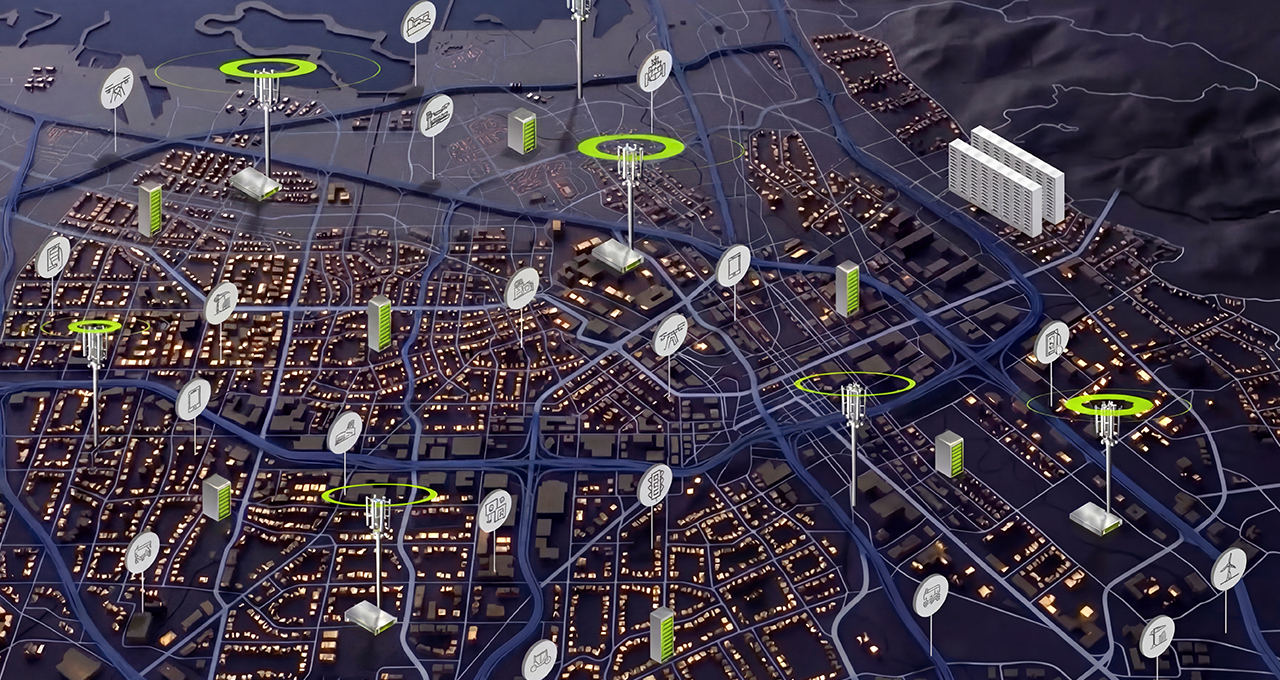
Picture this: vast telecom networks, those invisible webs snaking under cities and across oceans, suddenly pulsing with AI brains. Not tomorrow—right now, at NVIDIA GTC 2026, giants like AT&T, Comcast, and T-Mobile unveiled AI grids, turning their distributed edge sites into inference powerhouses. It’s like upgrading from dial-up to fiber optic superhighways for AI, shoving smarts right next to your phone, factory sensor, or delivery drone.
And here’s the kicker— they’ve got 100,000 mini-data centers worldwide, spare power for 100 gigawatts of AI muscle. That’s enough juice to light up entire nations’ worth of Blackwell GPUs. No hype; this is structural steel being poured for AI’s next era.
Global Operators Wire Up AI Grids
AT&T’s diving in first, teaming with Cisco and NVIDIA for IoT domination. Over 100 million connections? They’re pushing AI inference to the edge for public safety apps—think instant alerts from cameras, data never leaving your turf.
“Scaling AI services that are both highly secure and accessible for enterprises and developers is a core pillar of our IoT connectivity strategy,” said Shawn Hakl, senior vice president of product at AT&T Business. “By combining AT&T’s business‑grade connectivity, localized AI compute and zero‑trust security while working with members of the NVIDIA Inception program and harnessing Cisco’s AI Grid with NVIDIA infrastructure and Cisco Mobility Services Platform, we’re bringing real‑time AI inference closer to where data is generated — accelerating digital transformation and unlocking new business opportunities.”
Boom. Real-time, secure, edge-born intelligence. But AT&T’s just the opener.
Comcast? They’re crafting hyper-personalized worlds—conversational agents that don’t lag during Netflix binges or gaming spikes. Paired with NVIDIA, Decart, and HPE, their broadband beast delivers lower costs per token, higher throughput. Imagine your TV ad whispering secrets tailored just for you, computed milliseconds away.
Spectrum’s no slouch: 1,000 edge centers, megawatts humming <10ms from 500 million devices. First up? Hollywood-grade graphics rendering over fiber. Directors yelling “cut” from LA, pixels birthing in Brooklyn.
Why Do AI Grids Crush Centralized Clouds?
Central clouds? Yesterday’s news. They’re fat, distant elephants slurping power in Reno deserts while your drone in Dallas starves for inferences.
AI grids scatter the brains—like neurons firing across your skull, not a single bloated mainframe. Response times plummet, costs dive (cheaper tokens where data lives), and telcos monetize dormant real estate. Akamai’s already at it: 4,400 edges, thousands of RTX PRO 6000 Blackwell GPUs orchestrating requests like a DJ matching beats to crowds.
Indosat in Indonesia? Sovereign AI factory linked to edges and AI-RAN, powering Bahasa chatbots for island-hoppers. Culturally tuned, compliant, fast—no Beijing servers peeking.
T-Mobile’s piloting with robotics and smart cities—robots dodging traffic via edge smarts. This isn’t incremental; it’s telcos grabbing the AI delivery wheel from hyperscalers.
My bold call: remember the PC revolution? Mainframes ruled until distributed chips democratized compute. AI grids do that for inference—telcos snag 40% market share by 2030, hyperscalers scrambling as edges eat their lunch. (NVIDIA’s PR spins ‘partnerships,’ but let’s call it: CUDA’s the glue, Blackwell the nitro.)
Short para. Wild.
How NVIDIA’s Blackwell GPUs Turbocharge the Edge
Blackwell Server Editions? Beasts in shoebox sites. RTX PRO 6000s handle inference spikes without melting central offices. AI-RAN weaves AI into radio waves—base stations thinking, not just beaming.
Operators mix paths: light up wired edges now, layer AI-RAN later. Result? Grids for gaming (GeForce NOW), media, finance ticks, retail personalization. Low-latency? Check. Economical? Double check.
But wait—spare power’s gold. 100GW untapped? That’s hyperscaler envy. Telcos, long the dumb pipes, now the smart grid overlords.
And the wonder: agents swarming cities, IoT eyes watching without Big Brother clouds. Real-time public safety? Robots serving burritos? Indonesia’s startups building local LLMs? It’s AI as utility, not luxury.
One hitch—they’ll need orchestration wizardry to avoid gridlock. Akamai’s platform hints at it, matching jobs to GPU tiers. Scale wrong, and it’s traffic jam central.
Will Telcos Dominate AI Inference Markets?
Yes. But skeptically: Comcast’s gaming wins scream revenue, yet monetizing 100,000 sites? Herculean. Still, distributed edges beat mega-Watt chokepoints—physics favors proximity.
Unique twist: this echoes railroads becoming internet backbones in the ’90s. Telcos laid tracks; now they run the AI express. NVIDIA? The locomotive supplier printing money.
Energy surges. Pace quickens. Future? Yours, computed nearby.
🧬 Related Insights
- Read more: Tower’s Laser Chip Promises DWDM Magic for AI Racks—Hype or Hardware Hero?
- Read more: NVIDIA’s Omniverse Gambit: Selling Simulations to Power the Robot Future
Frequently Asked Questions
What are NVIDIA AI grids?
AI grids are telecom networks transformed into distributed AI compute platforms, using edge sites for low-latency inference powered by NVIDIA GPUs.
How do telcos build AI grids?
By deploying NVIDIA Blackwell GPUs in existing central offices and edges, integrating AI-RAN, and partnering for orchestration—like AT&T with Cisco.
Will AI grids replace cloud providers?
Not fully, but they’ll dominate edge inference, cutting costs and latency for real-time apps while telcos monetize their infrastructure.