Double the cost. Double the efficiency?
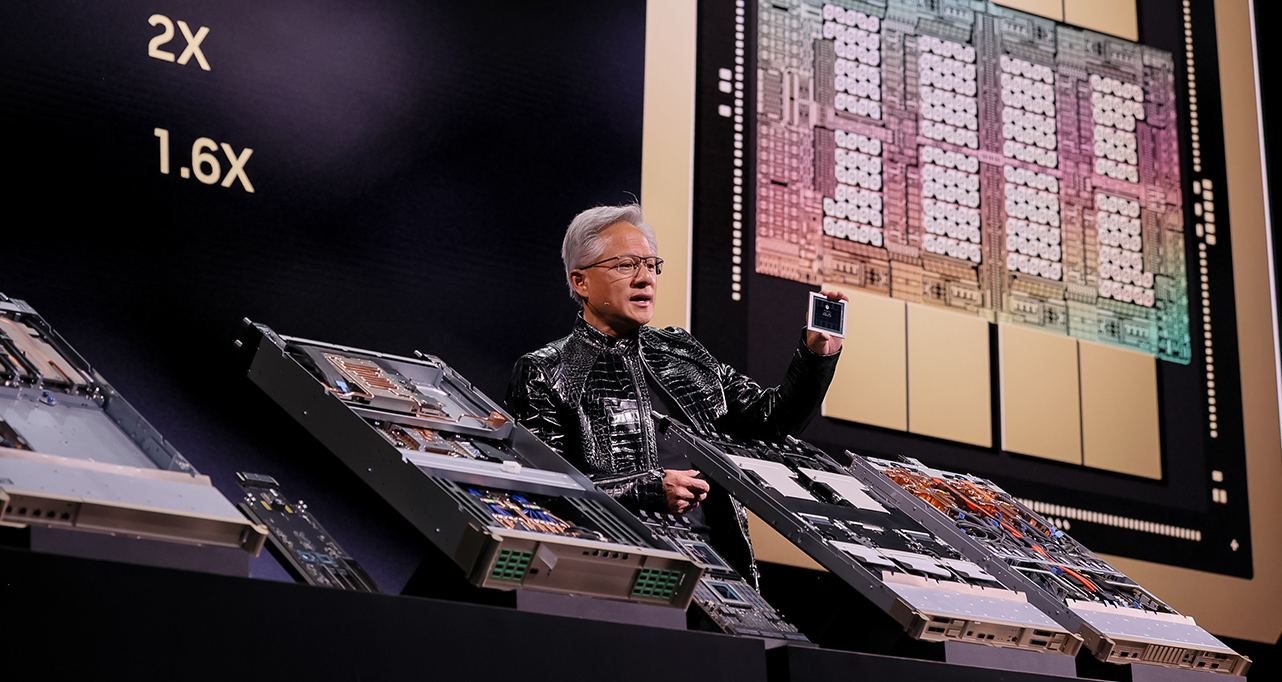
NVIDIA’s Blackwell GPUs are here, and they’re not cheap. Morgan Stanley has dropped a note suggesting that while outfitting a data center with these new chips will run hyperscalers roughly twice the bill as using custom silicon from giants like Google and Amazon, the sheer computing power per watt makes it a worthwhile investment. It’s a classic trade-off in the AI arms race: pay a premium for top-tier performance, or bet on in-house optimization.
The Watt-for-Watt Showdown
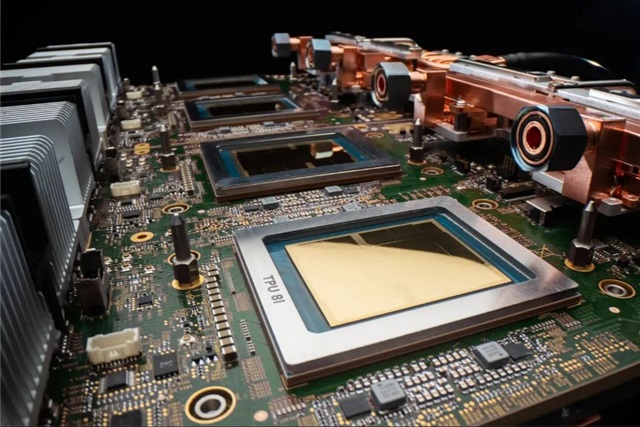
The core of Morgan Stanley’s argument hinges on raw computational efficiency. Their analysis compares the TFLOPS per Watt across NVIDIA’s latest offerings—including the Vera Rubin and GB300 chips, alongside the stalwart H100—against Google’s TPUs and Amazon’s Trainium ASICs. The findings are stark: NVIDIA’s custom silicon, particularly in its more advanced configurations, reportedly blows the competition out of the water, delivering anywhere from 2x to an astonishing 8x the performance per watt. This metric is crucial for data center operators where power consumption translates directly into operational costs and environmental impact.
According to Morgan Stanley’s estimates, the performance per Watt of the NVIDIA chips is “2x-8x ahead of custom ASICs.”
When you unpack this, it means that for every watt of electricity consumed, NVIDIA’s Blackwell architecture is churning out significantly more calculations. This isn’t just a technical curiosity; it directly impacts the total cost of ownership over a chip’s lifespan. A more efficient chip can reduce cooling requirements, power infrastructure needs, and ultimately, the monthly electricity bill for a massive AI data center. So, even if the initial sticker price is higher, the long-term operational savings could, in theory, make up the difference.
But Is Performance Per Watt the Only Metric?
Here’s where the narrative gets interesting, and frankly, a bit more human. While Morgan Stanley’s data-driven analysis paints a clear picture of raw processing power, the real world of AI deployment is more nuanced. The report itself introduces a critical counterpoint, highlighting that other industry players are looking beyond TFLOPS per Watt.
Consider the cost per million tokens generated. This metric, as pointed out by an expert from AI infrastructure provider Nebius, reflects the actual cost of running AI models, particularly large language models (LLMs). Here, NVIDIA’s Blackwell chips are reportedly commanding a higher price per token—around 25 cents—compared to competitors like Groq, which are supposedly in the 5-10 cent range. Furthermore, Groq’s chips are also touted as processing significantly more tokens per second (800 vs. NVIDIA’s 450).
This discrepancy is a significant piece of the puzzle. It suggests that while NVIDIA may be king of raw, power-efficient computation, it might not be the most cost-effective solution for every single AI workload, especially those centered on rapid text generation. This divergence in evaluation metrics—compute efficiency versus cost per output—is a classic Silicon Valley dance. Companies aim to optimize for the metric that best serves their primary business model, and users then choose based on their specific needs and budget.
A Blast From the Past: The GPU vs. ASIC Wars
This isn’t exactly new territory. We’ve seen this GPU versus ASIC debate play out before. For years, NVIDIA GPUs were the go-to for everything from gaming to scientific computing, and crucially, early AI research and development. Their flexibility and programmability made them ideal for experimentation. Then came the rise of ASICs – Application-Specific Integrated Circuits – designed from the ground up for very particular tasks. Google’s TPUs are a prime example, built to accelerate machine learning workloads specifically.
The market has often oscillated. When ASICs become dominant for certain tasks, NVIDIA pushes the boundaries of its GPUs, making them more specialized and efficient, thereby winning back market share. The current situation with Blackwell feels like NVIDIA’s latest aggressive counter-offensive. They’re betting that their architectural advancements can outpace the specialized efficiency gains of ASICs, at least on a performance-per-watt basis. It’s a high-stakes gamble, and Morgan Stanley’s endorsement is a significant win for NVIDIA’s PR machine, but the market will ultimately decide.
My unique insight here is that this isn’t just about raw silicon prowess; it’s about NVIDIA’s masterful narrative control. They’ve consistently positioned their GPUs as the indispensable engine of AI progress. While ASICs offer targeted efficiency, NVIDIA sells a vision of ubiquitous AI acceleration. Their ability to command premium pricing, even when custom solutions appear cheaper on an output basis, speaks volumes about brand equity and the perceived longevity of their platform. It’s less about being the cheapest and more about being perceived as the ‘best’ or ‘most future-proof.’
The Road Ahead for AI Infrastructure
So, what does this mean for the future of AI infrastructure? It suggests a bifurcated market is likely to persist. Hyperscalers and large enterprises with the resources to develop and deploy custom ASICs will continue to do so for their most high-volume, predictable workloads, aiming for maximum cost efficiency. However, for cutting-edge research, rapidly evolving AI models, and applications where flexibility and raw power are paramount, NVIDIA’s Blackwell might remain the undisputed champion, despite the hefty price tag.
The debate over AI chip costs and performance is far from over. As models grow more complex and data volumes explode, the demand for both raw compute power and cost-effective inference will only increase. NVIDIA has certainly made a bold statement with Blackwell, and Morgan Stanley’s validation lends significant weight to their claims. But the whispers from Nebius and the continued development of custom silicon indicate that the competition is only getting fiercer. It’s a complex ecosystem, and the “best” solution will continue to be context-dependent.
🧬 Related Insights
- Read more: AWS’s Trainium Lifeline: Will Amazon’s Custom Chips Rescue Its AI Laggard Status?
- Read more: [Leak] Intel Nova Lake: 52 Cores to Crush AMD 3D V-Cache
Frequently Asked Questions
What is NVIDIA Blackwell? NVIDIA Blackwell is the latest generation of NVIDIA’s GPU architecture designed for accelerated computing and AI workloads. It promises significant improvements in performance and efficiency over previous generations.
Why are NVIDIA’s new AI chips so expensive? The high cost is attributed to the advanced technology, increased complexity, and the significant research and development investment required to create these powerful AI accelerators. NVIDIA also aims to capture value from the unprecedented demand for AI computing power.
Will custom AI chips from Google and Amazon replace NVIDIA GPUs? It’s unlikely they will completely replace NVIDIA GPUs. Custom ASICs offer specialized performance and efficiency for specific tasks, making them cost-effective for certain workloads. However, NVIDIA GPUs’ versatility and broad ecosystem continue to make them essential for many AI applications and research.