DOE’s AI supercomputing blitz.
Nvidia and Oracle are dropping seven new supercomputers on the Department of Energy— including its largest ever. Picture this: 100,000 Blackwell GPUs in one machine, Solstice at Argonne National Lab, wired up with a 10,000-GPU sidekick called Equinox. Together? 2,200 exaFLOPs of AI muscle. That’s not just bigger; it’s a architectural leap, shifting from traditional HPC crunching numbers to agentic AI that supposedly thinks like a scientist.
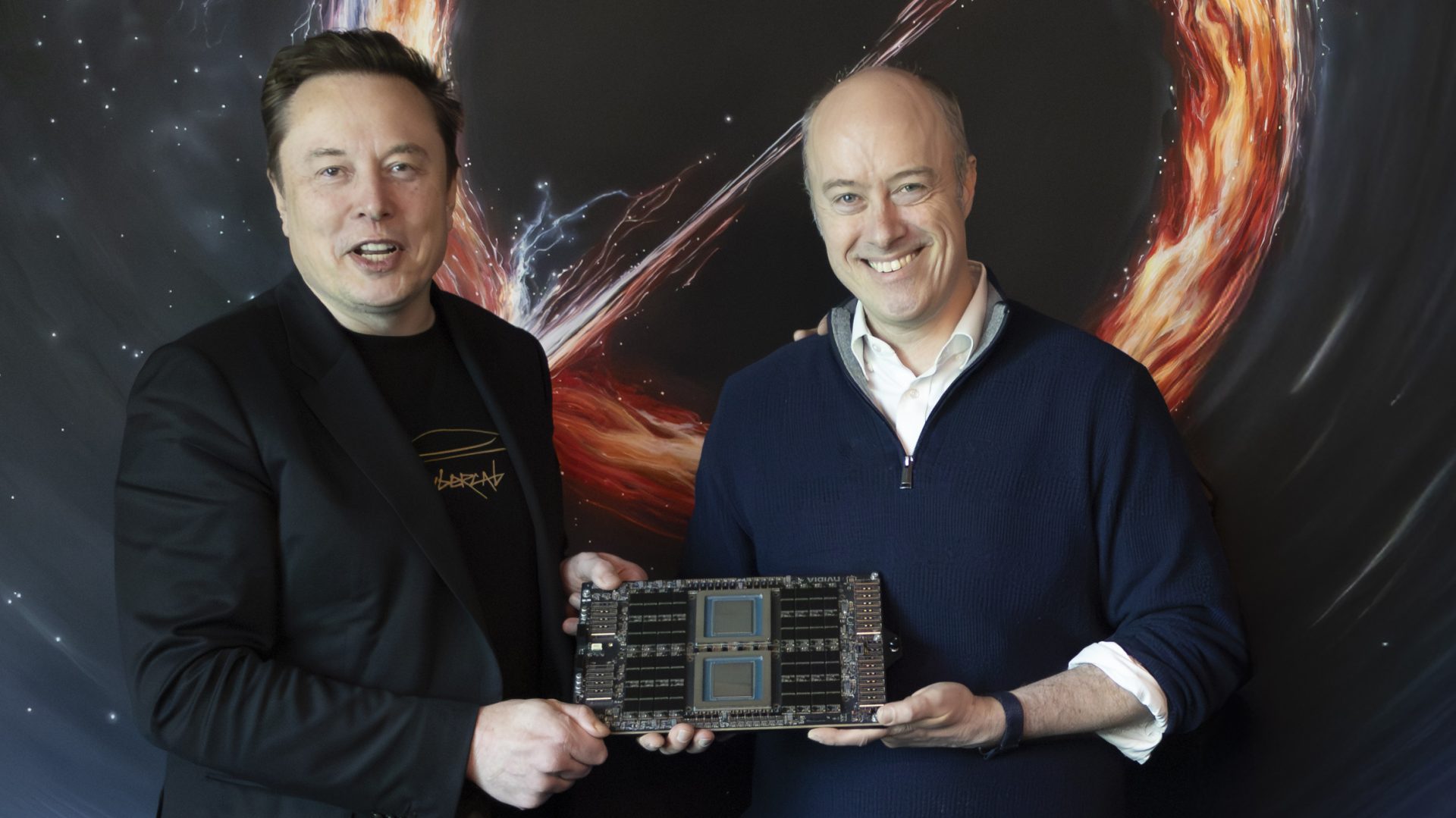
Jensen Huang laid it out at GTC: Nvidia’s annual love-fest for GPUs. He’s teaming with Oracle—yes, the database giant pivoting hard into cloud AI—to build this monster for Argonne in Illinois. Why Argonne? It’s DOE’s AI frontier lab, already pushing boundaries in simulations that mimic everything from fusion reactors to protein folds.
“Together with Oracle, we’re building the Department of Energy’s largest supercomputer that will serve as America’s engine for discovery, giving researchers access to the most advanced AI infrastructure to drive progress across fields ranging from healthcare research to materials science,” Huang said.
Bold words. But here’s my unique angle: this echoes the Manhattan Project’s computing pivot in the 1940s—when IBM punched cards for bomb simulations, birthing modern supercomputing. Back then, it was raw flops for physics; now, it’s Blackwell’s tensor cores chasing ‘agentic’ AI agents that hypothesize, test, iterate. The how? Nvidia’s NVLink fabrics stitching these GPUs into a single, humming beast—zero-copy data flows, no bottlenecks. The why? DOE wants R&D productivity exploding within a decade, taxpayer dollars fueling AI that discovers on its own.
Why Pour Billions into Argonne’s Solstice and Equinox?
Solstice isn’t solo. Link it to Equinox—another 10,000 Blackwells—and you’ve got DOE’s biggest AI cluster. Expected online? Equinox hits next year; Solstice, who knows—timelines vague as ever in these megaprojects. Architectural shift here screams intent: Blackwell’s not Hopper 2.0. It’s transformer-engine optimized, FP4 precision slashing memory walls, letting massive models train without melting the grid.
But agentic AI? Nvidia’s pitching these as “agentic scientists.” Vague buzzword salad—means AI agents that plan experiments, sift data, propose hypotheses. Cool in theory. Argonne’s adding Tara, Minerva, Janus too—Nvidia-powered, open to remote researchers. Expand access, sure. Yet accuracy plagues agents today; they hallucinate like drunk grad students. DOE betting big before fixing that?
Skeptical? Damn right. Corporate hype screams from Huang’s stage. Remember Frontier, DOE’s current exascale champ? It’s simulated climate models that actually work. Agentic AI feels like bolt-on buzz, not core rethink.
A single question haunts: power draw.
Los Alamos Joins the Nvidia Frenzy—But Why Vera Rubin?
Los Alamos won’t sit idle. New Mexico’s nuke lab snags two Vera Rubin systems—DGX-based, courtesy HPE’s Cray GX5000—in 2027. Vision for unclassified work: national security sims, materials, nukes, biomed. Mission? Classified, replacing Crossroads. LANL director Thom Mason calls them “purpose-built for supercomputing in the AI era.”
Vera Rubin—Nvidia’s next-gen after Blackwell—promises even denser inference. How? Grace-Blackwell Superchips fused with next CPUs, liquid-cooled for density. Why split architectures? Argonne gets Blackwell scale; LANL mixes Rubin for classified edge. It’s DOE hedging bets, architecturally: one lab for open science, another for black-box security.
Venado, LANL’s fresh Nvidia system from last year, paved this. Vision builds on it—though details fuzzy. Mission swaps Crossroads, online since ‘23. HPE’s role? Their Slingshot networks glue it, low-latency for agent swarms.
Is Agentic AI Ready for Prime Time in Science?
Agentic hype dominates. DOE wants these rigs boosting discovery—healthcare to materials. But underlying flaw: AI agents excel at trivia, flop on novel science. They chain tools poorly, confidence scores lie. Nvidia glosses this, promising productivity leaps.
Historical parallel? Cray-1 in the ’70s turbocharged CFD for NASA. Flops mattered. Today, exaFLOPs alone won’t cut it—need reliable agency. My prediction: by 2030, these deliver incremental wins in protein design, but true autonomy? Still sci-fi. Energy hogs too—100k GPUs could suck 100MW, rivaling small cities. DOE’s grid-ready?
Oracle’s cloud twist fits. They’re not just hardware; OCI integrates, OCI Supercluster vibes. Why them over AWS? Probably Nvidia favoritism—Huang’s ecosystem lock-in. Skepticism peaks here: is this science or US-China AI arms race proxy?
Three more at Argonne.
Tara, Minerva, Janus—details scarce. Open access expands DOE’s AI reach, letting under-equipped labs tap in. Smart. But Solstice’s scale dwarfs—100k GPUs is enterprise AI on steroids, repurposed for science.
Why Does This Matter for US Science Supremacy?
Geopolitics simmers under. China builds its own exaFLOPs monsters; DOE counters with Blackwell/Rubin hegemony. Architectural why: US fabs TSMC Arizona ramping Blackwell, but Nvidia’s moat is software—CUDA owns training stacks. Agentic push accelerates that lead, or wastes it on unproven agents.
Critique PR spin: Huang’s “engine for discovery” ignores pitfalls. Agent accuracy unsolved; power unsustainable. Bold bet, though—could redefine DOE labs like Summit did ML.
🧬 Related Insights
- Read more: NVIDIA’s Isaac Gambit: 90% Synthetic Data by 2030, But Robots Still Stumble in the Real World
- Read more: NVIDIA RTX PRO 6000 Blackwell Workstation: Desk-Side AI Power or Overhyped Desk Filler?
Frequently Asked Questions
What are Nvidia and Oracle building for the Department of Energy?
Seven AI supercomputers, led by Argonne’s 100,000-Blackwell-GPU Solstice and 10,000-GPU Equinox, totaling 2,200 exaFLOPs. Los Alamos gets two Vera Rubin systems in 2027.
When will DOE’s new supercomputers come online?
Equinox at Argonne next year; Solstice timeline TBD. Los Alamos’ Vision and Mission targeted for 2027.
What is agentic AI in DOE supercomputing?
AI systems that act autonomously—like virtual scientists—hypothesizing, experimenting, accelerating R&D in fields from materials to biomed.