The whole place is humming. Not the gentle thrum of a well-oiled machine, but the strained growl of an engine pushed past its limits. Gigascale AI training, we’re told, is the future. It’s also apparently a giant, power-hungry beast about to break everything. The supposed experts — Ampace and Eaton, naturally, in a sponsored yarn — are trotting out a solution. Because of course they are.
Here’s the thing. These AI behemoths, with their synchronized GPU bursts, don’t just sip power; they gulp. And they do it in fits and starts, creating these wild, high-frequency spikes that are apparently too much for the grid. It’s a “power paradox”: digital logic zipping ahead, while the physical plumbing lags behind, creaking under the strain. Traditional backup generators? Useless. They can’t react fast enough. So, what do you do? Over-engineer everything to the nines, burning cash to buffer chaos.
Is This Just More Corporate Hype?
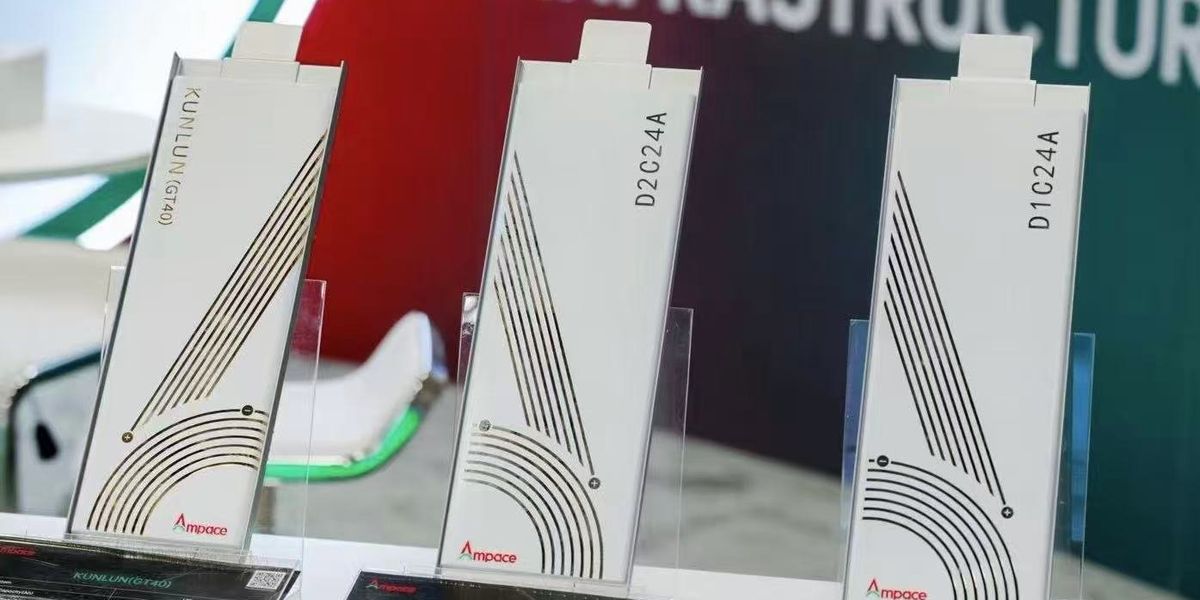
Ampace, bless their hearts, claims their semi-solid-state batteries are the answer. They’re calling them “shock absorbers.” Cute. The idea is that these batteries can soak up those millisecond power surges, stabilizing the local loop before the whole mess cascades upstream to the grid or your fancy diesel backup. It’s a step up from just having a battery sit there, waiting for the lights to go out. This is about active stabilization. Think of it less as an emergency parachute and more as a race car’s suspension system, smoothing out the bumps before they wreck the chassis.
The real bottleneck is no longer just the thermal limit of the chip or the capacity of the cooling system — it is the dynamic resilience of the power chain.
Of course, Ampace isn’t doing this alone. They’ve partnered with Eaton, the folks who make UPS systems. Together, they’re pitching a unified front: battery tech meets sophisticated power management. It’s the classic tech industry dance: a hardware innovation paired with a software/system overlay to make it sound even more impressive. It’s not just about the battery; it’s about the “algorithmic intelligence” orchestrating the whole thing. Fancy words for telling the battery when to do its thing and when to save juice for a real emergency.
The “Shock Absorber” Physics: Semi-Solid Chemistry for AI Pulses
Conventional power systems were built for a world where electricity demand was… predictable. Like your grandma’s casserole recipe. AI training is less casserole, more spontaneous combustion. Thousands of GPUs firing at once create these jarring voltage dips and frequency wobbles. Ampace’s semi-solid cells, with their supposed ultra-low internal resistance, are meant to absorb this madness. High cycle capability is key here. These things will be doing this dance constantly, so they can’t degrade after a few thousand jolts. The goal is to keep those 100 kW+ racks humming without sending seismic waves through the rest of the infrastructure.
It’s a neat idea, assuming it actually works. The challenge, as always, is scaling. Can these batteries handle the sheer volume and ferocity of energy demands in truly gigascale deployments? Or is this just a stopgap measure, a temporary band-aid on an ever-growing wound?
Why Does This Matter for Data Centers?
This isn’t just a technical curiosity. If AI training truly is the future, and it’s choking on its own power demands, then solutions like this aren’t optional; they’re existential. Data center operators are already grappling with staggering energy costs and the environmental impact of these massive compute farms. Anything that promises to improve efficiency, reduce waste, and enhance reliability is worth paying attention to. The promise here is that by smoothing out the power spikes, you avoid the costly cycle of over-provisioning and grid strain. It’s about making AI training more sustainable — both financially and physically.
But let’s not get ahead of ourselves. This is a sponsored article, after all. Ampace and Eaton have a vested interest in presenting their joint solution as the silver bullet. The real test will be in the widespread adoption and real-world performance. Will this technology be strong enough? Will it scale? Or will we be back here in a few years, talking about the next physical paradox of AI training?
Algorithmic Intelligence: Synchronizing Energy and Control
Hardware alone is never the full story. Ampace’s battery management system (BMS) is designed for high-speed sampling, keeping tabs on the battery’s state-of-charge even during those frantic, shallow cycles AI workloads are known for. Eaton’s contribution comes in the form of intelligent UPS features like ramp-rate control. These algorithms are designed to suppress the oscillations that occur when power demands fluctuate wildly. The objective: to buffer the rapid-fire energy demands without sacrificing essential emergency backup power. It’s about turning a passive backup system into an active participant in managing the grid’s health, ensuring that AI training doesn’t become the digital equivalent of a city-wide blackout.
This integrated approach is what Ampace and Eaton are betting on. They envision a future where energy storage isn’t just a safety net but an intelligent component of the power infrastructure, actively contributing to stability and efficiency. If they pull it off, it’s a significant step forward. If not, well, we’ll just have to find another company to write a sponsored article about the next big power crisis.