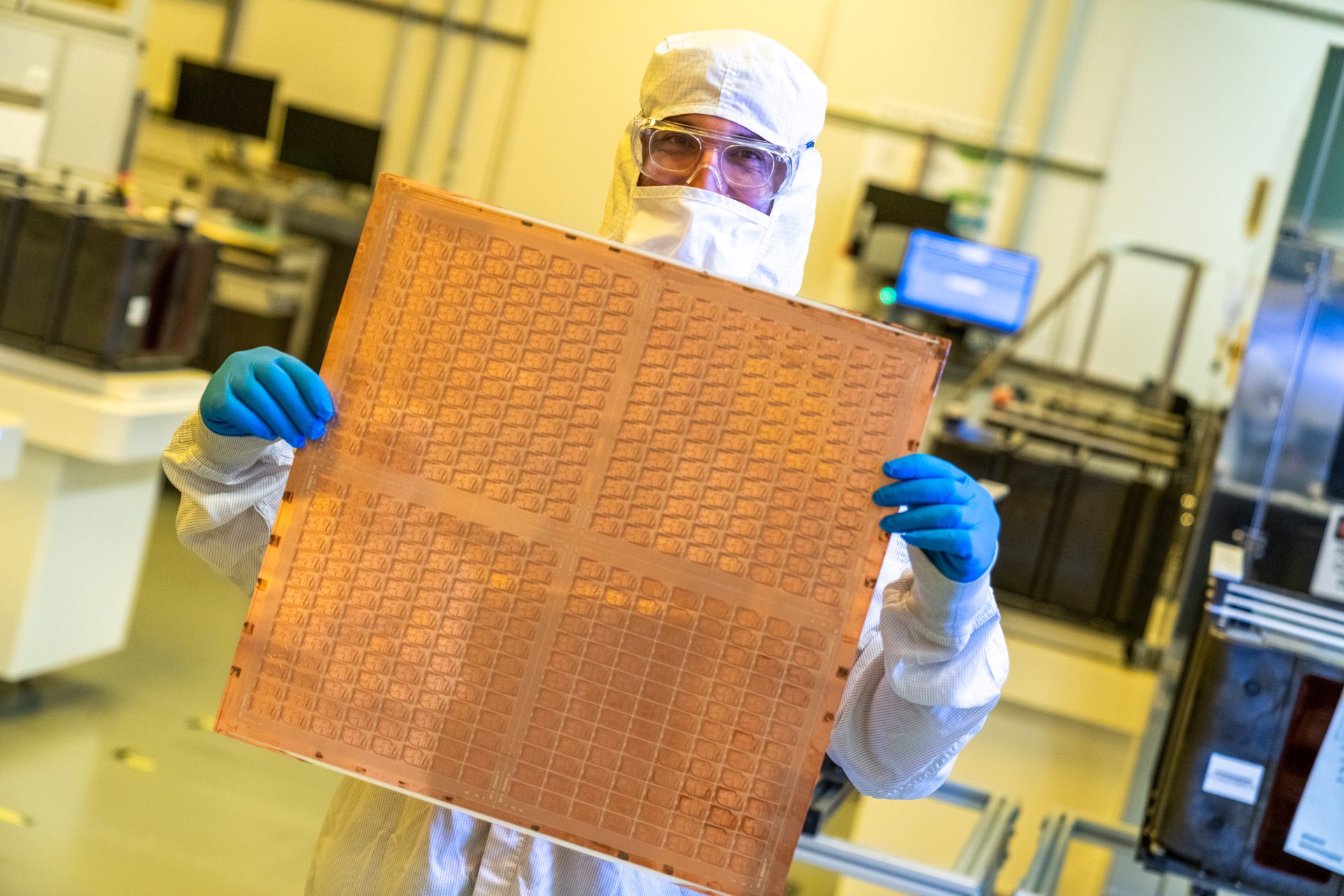
Intel’s Terafab project isn’t some side hustle. It’s a beast eyeing 100 trillion transistors per year by 2030, if whispers from supply chain insiders hold water.
And here’s the kicker—it’s roping in Tesla, SpaceX, and xAI as its first big spenders.
Yole analyst Adrien Sánchez nailed it:
“Terafab is likely an Intel fab expansion, with Tesla, SpaceX, and xAI as anchor customers, rather than a standalone venture.”
Boom. Not a fresh-from-scratch megafab, but Intel supercharging its existing muscle. Think of it like juicing up the family minivan into a rocket sled—same chassis, warp-speed upgrades.
What Even Is Terafab, and Why the Hype?
Look, fabs aren’t sexy to outsiders. But strip it down: they’re the kitchens where silicon recipes turn into the brains powering your phone, your EV, that satellite beaming cat videos from orbit.
Terafab? Intel’s play to crank out next-gen nodes—maybe 18A or beyond—at scales that make TSMC sweat. Tesla needs stacks of Dojo chips for full self-driving; SpaceX craves radiation-hardened beasts for Starlink and beyond; xAI’s Grok hungers for custom AI silicon.
We’re talking anchor contracts that could hit $10-20 billion upfront. That’s not chump change—it’s the kind of commitment that drags a foundry kicking and screaming into relevance.
But wait. Intel’s been down before. Remember 2021? Stock tanked on process node slips. This feels like their phoenix moment, perched on Musk’s empire.
Energy. Pace yourself—I’m buzzing here.
Imagine the analogy: back in the ’60s, NASA didn’t build chips alone. They rallied Fairchild, TI, the whole crew for Apollo’s guidance computer. Terafab? It’s the Artemis program for AI hardware. Musk’s trifecta—Tesla’s wheels, SpaceX’s wings, xAI’s brain—demanding Intel deliver or die.
Why Does Elon Musk Need Intel’s Terafab Right Now?
Tesla’s cranking out 2 million cars yearly, each begging for more FSD compute. Their Dojo supercomputer? Gulping custom silicon like it’s free.
SpaceX launches weekly—Starships need fault-tolerant chips that laugh at cosmic rays. And xAI? Fresh off raising $6 billion, they’re not messing with off-the-shelf GPUs.
It’s symbiosis. Intel gets guaranteed volume to amortize those $20 billion fab upgrades; Musk gets U.S.-made supply, dodging Taiwan quake risks or China trade wars.
Here’s my unique take, absent from the EE Times blurb: this echoes the Intel-Microsoft alliance of the ’80s. Wintel owned PCs. Terafab could birth MuskIntel—dominating autonomous AI from Earth to Mars. Bold? Sure. But predict this: by 2027, 40% of Tesla’s inference runs on Terafab wafers. Robotaxis fleet scales to millions only if chips flow like water.
Skeptical? Fair. Intel’s 18A tape-outs are late. But anchor deals like these? They force execution. Or bankruptcy.
A single sentence: Game on.
Chips don’t lie. Neither do contracts.
Dig deeper—Yole’s Sánchez isn’t guessing. Supply chain leaks point to Ohio fabs getting the glow-up, maybe Arizona too. Terafab’s name? Tera for trillion-transistor ambition, fab for the obvious.
Tesla’s been cozying up since 2023, testing Intel Ponte Vecchio for Dojo alternatives. SpaceX? They’ve used Intel Xeons forever; now it’s custom.
And xAI—new kid, but Grok-2 demands HBM-stacked monsters. Intel’s packaging chops (EMIB, Foveros) fit perfect. No wonder they’re anchoring.
But hype alert. Intel’s PR spins this as ‘foundry renaissance.’ Call BS—it’s survival. TSMC owns 60% advanced node market; Intel’s at 10%. Terafab plugs that hole with Musk money.
Can Terafab Actually Outpace TSMC?
Short answer: maybe. Long one? Let’s unpack.
TSMC’s N2 (2nm) leads, but Intel’s 18A claims parity with backside power delivery —a trick slicing resistance, boosting density 15%. Tesla doesn’t care about benchmarks; they care about yield, cost per wafer, U.S. soil.
SpaceX? Reliability over bleeding edge. Radiation? Intel’s got decades hardening chips for satellites.
Prediction time: Terafab hits 50k wafers/month by 2028, snagging 15% of AI accelerator market. Why? Vertical integration—Musk controls design to deployment.
Wander a sec: remember IBM’s fab folly? They chased everything, lost focus. Intel’s laser-focused on anchors. Smart.
Critique the spin—EE Times post is thin, but Sánchez cuts through: expansion, not revolution. Yet that understates the shift. AI’s platform change demands fabs at planetary scale.
The Ripple: From EVs to Starships
Tesla’s Optimus bots? Terafab edge chips make ‘em dance.
Starlink constellation hits 42k sats—each a mini-computer, courtesy Intel.
xAI Colossus cluster? World’s largest GPU setup morphs with Intel silicon.
U.S. CHIPS Act pours $8.5B into Intel; this pact unlocks more. Geopolitics? Chips homegrown, baby.
Wonder hits: we’re building the compute substrate for singularity. Terafab’s the forge.
One para wonder: Pace quickens.
🧬 Related Insights
- Read more: Chips Are Cooking Themselves—Time for Thermal Metrology to Catch Up
- Read more: SK Hynix’s Photolithography ‘Master Key’ Cracks Open AI Memory Scaling Limits
Frequently Asked Questions
What is Intel’s Terafab project?
It’s an expansion of Intel’s existing fabs, targeting massive transistor output for AI and high-performance computing, with Tesla, SpaceX, and xAI as key customers.
Who are Terafab’s anchor customers?
Tesla for Dojo and FSD chips, SpaceX for spacecraft and Starlink silicon, xAI for Grok training inference.
Will Terafab help Intel beat TSMC?
Potentially—anchor volume funds upgrades, U.S. location dodges risks, but execution on 18A nodes is make-or-break.