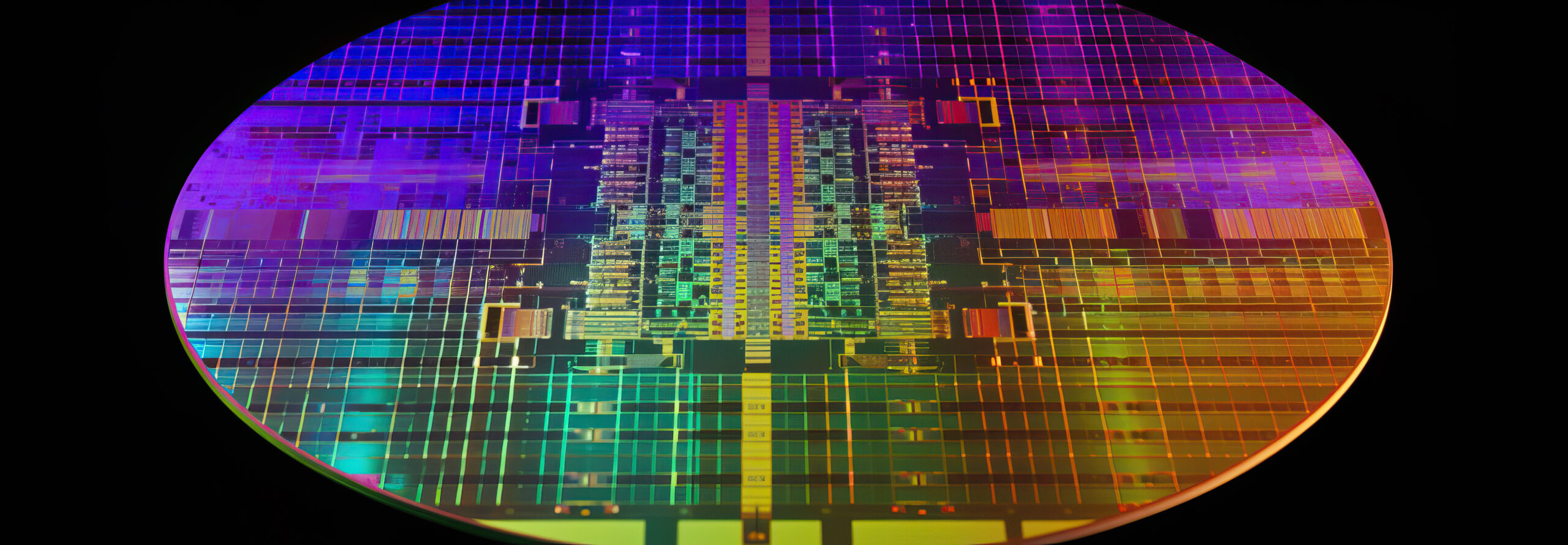
AMD’s New Power Play: Component-Level Control
It’s not enough to just dial down the whole GPU anymore. The relentless march of AI, gobbling up datacenter power like a ravenous beast, has forced chipmakers to get granular. AMD, in its latest paper, “CompPow: A Case for Component-level GPU Power Management,” is arguing for precisely that – a deeper dive into the silicon itself. Forget optimizing the entire Graphics Processing Unit as a monolithic entity; the future, according to AMD’s researchers, lies in understanding and managing its constituent parts. This isn’t just a theoretical exercise; the potential impact, if realized, is substantial.
Why This Matters for the AI Gold Rush
Datacenters, especially those built to churn through machine learning models, are power sinks. GPUs, the workhorses of this new AI economy, dominate energy allocation. While broad datacenter-level power optimization strategies have been in vogue, AMD’s approach shifts the spotlight inward, onto the GPU itself. Modern GPUs are complex beasts, not just a single processing unit but a collection of integrated components. CompPow (Component Power) advocates for awareness of these individual components – their workloads, their power demands, and their idle states – to wring out efficiency.
The abstract lays it out plainly: for a variety of ML operations and execution patterns, CompPow has demonstrated the potential for a 10% improvement in energy efficiency and even a 5% bump in performance. That might sound modest on paper, but multiply that across thousands of GPUs in a hyperscale datacenter, and the savings become staggering. Think lower electricity bills, reduced cooling needs, and potentially more compute packed into the same power envelope. It’s the kind of optimization that keeps Wall Street analysts happy and cloud providers competitive.
Can Software Truly Control Hardware’s Thirst?
This isn’t entirely uncharted territory. Different parts of a GPU already have varying power states. But CompPow seems to be about a much more dynamic and intelligent allocation. Imagine specific cores powering down when not actively in use, memory controllers throttling back, or even specialized processing units entering deep sleep modes while others are pushed to their limits. The paper’s authors, Aga and Ibrahim, suggest that software-hardware co-design is the key. This means not just building smarter hardware but also developing software that can intimately understand and direct the power profiles of these components.
“We make a case for component-awareness, termed CompPow in this work, for improved power management in modern GPUs. We demonstrate for a variety of ML operations and execution patterns, CompPow has the potential to deliver higher energy efficiency (10%) and even improved performance (5%).”
This quote highlights the core of AMD’s proposal: a shift from a one-size-fits-all approach to a finely tuned, component-level strategy. The implication is that current power management techniques, while effective at a macro level, are leaving significant gains on the table.
My Take: A Necessary Evolution, But Don’t Expect Miracles Overnight
Look, the math on energy efficiency is simple: less power consumed means lower operating costs and a smaller carbon footprint. For AMD, this is a chance to differentiate its offerings in a fiercely competitive market dominated by NVIDIA. If they can successfully implement CompPow and translate these research findings into tangible products, it’s a win.
However, there’s a healthy dose of skepticism warranted here. Academic papers often present ideal-case scenarios. Real-world implementation involves thermal constraints, driver complexities, and the sheer difficulty of dynamically managing hundreds of interconnected components in a high-throughput environment. Will we see this exact 10% gain across the board in mass-produced cards? I’d bet against it. But will it lead to a noticeable improvement and a more efficient GPU architecture over the next few generations? Absolutely.
This is also a subtle poke at the broader industry. If AMD can pull this off, it puts pressure on competitors to adopt similar strategies. The energy efficiency of AI hardware isn’t just a technical challenge; it’s becoming a business imperative. The era of power-hungry, brute-force computation is, or at least should be, on its way out. This research is a step in that direction, acknowledging that efficiency isn’t just a feature; it’s fundamental to sustainable growth in the AI age.
Future-Proofing the Compute Stack
What’s particularly interesting is how this dovetails with broader trends in chip design. As GPUs become more specialized, with dedicated AI accelerators and ray-tracing cores, the need for component-level management only grows. Trying to power an entire heterogeneous chip at its maximum potential when only a small fraction is being utilized is, frankly, wasteful. CompPow, if it lives up to its promise, could be a critical piece of the puzzle for making future, even more complex, AI accelerators viable from an energy perspective. It’s about making the powerful accessible, and the sustainable.
🧬 Related Insights
- Read more: Huang & Su Land in Taipei: Computex AI Showdown Begins
- Read more: Samsung Odyssey OLED G9 Price Cut: Is This the Future?
Frequently Asked Questions
What is CompPow? CompPow, short for Component Power Management, is a research initiative from AMD that proposes managing the power consumption of individual components within a GPU, rather than just the entire chip.
Will this make my games run faster? While the CompPow research focuses on ML operations, the underlying principle of more efficient component usage could eventually lead to performance improvements in gaming and other graphics-intensive applications by allowing components to operate at peak performance without exceeding power budgets.
When will CompPow be available in AMD products? AMD’s research papers often precede product implementation by several years. Specific timelines for CompPow integration into commercial AMD GPUs have not yet been announced, but it’s a promising direction for future architectures.