You ever stop and wonder, as the AI hype train barrels down the tracks at a million miles an hour, who’s actually going to store all this generated nonsense?
That’s the question Huawei is trying to answer with its freshly minted Data Storage 2030 white paper. They’re laying out a roadmap, a grand vision for the next decade of global storage. And the headline grabber? A projected 245TB SSD. Yep, you read that right. Two hundred and forty-five terabytes. On a single drive. It’s enough to make your current 4TB NVMe look like a floppy disk.
Look, I’ve been around the block enough times to know that roadmaps from big tech companies are often more wish list than gospel. But there’s a kernel of truth here, and it’s buried under the usual corporate jargon. The impetus, as always, is AI. Specifically, the insatiable hunger of large language models for data. They’re churning out terabytes of text, images, and code faster than we can download cat videos, and somebody’s gotta keep that digital bonfire fed.
Will DoB Packaging Really Solve Everything?
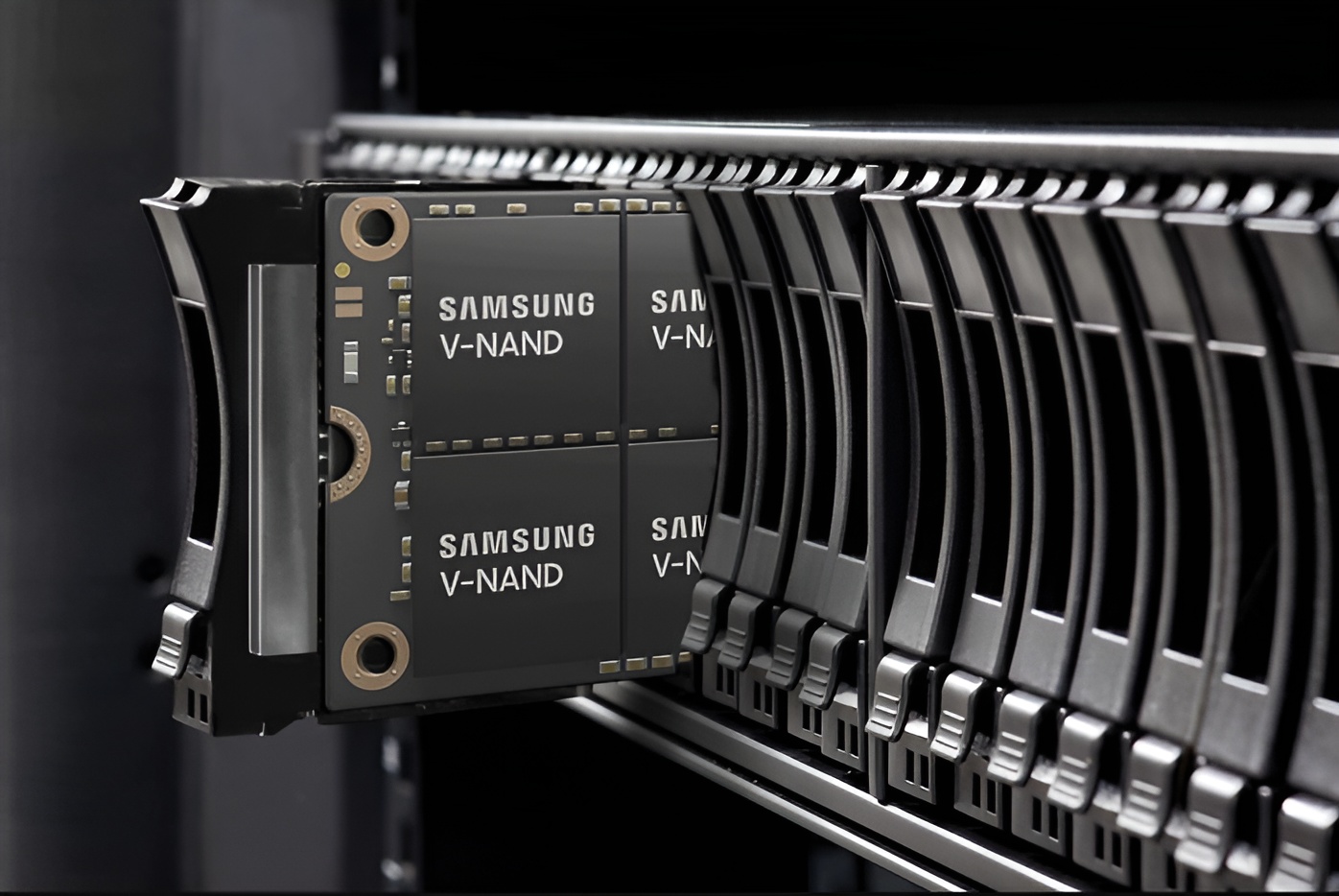
The secret sauce, according to Huawei, is something called Die-on-Board (DoB) packaging. They’re touting it as the key to cramming more flash memory chips into a smaller space. It’s a fancy way of saying they’re stacking them higher and tighter. This isn’t entirely new; 3D NAND has been doing this for years. The difference, they claim, is in the density and efficiency. More layers, less wasted space, and — theoretically — more storage capacity per unit. They’re talking about 1,200 layers in their roadmap. That’s a lot of floor space for flash chips.
But here’s the rub. Packing more stuff into a smaller space is one thing. Keeping it cool, accessible, and affordable is another. DoB packaging, while promising on paper, comes with its own set of engineering headaches. Thermal management is a big one. All those stacked chips generate heat, and if you can’t dissipate it effectively, performance tanks and reliability goes out the window. Then there’s the manufacturing complexity. Making these advanced packages is expensive, and that cost has to trickle down somewhere. Who’s footing the bill for this 245TB behemoth?
The relentless growth of data, particularly driven by AI, necessitates significant advancements in storage density and performance. Our Data Storage 2030 roadmap outlines the technological evolution required to meet these future demands.
This quote, plucked straight from their PR fluff, sounds all well and good. But let’s be real. For decades, storage has been a battle of inches, a constant push for more gigabytes per dollar. And while we’ve made incredible progress — I remember when 1TB was a mind-blowing figure — the cost per gigabyte is still the ultimate arbiter. Will these hyper-dense SSDs be accessible to the average enterprise, let alone consumers? Or will they be relegated to the deepest, darkest data centers serving the biggest AI labs and cloud providers? My money’s on the latter.
The 245TB Question: A Reality Check
Let’s talk about that 245TB number. It’s a target, a North Star. Reaching it will involve not just DoB packaging but likely advancements in NAND flash technology itself, potentially new materials, and incredibly sophisticated controllers. It’s a marathon, not a sprint, and Huawei is essentially publishing their training plan. The real question isn’t if we’ll get to 245TB, but when and at what price point. And importantly, who will be able to afford it. Right now, enterprise-grade SSDs are already a significant investment. Scaling that to 245TB is an exponential leap.
This also highlights a growing divide. On one side, you have the hyperscalers and AI giants who can absorb massive upfront costs for cutting-edge tech if it gives them a competitive edge. On the other, you have everyone else who’s still trying to make sense of their current storage infrastructure. Huawei’s roadmap feels very much aimed at the former. They’re not talking about your home NAS; they’re talking about the foundational infrastructure of the AI economy.
It’s a bit like when car manufacturers started talking about self-driving. The concept was there, but the reality for most people was still a good old-fashioned steering wheel. We’re in a similar phase with ultra-high-density storage. The vision is dazzling, but the practical application for the masses is still a long way off. The real breakthrough here isn’t just the 245TB number, but the implicit acknowledgment that AI isn’t just a workload; it’s a fundamental driver reshaping the entire storage industry from the ground up.
Who’s Actually Making Money Here?
So, who wins? Huawei, obviously, wants to be seen as a leader in the next generation of storage infrastructure. Companies that produce the flash memory chips, the controllers, and the advanced packaging materials will also stand to benefit. And then there are the cloud providers and AI companies that will eventually deploy these drives. They’ll pay top dollar for the capacity and performance, and pass on the costs, indirectly, to their users.
It’s a cycle. AI creates data, we need more storage, companies develop new storage tech, which enables more AI, and so the merry-go-round continues. Huawei is betting they’ll be a central player in that storage development. Whether their DoB packaging strategy is the winning ticket remains to be seen. But one thing’s for sure: the era of hoarding petabytes is here, and the storage vendors are scrambling to keep up.