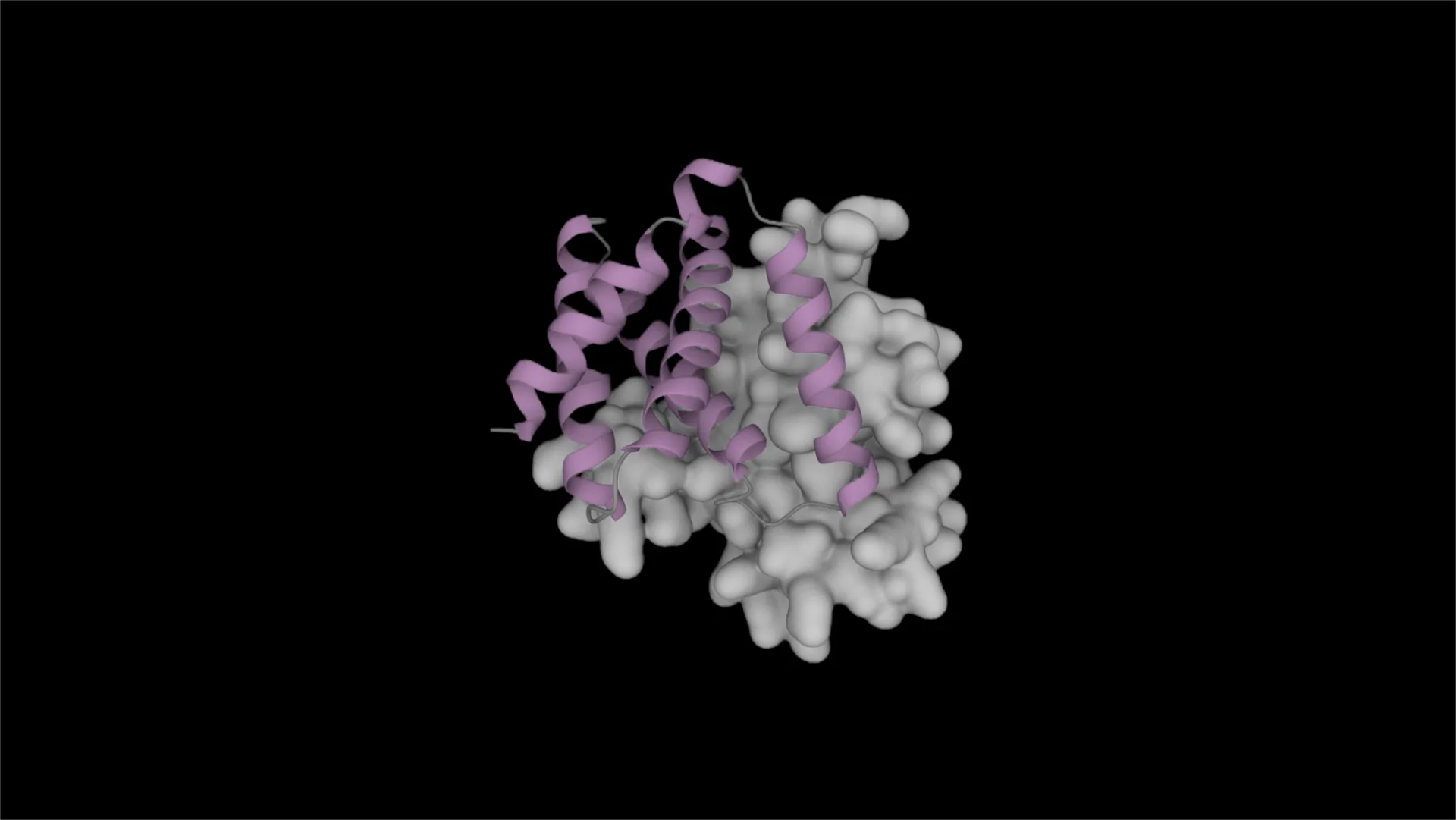
Duke University researchers huddled around a glowing screen last week, jaws dropping as Proteina-Complexa—NVIDIA’s new generative model—delivered a binder that snugged perfectly against TNF-alpha, a fiendishly complex three-chain protein implicated in inflammation and cancer.
Proteina-Complexa isn’t just another AI toy. It’s a beast built for designing de novo protein binders, those custom proteins that latch onto targets like disease proteins or small molecules with laser focus. And here’s the kicker: trained on over a million structures from PDB, AlphaFold, and fresh datasets like Teddymer, it’s already churning out designs validated in real labs.
NVIDIA’s timing? Spot on. Biotech’s starving for faster ways to crack the protein design code, where traditional methods crawl through vast sequence spaces. This model co-designs backbone, side-chains, and amino acid sequences in one go—using a partially latent flow-matching framework atop La-Proteina. No more Frankenstein workflows stitching separate backbone generators to sequence predictors.
What Makes Proteina-Complexa Tick?
Backbone alphas float in explicit 3D Cartesian space; everything else—side-chains, non-alphas, sequences—hides in a compressed latent via autoencoder. Smart balance: atomic fidelity without melting servers.
But don’t stop there. Inference-time compute scaling amps it up—beam search, best-of-N reasoning kicks in for tough targets, pouring extra flops where needed. Result? Higher in silico scores, and—crucially—wet-lab wins.
“Proteina-Complexa generates binders with full atomic detail: protein backbone, side-chains, and amino acid sequence, enabling direct handoff to experimental testing without intermediate modeling steps.”
That’s straight from NVIDIA’s playbook. No fluff.
And the data haul? Over 1 million curated structures. PLINDER for binders, Teddymer for complexes—gold-standard stuff. It’s like feeding a deep learning model the entire Protein Data Bank on steroids.
Is Proteina-Complexa Actually Better Than AlphaFold?
AlphaFold nailed prediction. Proteina-Complexa? Generation. Big leap.
Historical parallel: remember when GPUs turned image recognition from pipe dream to commodity? Same script here. NVIDIA’s CUDA empire—dominating 90%+ of AI training compute—now eyes bio-AI. Prediction: by 2026, Proteina-Complexa variants could claim 40% of protein design workloads, juicing NVIDIA’s data center revenue as pharma firms rent H100s by the cluster.
Skeptics sniff hype. Fair. But validations silence them: Manifold Bio, Novo Nordisk, Viva Biotech, Duke—binding affinities confirmed for TNF-alpha, Claudin-1. Even small-molecule binders, eyed for drug delivery and sensors, checked out with Cambridge.
Look, fragmented pipelines ruled before—backbone here, sequence there. Co-design couples chemistry and geometry from the jump. High-affinity interfaces? Baked in. Folders that actually synthesize? Check.
One quibble: NVIDIA’s PR spins ‘unifying generative approach’ like it’s magic. It’s compute scaling + data, dressed fancy. Still, it works.
Real-World Wins: From Cancer Targets to Enzymes
TNF-alpha binder: purple blob engulfs the trimer, hydrogen bonds glowing red in sims. Claudin-1: tight interface. Small molecule: purple-gold grip.
Oncology, immunology, neurology—disease targets galore. No hand-wringing over folding; these spit out expressible sequences.
Enzyme design? Feed it an active site geometry, get diverse scaffolds around it. Biocatalysis, remediation, syn-bio. Industrial gold.
Partners aren’t messing around. Novo Nordisk—diabetes giant—testing binders. Viva Biotech, contract research muscle, validating. This isn’t vaporware.
Market dynamics scream opportunity. Protein therapeutics hit $100B+ annually; binders unlock degraders, inhibitors. AI acceleration? Could shave years off discovery, billions in R&D.
But here’s my edge: NVIDIA’s not just selling models—they’re selling the stack. Bio-AI runs hottest on their silicon. Expect DGX pods in every pharma skunkworks.
Why Bet on NVIDIA for Protein AI Now?
Compute scaling isn’t gimmickry. For easy targets, zip through. Hard ones—like multi-chain monsters—extra inference refines. Efficiency jumps; quality soars.
Critique the spin: ‘de novo enzymes’ sounds sexy, but active site grafting’s been around. Proteina-Complexa’s edge? Diversity + atomic detail, direct to lab.
Bold call—watch competitors scramble. OpenAI’s bio push? Too general. DeepMind? Prediction kings, not generators yet. NVIDIA’s GPU moat locks this down.
Step-by-step CLI guide exists—generate your binder today. But scale matters; pros will fire up BioNeMo clusters.
🧬 Related Insights
- Read more: Apache’s Responsible AI Push: The Unsung Heroes Powering AI’s Open Future
- Read more: NVIDIA Unlocks GPU Slicing for Kubernetes — But Who’s Really Winning?
Frequently Asked Questions
What is Proteina-Complexa?
NVIDIA’s generative AI for designing protein binders and enzymes from scratch, co-generating structures and sequences with atomic precision.
How accurate is Proteina-Complexa for drug targets?
Lab-validated binding for TNF-alpha, Claudin-1, small molecules—partners like Duke and Novo Nordisk confirm high-affinity hits.
Can I use Proteina-Complexa for enzyme design?
Yes—input active site geometry, get diverse protein scaffolds for biocatalysis or syn-bio apps.