Are we on the cusp of a seismic shift in the global semiconductor industry, dictated not by innovation, but by legislative decree? It certainly feels that way as US lawmakers push for a ban on ASML’s Deep Ultraviolet (DUV) lithography equipment exports to China.
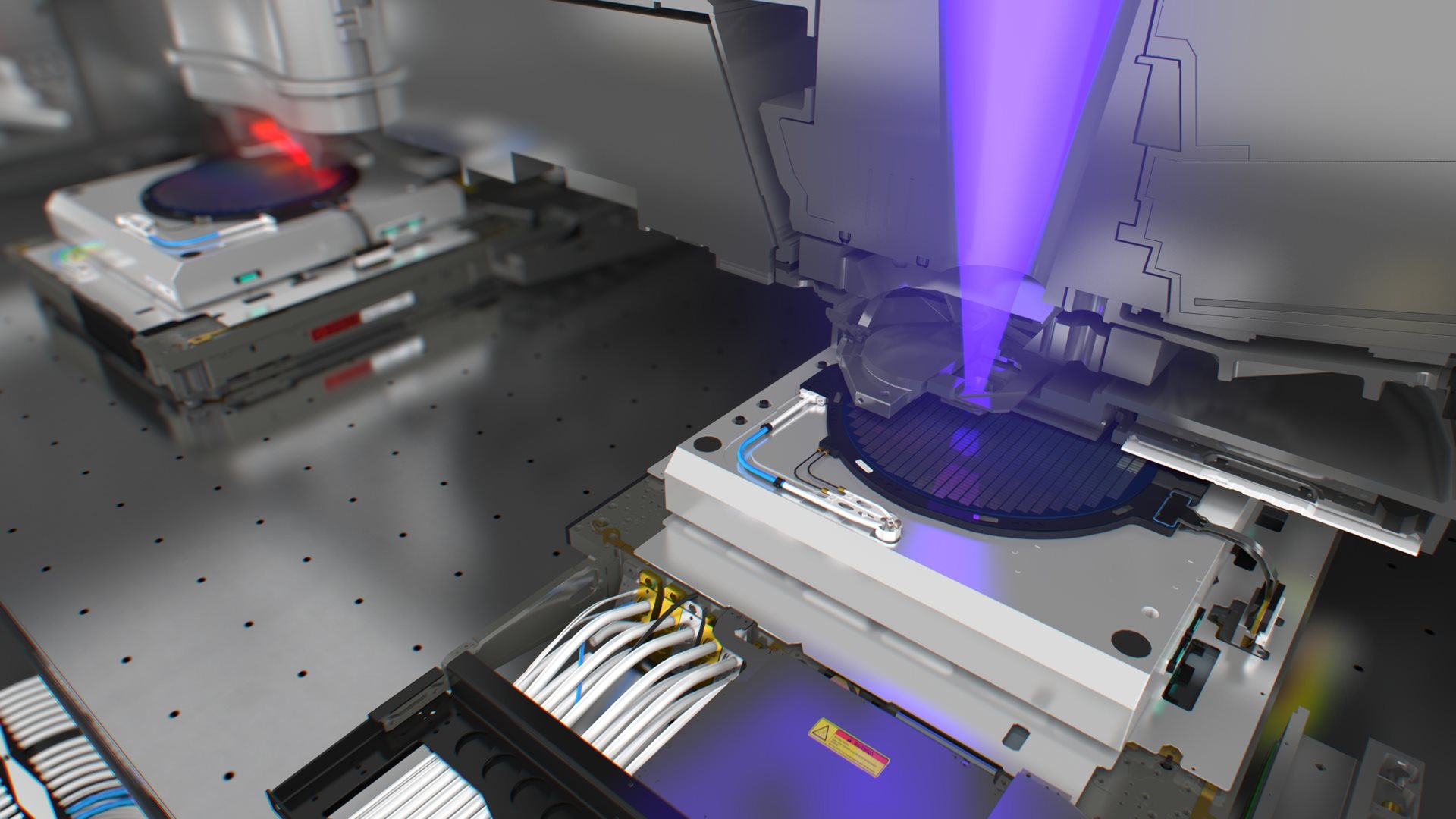
This isn’t just another ripple in the ongoing US-China tech skirmish; it’s a direct assault on the very foundation of China’s advanced chip manufacturing capabilities. We’ve seen this play before with Extreme Ultraviolet (EUV) lithography, where the Netherlands-based ASML, under US pressure, effectively halted China’s access to the most cutting-edge chipmaking tech. Now, the target is DUV — the workhorse technology that, while older, remains absolutely indispensable for producing the vast majority of the world’s chips, including those powering everything from smartphones to advanced military hardware.
The DUV Lifeline
Let’s be blunt: China’s domestic chip industry, for all its ambition, is staring at a dependency problem. Companies like SMIC, Huawei, Hua Hong, CXMT, and YMTC – the big names in Chinese foundries and memory manufacturing – are almost entirely reliant on ASML’s DUV machines. SMIC, for instance, has managed to eke out 7nm-class processes through clever multi-patterning techniques, all thanks to these DUV systems. For memory giants like CXMT and YMTC, scaling up production capacity hinges on acquiring more DUV lithography tools. Without them, their capacity expansion plans look like sandcastles facing a tidal wave.
This is precisely why the proposed MATCH Act (which stands for “Modernizing the Arms Trade and Chemical and Health Sectors Act” – a rather broad name for a very specific piece of legislation) is so significant. It’s not just about closing loopholes; it’s about directly targeting what US Senator Jim Risch calls “chokepoint” semiconductor manufacturing equipment technology that adversaries “cannot build themselves.” The logic is clear: if you can’t build it, and your allies won’t sell it to you, your technological progress stalls.
By promoting harmonization of export controls among allies and closing servicing and entity-specific loopholes, the MATCH Act preserves the U.S. technological lead in the AI competition with China.
This statement from Senator Risch is the crux of the matter. It’s a clear admission that the US views semiconductor manufacturing equipment as a strategic weapon in the AI race. And it’s not just about stopping China from making better chips; the Act explicitly cites the equipment’s use in modernizing China’s military technology. This adds a layer of national security urgency that makes the push for a DUV ban all the more potent.
Beyond the Ban: The Ripple Effect
The immediate impact, of course, would be on ASML itself. China accounted for nearly 20% of ASML’s total revenue in its most recent report, driven almost exclusively by DUV sales. A ban would yank a significant chunk out of their order book. But ASML isn’t the only player feeling the pressure. Chinese chip buyers were poised to significantly increase their DUV procurement in the coming quarters, investing heavily in new production lines. This ban would slam the brakes on that expansion, potentially leading to significant financial losses and a glut of unfinished fab capacity.
And what about China’s domestic industry? They’ve certainly tried to develop their own lithography capabilities. But so far, their efforts have been confined to more mature process nodes, like 28nm. For anything approaching cutting-edge, the DUV dependence remains absolute. This legislation could effectively cap their technological progression, pushing them further behind the global leaders.
This isn’t just about economics; it’s about strategic autonomy and geopolitical use. The US is betting that by controlling access to essential manufacturing tools, it can dictate the pace of technological development in China. It’s a high-stakes gamble. History, however, has shown that technological dependencies can be a double-edged sword, often spurring desperate — and sometimes surprisingly successful — domestic innovation in response to external pressure. We saw something similar with Japan’s push into memory chips in the 1980s, partly driven by US trade tensions.
Will this ban force China to accelerate its own domestic lithography development to an unprecedented degree, or will it simply hobble its current capabilities and create a more fragmented, less efficient global supply chain? The former seems unlikely in the short to medium term, given the immense complexity of DUV technology. The latter, however, is a very real possibility, with significant implications for global tech pricing and availability.
This move by the US isn’t just about chips; it’s about asserting dominance in the defining technological battleground of the 21st century. And ASML’s DUV equipment, ironically, might just be the key that unlocks or locks down that future.