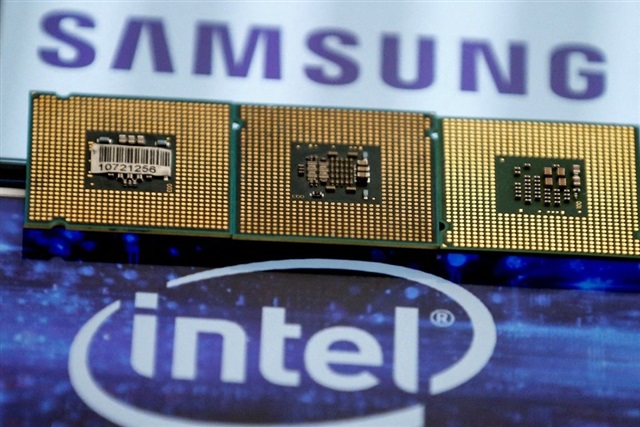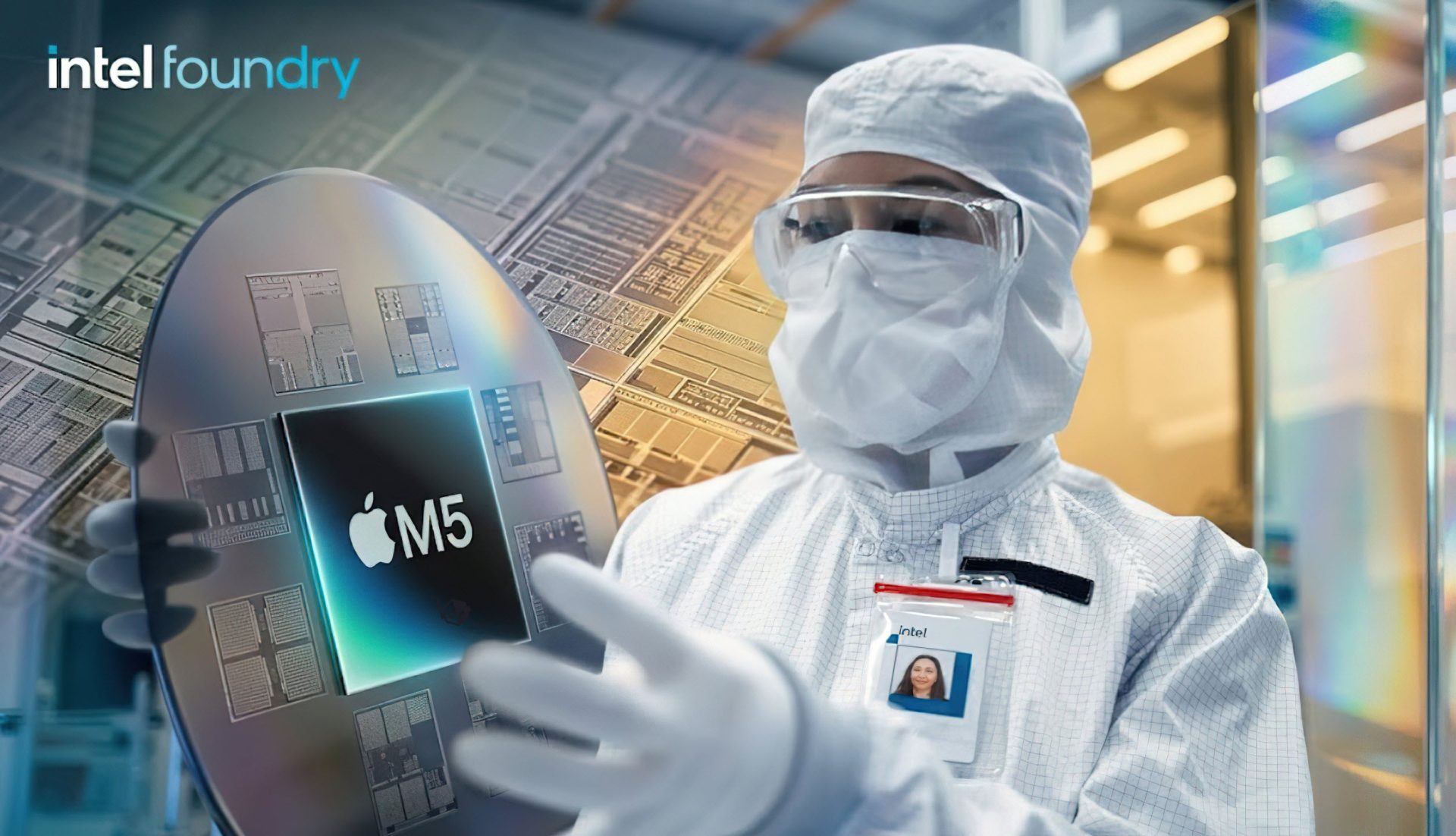
So, Apple’s been quietly outsourcing chip fabrication to TSMC for ages, right? Now, industry chatter, amplified by Bank of America, suggests a seismic shift: a potential deal where Intel actually manufactures some of Apple’s silicon. It’s a move that, if it pans out, could reconfigure supply chains and, more importantly for the equipment makers, trigger a capital expenditure spree not seen in a while.
The €4.6 Billion Question: Does the iPhone Come Into Play?
The numbers are eye-watering. Bank of America estimates this Intel-Apple pact could be worth a cool $10 billion. But the real kicker isn’t the deal value itself, it’s the downstream impact on the foundries’ suppliers. We’re talking about billions in orders for the very machines that etch those impossibly tiny circuits onto silicon wafers. The Dutch firm ASML, the sole provider of the cutting-edge Extreme Ultraviolet (EUV) lithography machines essential for the latest chip nodes, is at the epicenter of this potential spending boom. And then there’s BE Semiconductor, eyeing a significant uptick in demand for its advanced packaging and bonding equipment.
What’s driving the divergence in BofA’s forecasts? It hinges entirely on whether this reported agreement extends to Apple’s golden goose: the iPhone. If Intel is tasked with manufacturing chips for Apple’s flagship smartphone, the equipment orders swell dramatically. BofA suggests ASML could see orders worth a staggering €4.6 billion in this scenario, compared to a more modest €1.8 billion if only less-demanding chips are involved. Similarly, BE Semiconductor could see Intel snapping up 182 hybrid bonding machines instead of a mere 15.
This isn’t just about a single company’s capacity. Intel has been aggressively pushing its packaging services, partly to offset the intense demand — and tight capacity — at TSMC, particularly with the AI boom drawing heavily on advanced packaging. Bringing Apple into the fold, especially for iPhone components, would necessitate a significant build-out of Intel’s own capabilities, thus translating directly into colossal orders for the equipment manufacturers.
But here’s the cynical analyst’s take: Intel’s foundry ambitions have been a long, arduous road. They’ve poured billions into R&D and capacity, often with mixed results. While a deal with Apple would be a massive validation and a much-needed revenue stream, it also represents a monumental gamble. Can Intel execute at the scale and quality Apple demands, particularly for a product as critical and high-volume as the iPhone, without cannibalizing its own efforts or falling prey to the same execution pitfalls that have plagued its foundry business historically? The market seems to be betting on a positive outcome, driving up the valuations of the equipment makers, but the devil, as always, will be in the execution.
“If the Intel and Apple deal also includes the iPhone, then Intel could order as many as 182 hybrid bonding machines from BE Semiconductor, while without the iPhone, the order could sit at 15 machines.”
This isn’t just about ASML and BE Semiconductor cashing checks. It’s about the broader geopolitical implications of diversifying chip manufacturing away from Taiwan. Intel, with its massive fabs and ambitions in the US and Europe, could become a more central player in this strategic realignment. For Apple, it’s a move that could offer more supply chain control and potentially better cost structures, assuming Intel can deliver. For Intel, it’s a chance to finally prove the efficacy of its foundry strategy on the grandest stage.
We’ve seen this play out before, albeit on smaller scales. Chipmakers jockeying for position, suppliers caught in the crossfire, and the relentless march of technological advancement demanding ever-more sophisticated — and expensive — manufacturing tools. The stakes are incredibly high. A successful Apple-Intel partnership could reshape the competitive landscape for years to come, and suppliers like ASML are positioned to benefit handsomely from this potential tectonic shift. But until contracts are signed and production lines hum, it remains an expensive bet based on the best intelligence available.
Why Does This Matter for the Semiconductor Industry?
The potential for such a significant deal underscores the ongoing consolidation and strategic plays within the semiconductor manufacturing ecosystem. It highlights the criticality of advanced manufacturing equipment — particularly EUV lithography and advanced packaging solutions — in enabling next-generation chip technologies. For Intel, it represents a significant opportunity to revitalize its foundry business and recapture market share. For Apple, it’s another step in its complex supply chain strategy, potentially offering greater flexibility and diversification. And for the equipment manufacturers, it’s a clear indicator that the capital investment cycle in advanced chipmaking is far from over, especially with the insatiable demand driven by AI and next-generation consumer electronics.
🧬 Related Insights
- Read more: Nvidia’s RTX NTC: 80% VRAM Slash Tested – Real Gains or GPU Gimmick?
- Read more: Chey Tae-won Crashes NVIDIA’s GTC Party: SK Hynix’s HBM Hustle Gets Real
Frequently Asked Questions
What does the Intel-Apple deal reportedly entail? Reports suggest Intel might manufacture some of Apple’s chips, a departure from Apple’s current reliance on TSMC, potentially involving advanced packaging and bonding services.
How much could ASML potentially earn from this deal? Bank of America estimates that if the deal includes iPhone chip production, ASML could receive orders totaling €4.6 billion for its EUV lithography machines.
Will this deal impact Apple’s current chip suppliers? If the deal materializes, it could lead to a reallocation of Apple’s chip manufacturing orders, potentially reducing the volume procured from its existing suppliers like TSMC.