Are we finally tiring of the GPU cluster hamster wheel?
For what feels like an eternity, the prevailing wisdom in AI hardware has been simple: need more power? Add more GPUs. Building bigger models? Just make bigger clusters. It’s the tech equivalent of adding more lanes to a highway that’s already choked with traffic. And then along comes Cerebras, a company that looked like a weird outlier for years, marching to its own silicon drum.
Now, that drumbeat is starting to sound like a marching band. Wall Street seems to think Cerebras’s approach — wafer-scale engines instead of distributed GPU mayhem — is a legitimate bet for the future of AI infrastructure. The company just dropped a massive IPO, pricing shares at $185 a pop and raking in a cool $5.55 billion. That puts its valuation somewhere between a hefty $40 billion and a stratospheric $56 billion. CEO Andrew Feldman is now sitting on a stake worth nearly $2 billion. Not bad for someone who bet against the herd.
This IPO lands at a time when the biggest AI players, OpenAI and Anthropic, are in a perpetual arms race for compute. Nvidia, the undisputed king of the hill, is still the go-to. But a rising tide of inference costs, power demands, and the sheer headache of managing massive, sprawling datacenters are creating cracks. Suddenly, alternative architectures that promise simpler scaling look a lot more attractive. Cerebras is perfectly positioned to capitalize on that newfound willingness to look beyond the familiar.
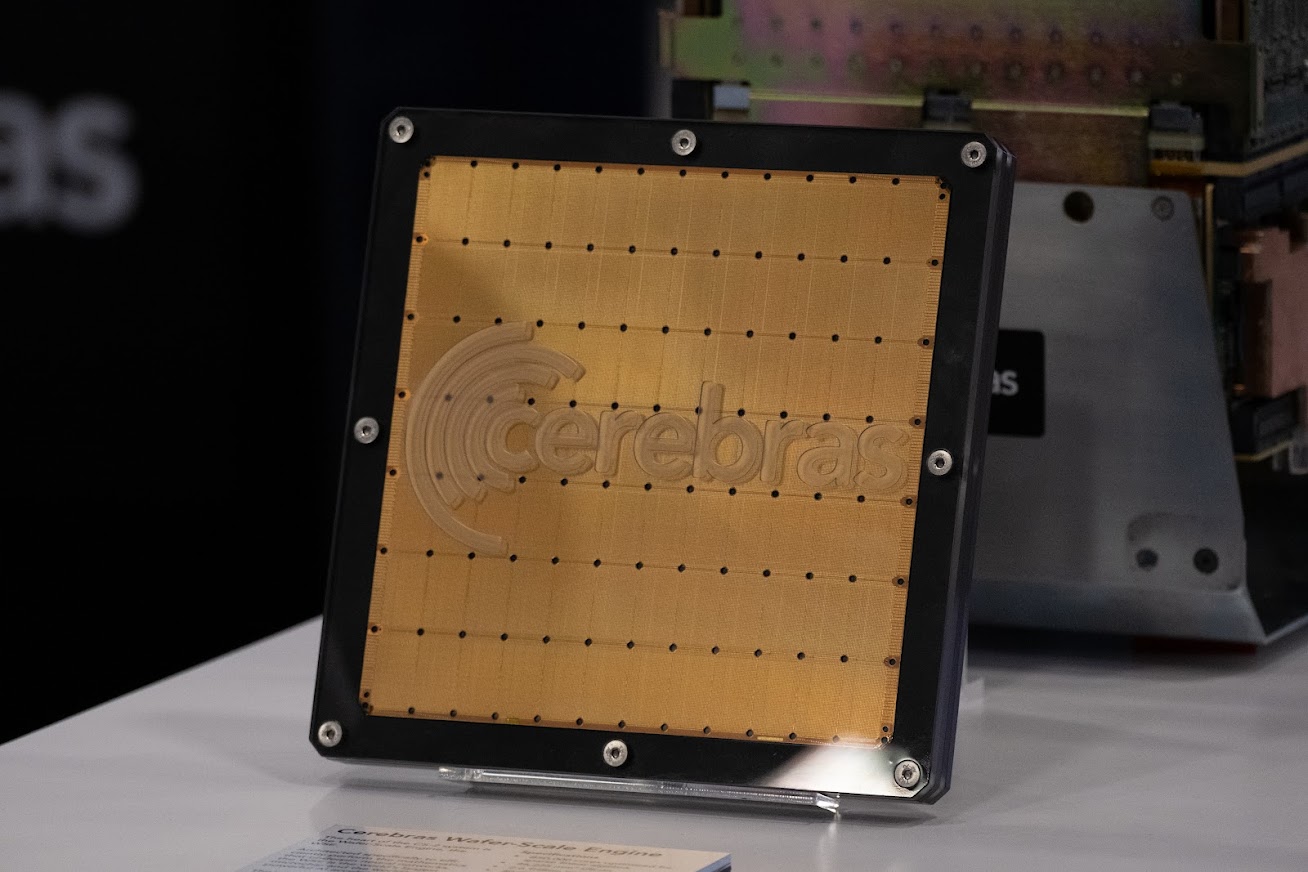
Their secret sauce? The wafer-scale engine. Imagine a single, gargantuan chip designed to keep vast amounts of compute and memory glued together. Contrast that with the traditional GPU cluster, where data gets punted back and forth across a complex network fabric. Cerebras is trying to cut through that Gordian Knot by doing more work on one, colossal piece of silicon. Less travel time for data means less overhead, potentially. At least, that’s the theory.
Don’t get me wrong, the GPU cluster model isn’t dead. It’s the engine that powered the AI boom for a reason: they’re powerful, mature, and the software ecosystem is deeper than the Marianas Trench. But scaling is revealing its warts. Building datacenters is a slow, agonizing process. Networking costs are ballooning. And memory bottlenecks are becoming performance killers. Then there’s inference – the costly act of actually using these AI models – which is rapidly becoming a major operational expense. This shift makes any hardware that simplifies scaling look like manna from heaven.
And let’s not forget the supply chain chaos the AI boom has wrought. Chips, memory, storage – everything is tight. Hyperscalers and AI giants are hoovering up available capacity, leaving everyone else scrambling. That just adds another layer of pressure on anyone trying to build or expand their AI and HPC systems.
Cerebras, founded back in 2015 by some ex-SeaMicro folks, has been playing the long game. While everyone else was busy building bigger GPU farms, they were quietly perfecting wafer-scale systems. Their IPO was even delayed last year due to some regulatory scrutiny tied to G42. But with AI infrastructure demand skyrocketing, the market backdrop for their public debut couldn’t be better.
Does this mean Cerebras is a guaranteed winner? Absolutely not. Nvidia still owns the accelerator market, and its software ecosystem is a formidable moat. But the sheer investor enthusiasm for companies daring to challenge the GPU scaling paradigm is a clear signal. The market is starting to ask: is this relentless pursuit of larger and larger clusters the only way forward?
The elephant in the room for Cerebras has always been manufacturing these massive wafers. Larger chips mean higher defect rates and lower yields. Their solution? A fault-tolerant architecture designed to reroute around bad sections of the wafer while keeping performance up. It’s a high-wire act, for sure.
And Cerebras isn’t alone in this rebellion. Groq, with its specialized Language Processing Units (LPUs), and SambaNova, touting custom AI hardware and integrated software, are also pushing alternative architectures focused on inference efficiency and simpler deployment. They might not be doing wafer-scale, but they’re definitely not just building more of the same.
The hype around Cerebras’s IPO doesn’t settle the wafer-scale debate overnight. But it does tell us one thing: investors are ready to bet on a future that isn’t solely defined by the GPU scaling model. They’re looking for innovation, for alternatives, for a way out of the escalating costs and complexity. The question now is, can Cerebras deliver on its wafer-sized promise?
A Historical Parallel: The Mini-Computer Revolution
It’s easy to get caught up in the sheer scale of Cerebras’s ambition. But this push for an alternative architecture reminds me a bit of the mini-computer revolution of the 1970s. Back then, the giants were mainframes – expensive, complex beasts that few could afford. Companies like DEC (Digital Equipment Corporation) introduced minicomputers, offering a more accessible, albeit less powerful, alternative. They didn’t replace mainframes overnight, but they opened up computing to a whole new market and ultimately forced the mainframe giants to adapt. Cerebras, in its own way, might be doing the same for AI hardware – offering a different path that could redefine what’s possible, and affordable.
Is the GPU Scaling Model Actually Broken?
‘Broken’ is a strong word. ‘Strained’ or ‘facing significant challenges’ might be more accurate. The GPU cluster model has been incredibly successful, but the sheer scale of modern AI models and the increasing demands for inference are pushing its limits. The constant data movement, the power consumption, and the sheer physical space required for massive GPU deployments are becoming major pain points. When these pain points become significant enough to impact operational costs and deployment timelines, alternative architectures, even if less mature, start to look very appealing. The Cerebras IPO suggests the market believes these pain points are indeed becoming critical.
Cerebras is trying to cut down on that sort of complexity by doing more on one large piece of silicon.
🧬 Related Insights
- Read more: Broadcom’s 400G/Lane DSP: AI’s Bandwidth Savior or Just More Chip Hype?
- Read more: Nvidia’s China AI Chip Market Share Hits Zero: Policy Backfire?
Frequently Asked Questions
What is wafer-scale computing? Wafer-scale computing involves using an entire silicon wafer, or a significant portion of it, as a single, massive chip. This is in contrast to traditional chip manufacturing, where a wafer is diced into many smaller individual chips. The goal is to integrate more processing power and memory onto a single die, reducing the need for inter-chip communication and potentially increasing efficiency.
Will Cerebras’s IPO mean the end of Nvidia? Unlikely. Nvidia has a dominant market share and a deeply entrenched software ecosystem that competitors struggle to match. However, Cerebras’s IPO and the investor interest it signals suggest a growing market appetite for alternatives. This could lead to increased competition and force Nvidia to innovate even faster, potentially leading to a more diverse AI hardware landscape rather than a complete overthrow.
Why is inference becoming so expensive? Inference is the process of using a trained AI model to make predictions or generate outputs. While training models is computationally intensive, running them continuously for millions of users or tasks requires significant, sustained processing power. As AI models become larger and more complex, and their deployment expands, the cost of running these inference computations 24/7 can become a substantial part of an AI company’s operating expenses.