Is the AI chip market ready for a $40 billion IPO that isn’t Nvidia? That’s the audacious question Cerebras Systems is implicitly asking as it reportedly prepares for a listing that could fetch up to $4 billion. This isn’t just another startup looking for a quick payday; it’s a deep architectural bet on a future where sheer wafer size and specialized interconnects, not just GPU muscle, are king. And if it works, it could redefine what we even consider an “AI chip.”
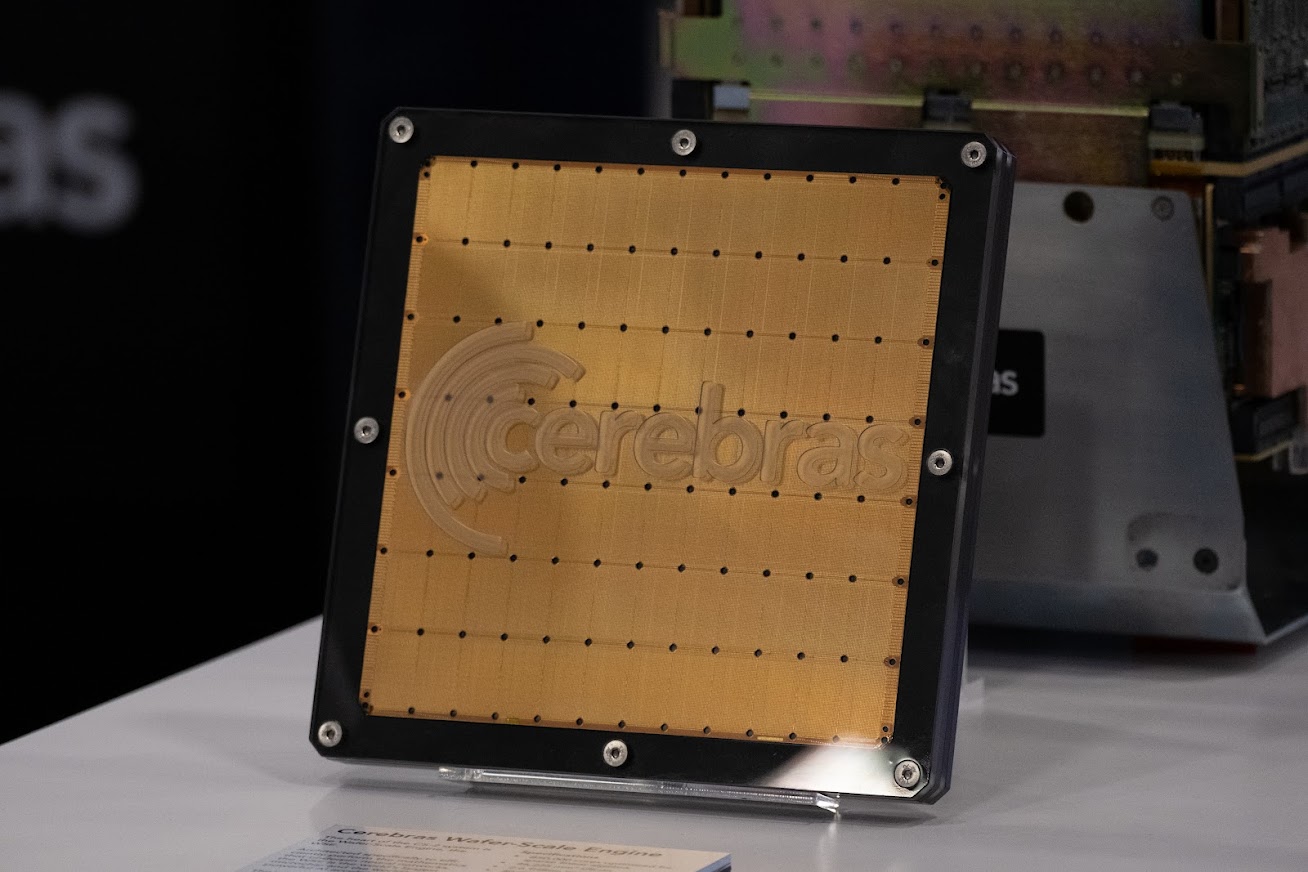
Think about the landscape for a second. We’ve all been conditioned to think of AI acceleration through the lens of parallel processing — thousands of cores crunching numbers. Nvidia has perfected this model, building an empire on its CUDA ecosystem and GPU dominance. But Cerebras isn’t playing the same game. Their chips, famously massive, are designed around a different philosophy: putting as much compute as physically possible onto a single, enormous piece of silicon. This isn’t about adding more little cores; it’s about creating a monolithic titan, a “Wafer Scale Engine” (WSE) designed to eliminate the communication bottlenecks that plague traditional multi-chip systems.
The Monolithic Bet: Why Size Matters (Here)
Cerebras’ core differentiator, and the reason for its eye-watering valuation target, lies in its Wafer Scale Engine. Imagine a single chip, the size of a pizza, packed with an insane number of cores and memory. That’s the WSE. The promise? Vastly improved performance and efficiency for AI workloads by minimizing data movement. Traditional systems, even those with the latest GPUs, have to shuttle data between multiple chips, processors, and memory modules. This constant back-and-forth, this dance of data, eats up time and energy. Cerebras aims to obliterate that. Their architecture is built to keep data local, to reduce latency to near zero for certain operations, and to offer a degree of programmability that’s remarkably flexible for such a specialized piece of hardware.
This isn’t just about stuffing more transistors onto a wafer; it’s about a fundamental rethinking of chip interconnects and memory hierarchies. The sheer scale means they can integrate more specialized compute engines and a massive amount of on-chip SRAM. They’re not just competing on FLOPS; they’re competing on memory bandwidth, latency, and the ability to handle extremely large AI models without the usual distributed computing headaches. It’s a bold, almost defiant, approach to a problem that many are trying to solve with more incremental, albeit still impressive, improvements to existing designs.
Cerebras’s approach is to build a massive, single chip that can hold an entire neural network. This eliminates communication bottlenecks that occur when you try to connect many smaller chips together.
Of course, building a chip the size of a dinner plate comes with its own set of astronomical challenges. Yield rates, for one. If a tiny fraction of a standard chip is defective, it’s a minor issue. If a sliver of your massive wafer has a problem, you’ve potentially lost the entire thing. Cerebras has invested heavily in defect reduction, redundancy, and advanced manufacturing techniques to mitigate this. Then there’s the power consumption and cooling — essentially building a supercomputer on a chip. Their systems are designed to handle this, but it’s a far cry from dropping a single GPU into a server.
The Nvidia Shadow: Can Cerebras Carve a Niche?
The specter of Nvidia looms large over any ambition in the AI chip space. Nvidia’s CUDA software stack is practically a religion in AI development, creating an ecosystem lock-in that’s incredibly difficult to break. Cerebras faces an uphill battle convincing developers to port their models and workflows to a new, albeit potentially more powerful, architecture. Their strategy, therefore, isn’t necessarily to replace Nvidia wholesale, but to target specific, high-value segments of the AI market where their unique architectural advantages — handling massive models, extreme compute density, and ultra-low latency — can truly shine.
This could mean high-performance computing centers, specialized research labs, or companies pushing the boundaries of what’s possible with AI. Imagine training the next generation of foundational models, or running complex simulations where every nanosecond of latency matters. This is where Cerebras hopes its monolithic approach will prove its worth, offering a performance-per-watt or performance-per-dollar advantage that Nvidia, with its inherently more distributed architecture, can’t match. Their IPO isn’t just a fundraising exercise; it’s a declaration of intent, a signal to the market that there’s a viable, fundamentally different path to AI acceleration.
It’s easy to dismiss Cerebras as a niche player with an impossibly ambitious (and expensive) product. But then again, that’s exactly what many said about Nvidia in its early days. The company’s willingness to pursue such a radical architectural shift, and its ability to attract the kind of capital that a $40 billion IPO implies, suggests there’s a deep belief in its vision. If Cerebras can execute, and if the market truly embraces architectural diversity in AI compute, this could be a defining moment.
What’s the Core Problem Cerebras is Solving?
Cerebras tackles the latency and communication overhead inherent in distributed AI computing systems. By building a single, massive chip (the Wafer Scale Engine), they aim to keep data and computation localized, dramatically speeding up AI model training and inference.
How Does Cerebras’s Approach Differ from Nvidia’s?
While Nvidia focuses on massively parallel GPUs with a vast software ecosystem (CUDA), Cerebras emphasizes a monolithic wafer-scale architecture. This means one enormous chip packed with compute and memory, aiming to eliminate inter-chip communication bottlenecks that plague multi-GPU setups.
Is Cerebras’s IPO a Good Sign for AI Innovation?
Absolutely. A successful IPO for Cerebras, regardless of its direct competition with Nvidia, signals strong investor confidence in novel AI hardware architectures beyond the current GPU paradigm. It encourages further research and development into alternative approaches to accelerate AI.
Frequently Asked Questions
What does Cerebras Systems actually do? Cerebras Systems designs and builds a unique type of AI accelerator chip called the Wafer Scale Engine (WSE). This is a single, massive chip designed to be much larger than traditional chips, with the goal of improving the speed and efficiency of AI computations by minimizing data movement between components.
Will Cerebras compete directly with Nvidia? Cerebras aims to compete in the AI chip market, but its architectural approach is fundamentally different. While Nvidia’s strength is in distributed GPU processing, Cerebras’s monolithic wafer-scale design targets workloads where extreme compute density and low latency are paramount. They may not aim to replace Nvidia across the board, but to offer a compelling alternative for specific high-performance AI tasks.
How much money is Cerebras trying to raise? Cerebras Systems is reportedly preparing to raise up to US$4 billion in its initial public offering, targeting a company valuation of around US$40 billion. This would make it one of the largest IPOs in the AI chip sector.