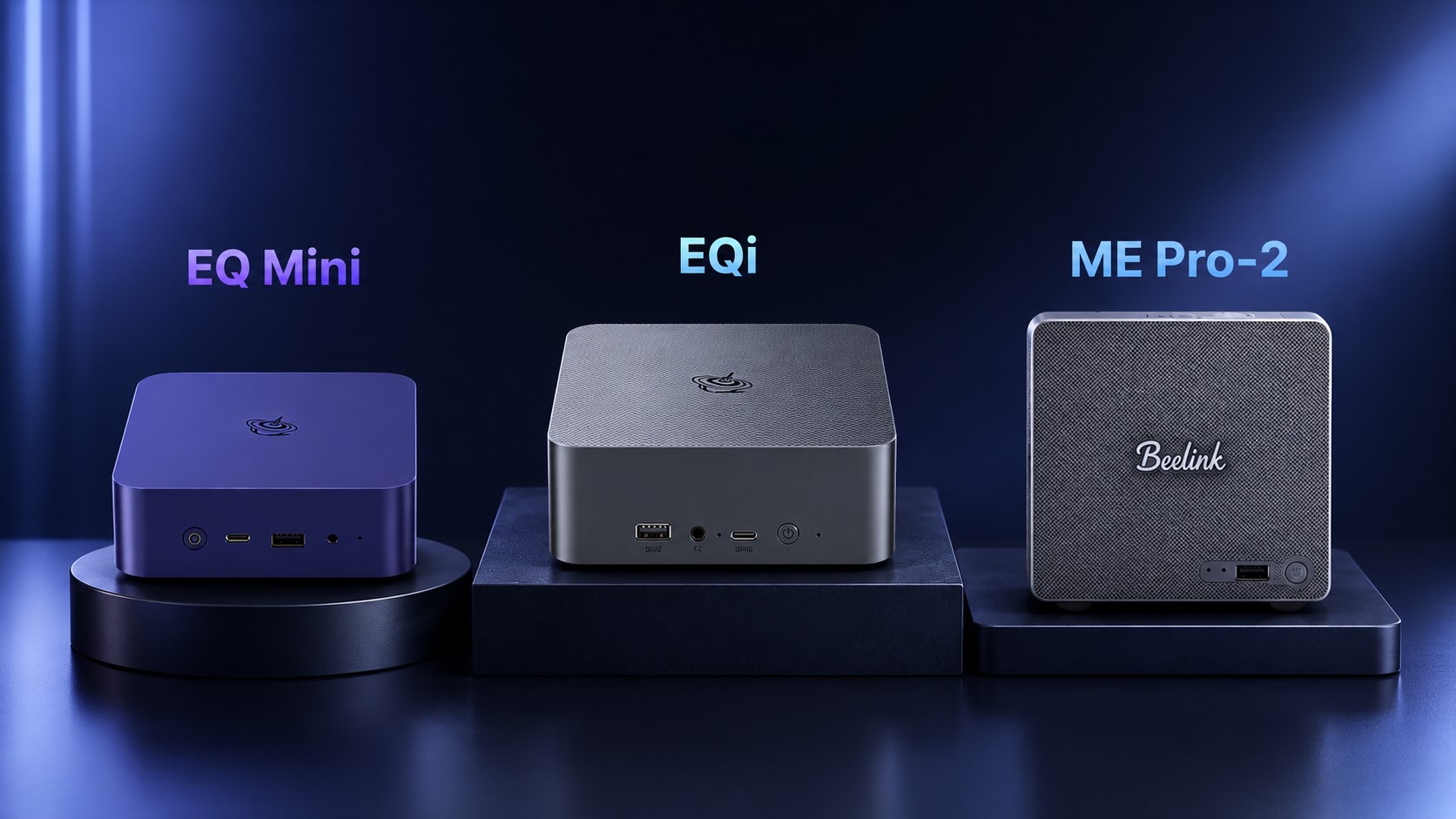
Get this: Intel’s new ‘Wildcat Lake’ chips aren’t just for laptops anymore. Beelink has gone and stuffed them into three ridiculously small desktop boxes, and I’m here for it!
This isn’t just another incremental update, folks. We’re talking about a genuine platform shift. Think of it like going from a flip phone to your first smartphone – suddenly, a whole universe of possibilities opens up, all in a package that used to just make calls. These mini PCs, powered by the Intel Core 3 304 CPU, are doing exactly that for the entry-level desktop space. They’re the tiny powerhouses that punch way above their weight class, proving that you don’t need a supercomputer to get serious work done.
The Core of the Matter: Intel Core 3 304
At the heart of the EQ Mini, EQi, and ME Pro-2 lies the Intel Core 3 304. Now, before you scoff at ‘entry-level,’ understand this CPU’s unique makeup: a 1+4 core configuration. That’s one beefy Performance-core and four zippy, power-sipping LP-E cores. This hybrid approach is what allows Beelink to pack so much capability into such minuscule enclosures, some as small as 112 x 112 x 37 mm. It’s like having a tiny, efficient sports car engine designed for maximum bang for your buck.
EQi and ME Pro-2: Stepping Up the Game
While all three share the same core silicon, the EQi and ME Pro-2 are the ones really turning heads. The EQi, for instance, offers a sweet spot of DDR5 and LPDDR5 memory support, meaning you get both speed and efficiency. Add to that dual M.2 slots for speedy SSDs, dual USB4 ports for all your high-speed peripherals, and – get this – dual LAN ports, including a blazing-fast 10 GbE and a respectable 2.5 GbE. This is no longer just a home office machine; it’s ready to be a mini server or a networking powerhouse.
The ME Pro-2 takes it a step further, targeting those who need NAS (Network Attached Storage) capabilities. It rocks a larger chassis, accommodating both 3.5” and 2.5” drives, but sacrifices one of the M.2 slots for this expanded storage flexibility. Still, it retains the core connectivity that makes these machines so appealing. It’s a Swiss Army knife of a PC, adapted for specific, yet common, needs.
A Glimpse into the Future of Computing
What’s truly exciting here is the democratization of performance. For years, serious computing power meant a sprawling tower and a significant chunk of your desk real estate. These mini PCs, powered by advancements in both CPU architecture and miniaturization, are flipping that script. They’re proving that you can have a capable, versatile machine that disappears into your setup.
Look, the PR often spins these kinds of releases as ‘revolutionary.’ But here’s my take: this is an evolutionary leap, and it’s happening now. This isn’t just about Beelink; it’s about Intel finally pushing its entry-level silicon into the compact desktop space with real, tangible benefits. This is the kind of stuff that frees up space, reduces energy consumption, and makes powerful computing accessible to even more people.
These mini PCs are the slowest and most entry-level systems, packed into small enclosures measuring as little as 112 x 112 x 37 mm.
Is that a limitation? Absolutely. But it’s also the point. For countless users – students, remote workers, casual users, media server enthusiasts – this level of performance is more than enough. And the fact that it comes in such a compact, versatile package with options like dual 10GbE LAN? That’s the true innovation.
Why This Matters for You
This isn’t just about Beelink making small computers. It’s about the entire PC landscape shifting. We’re seeing processors designed for efficiency and integration finding their way into form factors that were previously reserved for much lower-power devices. This signals a future where your primary computing device could be virtually invisible, yet incredibly powerful. Think of your workstation evolving from a large monolith to a discreet box tucked away behind your monitor, or even integrated into your desk itself. The implications for home offices, smart homes, and even digital signage are immense. This is the vanguard of a more integrated, less obtrusive computing experience.
The pricing hasn’t been announced yet, but considering these Intel Core 3 304 CPUs are targeting the under-$600 laptop market, we can expect these mini PCs to be even more wallet-friendly. This accessibility is key to ushering in this new era of compact computing. It’s not just for the enthusiasts anymore; it’s for everyone.
🧬 Related Insights
- Read more: Apple’s Mac Mini Cut: Memory Crisis & AI Boom Collide
- Read more: Phantom Blade Zero Bails on DLSS 5: Handmade Art Trumps NVIDIA’s AI Magic
Frequently Asked Questions
What is Intel Wildcat Lake?
Intel Wildcat Lake refers to a family of Intel processors designed for efficiency and integration into smaller devices like laptops and mini PCs. They often feature a mix of performance and power-saving cores.
Will these mini PCs replace my main desktop computer?
For many users, absolutely! If your computing needs involve web browsing, office applications, media consumption, or even light development and server tasks, these mini PCs offer ample power in a tiny footprint. For heavy gaming or demanding professional creative work, you might still need a more powerful workstation.
What does dual LAN mean for a mini PC?
Having dual LAN ports (network connections) means the mini PC can be connected to two different networks simultaneously. This is particularly useful for networking enthusiasts, small office setups, or for creating dedicated network segments, like a home lab or a more secure browsing environment.