Has AMD’s latest memory tech update—EXPO 1.2—already passed you by? It’s a fair question. Because while the ink is drying on the press releases, the real-world impact for most users will be… well, subtle, at least for a while. This isn’t a revolution you can easily see or feel right now; it’s a foundational upgrade, a quiet architectural tweak designed for a future that’s still a few years out. And understanding why it matters, and when it will matter, requires a deeper dive than your average spec sheet comparison.
AMD EXPO 1.2, now trickling onto AM5 motherboards, is ostensibly about pushing the boundaries of DDR5 memory overclocking. Think faster RAM kits, rivaling the best on the market. That’s the PR spin. But the folks who really dig into this stuff, like the renowned third-party utility developer 1usmus and hardware whisperer chi11eddog, are pointing to a more nuanced reality. The most significant gains, they suggest, won’t be fully realized until AMD’s Zen 6 processors hit the scene, likely sometime between late 2026 and early 2027.
Unpacking the ‘Module Geometry’**
One of the intriguing — and admittedly, slightly opaque — enhancements in EXPO 1.2 is its supposed support for ‘module geometry.’ What does that even mean? It refers to how memory chips are arranged on the actual DIMM. While details are scarce, this could tie into innovations like HUDIMMs. These aren’t about raw speed boosts in themselves, but rather clever ways to manage signal integrity and potentially streamline manufacturing—especially useful in an ongoing memory supply chain that’s perpetually… interesting.
Now, let’s talk about the elephant in the server room: MRDIMMs (Multiplexed Rank Dual In-line Memory Modules). EXPO 1.2 does include support for these beasts. The catch? MRDIMMs are primarily server and data center fare, designed for massive bandwidth and capacity. So, unless you’re building a Threadripper workstation that doubles as a crypto mine, this particular feature won’t grace your consumer AM5 rig.
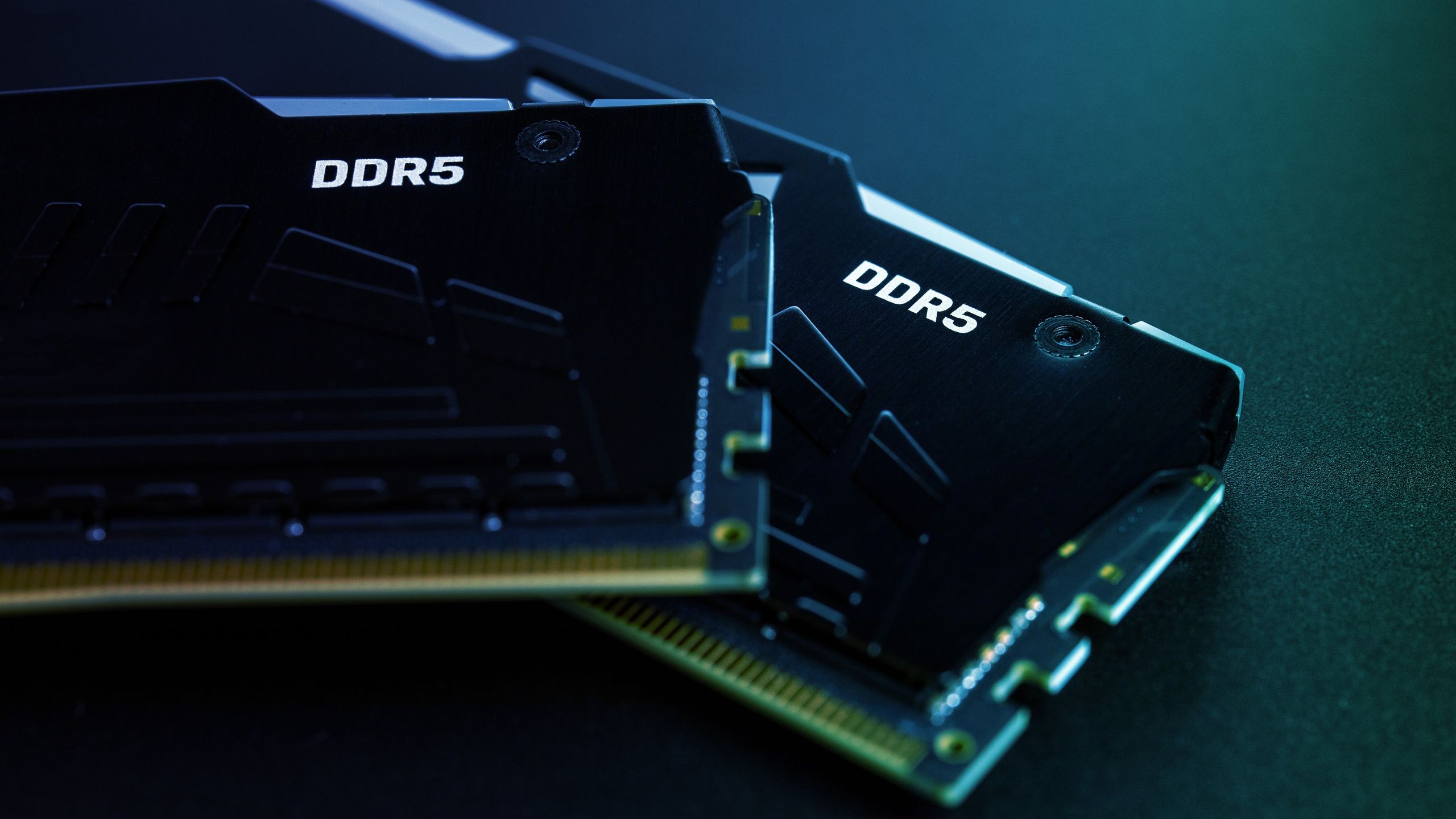
But here’s where it gets really interesting for the enthusiast crowd, and a bit frustrating for current adopters of cutting-edge DDR5. EXPO 1.2 still only partially embraces CUDIMMs (Clocked Unbuffered Dual In-line Memory Modules) and CSODIMMs (Clocked Small Outline Dual-line Memory Modules). These modules are the future of high-frequency DDR5, relying on a Client Clock Driver (CKD) to keep signals clean and stable as frequencies climb. It’s the digital equivalent of a high-performance engine’s carefully tuned ignition system. Yet, EXPO 1.2, at least with current firmware (AGESA 1.3.0.1), still largely treats CUDIMMs in a ‘bypass mode.’ This essentially means it’s not fully leveraging the CKD’s capabilities.
According to 1usmus, this partial support is likely a deliberate staging ground. AMD is apparently paving the way for full CUDIMM integration, and the primary driver for this heavy lifting is none other than the upcoming Zen 6 architecture. They’re building the highway now, so the supercars of RAM can truly unleash their horsepower later.
The Ultra Low Latency Leap**
Amidst the architectural groundwork, there’s a tangible improvement arriving now: Ultra Low Latency (ULL) mode. This isn’t some theoretical future benefit; it’s a direct assault on memory lag. Hardware leaker chi11eddog claims enabling ULL can lop off a noticeable five to seven nanoseconds from a standard DDR5-6000 kit. For anyone who obsessions over frame times in games or responsiveness in heavy creative applications, that’s not insignificant. It’s the kind of small win that can feel huge in day-to-day use.
EXPO 1.2 also sprinkles in additional fine-tuning options for the hardcore overclockers. New memory timings like tREFI, tRRDS, and tWR, alongside VDDP voltage controls, offer more granular dials to twist and turn in pursuit of silicon supremacy. These aren’t features that will excite the average user, but for the dedicated few, they represent crucial stepping stones to squeezing every last MHz out of their memory.
Global Reach, Local Impact**
In a move that hints at broader supply chain integration, EXPO 1.2 is also broadening compatibility with three Chinese memory manufacturers: RAMXEED Limited Conexant, Rui Xuan, and Fujitsu Synaptics. While you’re unlikely to see these brands on Western store shelves, it’s a signal to consumers sourcing kits from platforms like AliExpress. Full compatibility ensures those overseas purchases won’t hit unexpected roadblocks.
Motherboard makers are already on the move. Asus, for instance, has begun rolling out beta firmware with early EXPO 1.2 support across its 800-series lineup, with X870E and X870 boards getting the initial taste. B850 boards are expected to follow. Expect other manufacturers to jump aboard this firmware train shortly.
A Long Game for Peak Performance**
So, here’s the bottom line: AMD EXPO 1.2 is a statement of intent. It’s a commitment to refining the AM5 platform and pushing the envelope on memory performance. But it’s also a masterclass in long-term planning. The immediate benefits are there, particularly in latency reduction and finer tuning. However, the truly jaw-dropping performance leaps – the ones that justify the underlying architectural shifts like improved CUDIMM support – are explicitly tied to the Zen 6 generation. It’s like buying a high-performance sports car chassis; you get a great ride today, but the truly earth-shattering acceleration is reserved for when the next-gen engine drops.
AMD’s strategy here feels familiar. They’ve often built the platform and then unlocked its full potential with subsequent CPU generations. It allows for a more measured rollout of new technologies and ensures that when the flagship product arrives, it has a mature, strong foundation to build upon. It might leave some early adopters feeling a slight pang of ‘is this it?’, but for the ecosystem as a whole, it’s a sensible, if somewhat delayed, path to peak performance.
🧬 Related Insights
- Read more: NVIDIA’s H100 SuperPOD Predicts Millions of Protein Complexes Overnight
- Read more: Raspberry Pi 5’s 16GB Price Doubles to $205 as AI Eats All the RAM
Frequently Asked Questions**
Will EXPO 1.2 make my current RAM faster?
Slightly, yes. While the most significant gains are slated for future CPUs, EXPO 1.2 introduces features like Ultra Low Latency (ULL) mode that can reduce memory latency by several nanoseconds on existing DDR5 kits. You might also see more granular tuning options.
When will I actually see the big benefits of EXPO 1.2?
According to industry experts, the substantial performance improvements from EXPO 1.2 will likely be unlocked with AMD’s next-generation Zen 6 processors, expected around late 2026 to early 2027. This is when full support for technologies like CUDIMMs will likely come online.
Do I need to buy new RAM for EXPO 1.2?
Not necessarily. EXPO 1.2 is a motherboard and CPU technology that improves how existing DDR5 RAM is utilized. However, to take full advantage of future potential, especially with Zen 6, investing in memory kits optimized for higher frequencies and with the correct specifications will be beneficial.