Everyone expected the AI gold rush to mean an arms race for the absolute latest, shiniest silicon. The whispers in the server rooms, the leaks from the fabs, the analyst reports – they all painted a picture of ever-increasing core counts, ever-wider memory buses, and yes, ever-escalating price tags. We were told that to run these large language models (LLMs), you needed cutting-edge hardware, no exceptions. But here’s the thing: what if the future of AI isn’t just about brute force, but about cleverness? What if the real innovation lies not in what’s new, but in what’s repurposed?
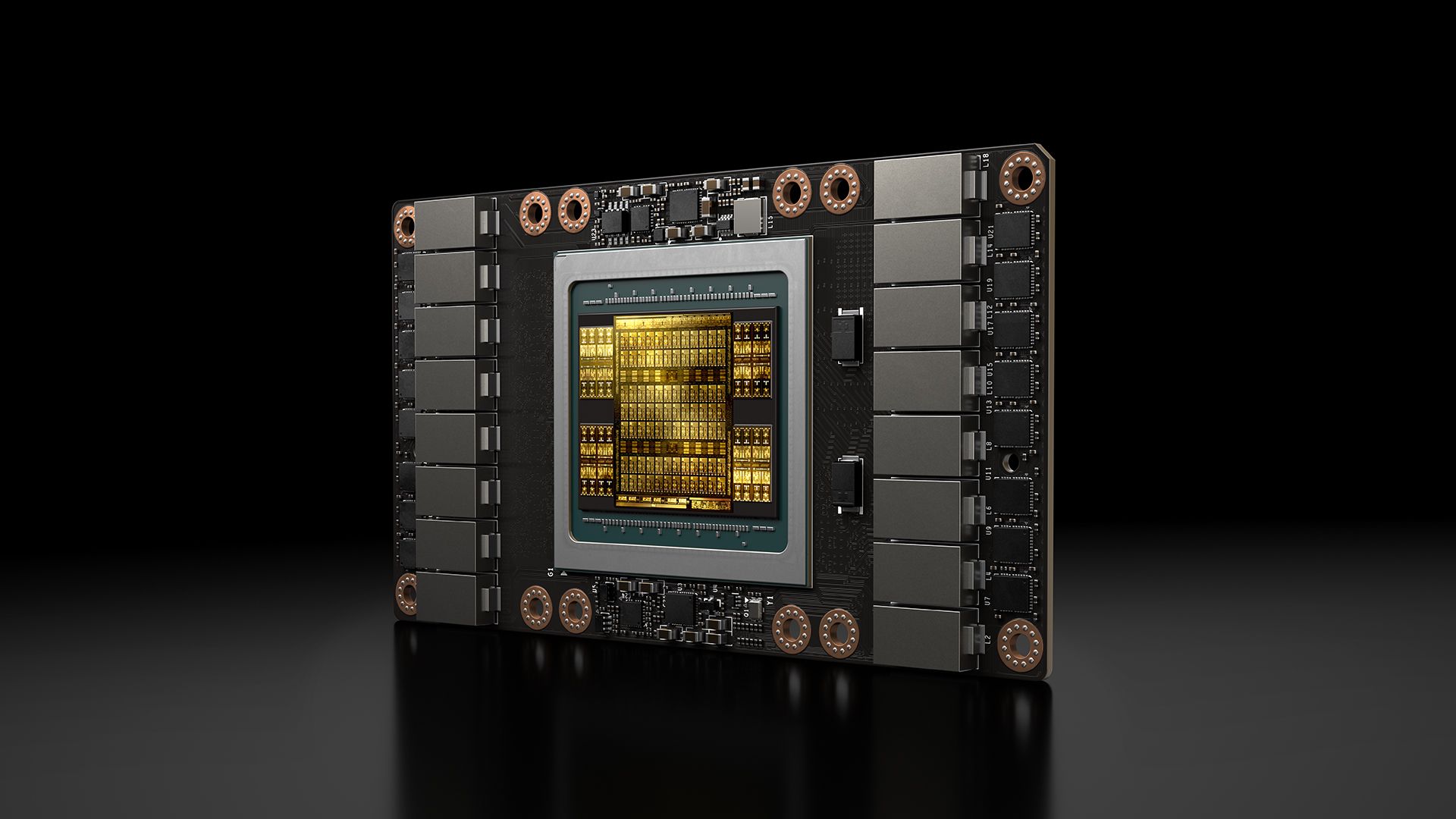
Look, the AI boom has sent GPU prices into the stratosphere. You want to run LLMs locally? Get ready to mortgage your house for a graphics card with enough VRAM. It’s been a bit of a Wild West, frankly. But then, like a glint of gold in a dusty saloon, YouTuber Hardware Haven stumbled upon something truly special: forgotten server silicon that’s still got a serious kick. He took an Nvidia V100 server GPU – the kind you’d find humming away in a rack, not plugged into your gaming rig – and, with a bit of ingenuity and a custom PCB, turned it into a PCIe card that can hang with, and often beat, today’s mid-range offerings in AI inference.
This isn’t some abstract thought experiment. This is real hardware, wrenched from its intended environment and reborn. The V100, based on the venerable Turing architecture, usually lives in an SMX socket – a mezzanine connector designed for flat installation in server boards. Think of it like a CPU socket, but for a GPU, mounted flush with a specialized baseboard. Our intrepid modder snagged one of these bad boys for a mere $100. Add to that a $100 SMX-to-PCIe adapter, and bam! A $200 entry ticket into the world of serious AI acceleration.
The V100 itself, in this case, rocks 16GB of HBM2 memory, offering a blazing 900 GB/s of bandwidth. That’s plenty for a lot of current LLM tasks. Now, the PCIe adapter card this GPU plugs into? It’s barebones. No built-in cooling. So, naturally, the YouTuber fired up his 3D printer and crafted a custom duct, attaching an 80mm Noctua fan to coax cool air over the heatsink. It’s a Frankenstein’s monster of a build, but a beautiful one.
And the performance? This is where it gets wild. Slotting this repurposed V100 into a standard Ryzen system – remember, it has no display output itself, so you’ll need integrated graphics – and feeding it the Ollama benchmark with gpt-oss-20b, it spat out 130 tokens per second. That’s faster than a brand-new Radeon RX 7800 XT, which managed only about 90 tokens per second, even with its own 16GB of VRAM. Nvidia’s software advantage in AI benchmarks is legendary, but still – impressive.
Comparing it to a more apples-to-apples Nvidia lineup, the V100 went head-to-head with an RTX 3060 12GB. Running Google’s gemma4: e4b, the V100 hit 108 tokens per second to the 3060’s 76. Now, the 3060 did sip less power (235W vs. 293W for the V100), but when you crunch the numbers on tokens per watt, the V100 actually wins, achieving 0.37 tokens/s per watt compared to the 3060’s 0.33.
But here’s the kicker: power limiting. When both cards were throttled to 100W, the V100 delivered a staggering 95 tokens per second while drawing only 170W. The 3060, at the same power draw (171W), could only muster 68 tokens per second. Suddenly, the V100’s efficiency score rockets to 0.55 tokens/s per watt, leaving the 3060 in the dust at 0.39.
The Unseen Cost: Idle Power
There’s a catch, of course. Every system has its Achilles’ heel, and for this salvaged V100, it’s idle power. It hums along, sipping 45W just doing nothing – compared to the 3060’s more modest 35W. For continuous, always-on inference workloads, that’s a factor. Still, for those who can tolerate it, the payoff is immense.
Even in heavier tasks like Frigate NVR, the V100 performed admirably, outclassing the RTX 3060 in identification speed. Yes, it chewed through more power (over 100W just for two cameras), but the raw capability was undeniable. It’s a far cry from the struggling Intel N100 mini PC that previously fumbled dog identifications.
This whole experiment is a powerful reminder. We’ve been conditioned to believe that AI acceleration requires the newest, most expensive hardware. But this $200 V100 mod is a stark counterpoint. It’s a proof to the incredible engineering baked into older datacenter silicon and the sheer creativity of the enthusiast community.
“Amidst the ongoing AI boom, the best value lies in older, often forgotten silicon that’s still capable, which is exactly what YouTuber Hardware Haven found.”
This hack is more than just a neat trick; it’s a signal. It tells us that the platform shift AI represents isn’t just about the giants building massive foundries for the next generation. It’s also about the clever builders, the resourceful tinkerers, the ones who see potential where others see obsolescence. This hacked V100 isn’t just a graphics card; it’s a beacon for a more accessible, more adaptable AI future.
Why Does This $200 AI GPU Matter?
It matters because it democratizes AI. It proves that powerful AI inference isn’t solely the domain of large corporations with unlimited budgets. This mod injects a much-needed dose of reality into the hyper-inflated GPU market, showing that raw performance and efficiency can be unlocked from sources previously thought out of reach for the average tinkerer or small business. It’s like finding a vintage sports car chassis that, with a few tweaks and a modern engine, can still outpace many new models off the line.
🧬 Related Insights
- Read more: Semiconductor IP Licensing: How ARM, Synopsys, and Cadence Power the Industry
- Read more: SK hynix’s Ethics Double: From Korean Trailblazer to Global Standard-Setter
Frequently Asked Questions
What does the Nvidia V100 do when used in a server? The Nvidia V100 is a high-performance GPU designed for datacenter tasks like deep learning, AI training and inference, high-performance computing (HPC), and professional visualization. It was originally released in 2017.
Will this mod work with any Nvidia server GPU? This specific mod involves converting an SMX socketed V100 to a PCIe interface. While the concept of adapting server GPUs to PCIe might be possible for other models, the SMX interface and the specific adapter card used are unique to certain V100 configurations and older server designs. It’s not a universal solution.
Is this mod safe to do myself? Modifying server hardware to run on consumer systems involves electrical and technical risks. This particular mod required custom PCB design and 3D printing for cooling. It’s recommended for experienced individuals with a strong understanding of hardware modification and safety protocols.