When Apple designs a new iPhone chip, it does not create every circuit from scratch. Instead, it licenses proven design blocks from specialized companies, assembling a complex processor the way an architect combines standardized building components. This practice, known as semiconductor IP licensing, is one of the most important and least understood business models in the technology industry. It enables hundreds of chip companies to build sophisticated products while keeping development costs manageable.
What Is Semiconductor IP?
Semiconductor intellectual property refers to pre-designed, pre-verified circuit blocks that chip designers can integrate into their own products. These blocks range from simple interface controllers to complex processor cores. The key value proposition is reuse: rather than spending years designing and verifying a USB controller or a CPU core, a chip company can license a proven design and focus its engineering resources on the features that differentiate its product.
IP blocks come in several forms. "Hard" IP is a fully laid-out design optimized for a specific manufacturing process. "Soft" IP is delivered as synthesizable code, typically in hardware description languages like Verilog or VHDL, that can be adapted to different processes. "Firm" IP sits between the two, offering some flexibility while including physical implementation guidance.
The semiconductor IP market generates over $7 billion in annual revenue and is growing faster than the broader chip industry. This growth reflects the increasing complexity of modern chips, which can contain billions of transistors and dozens of distinct functional blocks. No single company can economically design all of these blocks in-house.
ARM: The Processor Core Giant
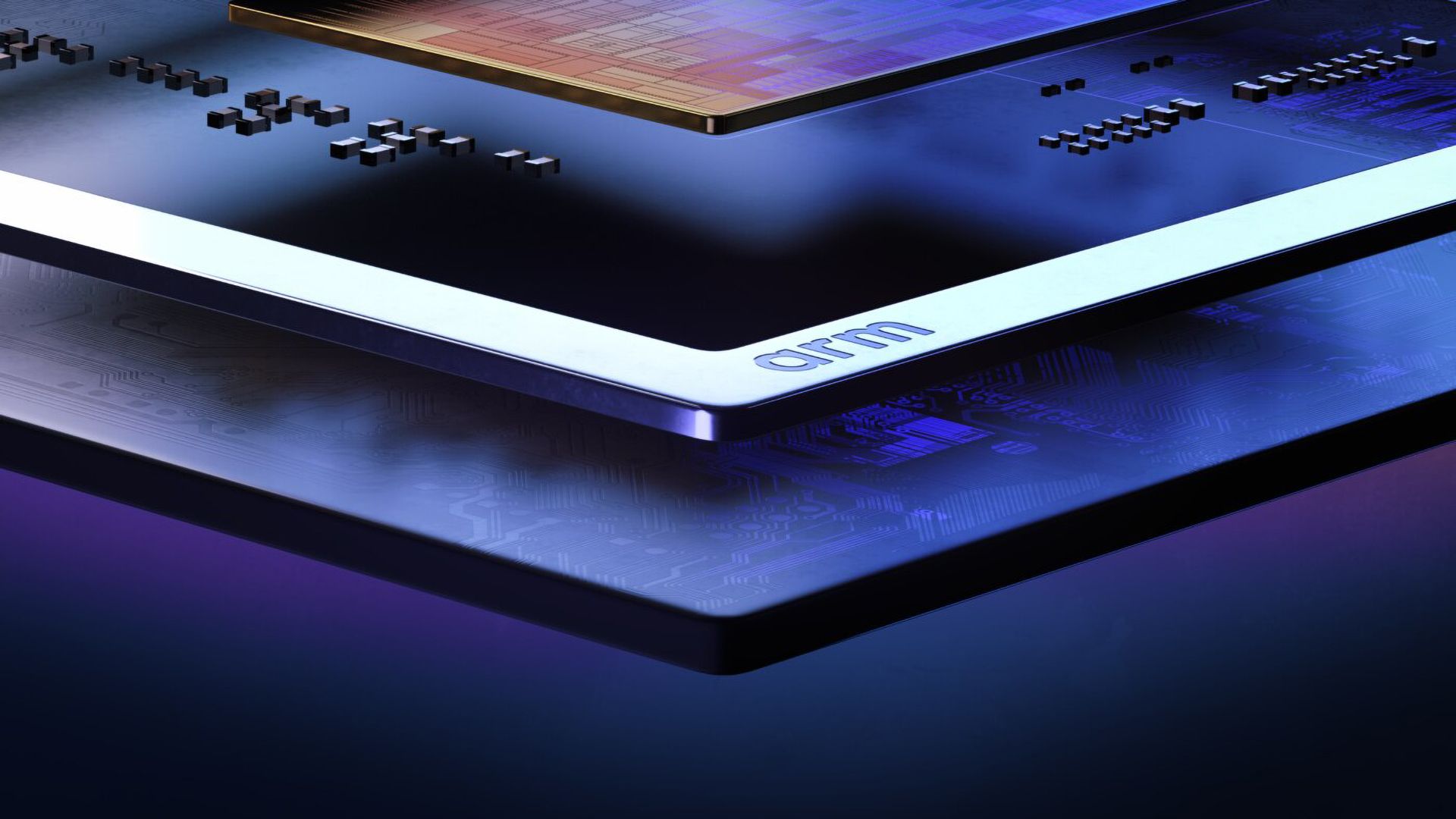
ARM Holdings is the most prominent semiconductor IP company, and its business model has shaped the entire mobile computing era. ARM designs processor core architectures and licenses them to chip manufacturers worldwide. The company does not manufacture any chips itself. Instead, it earns revenue through upfront licensing fees and per-chip royalties.
ARM's reach is staggering. Over 250 billion chips have been manufactured using ARM architectures, and ARM-based processors power virtually every smartphone on Earth. Apple's A-series and M-series chips, Qualcomm's Snapdragon processors, Samsung's Exynos chips, and MediaTek's Dimensity SoCs all build on ARM's instruction set architecture and, in many cases, license ARM-designed CPU cores directly.
ARM offers two licensing tiers. Standard licenses provide pre-designed cores like the Cortex-A, Cortex-R, and Cortex-M families, which licensees integrate with minimal modification. Architectural licenses grant companies the right to design their own cores that implement the ARM instruction set. Apple, Qualcomm, and Samsung hold architectural licenses, which is why their custom cores can differ dramatically in performance and efficiency despite sharing the same instruction set.
ARM's 2023 IPO valued the company at roughly $65 billion, reflecting its central role in the semiconductor ecosystem. With the expansion of ARM into data center servers, automotive systems, and AI accelerators, the company's influence continues to grow beyond its mobile computing origins.
Synopsys: Design Tools and IP Combined
Synopsys occupies a unique position in the semiconductor industry, combining electronic design automation (EDA) tools with a vast portfolio of semiconductor IP. This dual role makes Synopsys indispensable to chip designers, who often use Synopsys tools to design chips that incorporate Synopsys IP blocks.
The Synopsys IP portfolio includes interface controllers for standards like USB, PCIe, DDR, and Ethernet. These interface blocks are critical because they must comply with rigorous industry specifications and interoperate with products from hundreds of other companies. Designing and verifying a compliant USB4 controller, for example, requires specialized expertise that most chip companies would rather license than develop internally.
Synopsys also provides processor IP through its ARC and ASIP product lines, security IP for applications like content protection and secure boot, and foundation IP including standard cell libraries and memory compilers. The company generates roughly $2 billion annually from IP licensing alone, making it the second-largest semiconductor IP vendor after ARM.
Cadence: Verification and Analog IP
Cadence Design Systems mirrors Synopsys in offering both EDA tools and semiconductor IP, though the two companies have historically emphasized different strengths. Cadence has been particularly strong in verification IP, which helps chip designers confirm that their products correctly implement interface standards, and in analog and mixed-signal IP.
Verification IP is distinct from design IP. Rather than providing circuit blocks to include in a chip, verification IP provides simulation models and test environments that validate a chip's behavior against specifications. When a company designs a chip with a PCIe interface, Cadence's verification IP can simulate the behavior of thousands of potential connection partners to ensure compliance before the chip is manufactured.
Cadence's Tensilica processor IP offers configurable and extensible processor cores that customers can tailor to specific applications. This approach differs from ARM's model by allowing more fundamental modifications to the processor architecture, making it popular for specialized applications like audio processing, computer vision, and AI inference.
The Economics of IP Licensing
The financial structure of semiconductor IP licensing varies by provider and product. ARM typically charges an upfront license fee ranging from $1 million to $10 million or more, depending on the core and the license type, plus a per-unit royalty of 1 to 2 percent of the chip's selling price. For a $50 smartphone chip shipping 100 million units, those royalties alone can exceed $50 million.
Interface IP from companies like Synopsys and Cadence is usually licensed for a fixed fee per project, without per-unit royalties. These fees can range from $200,000 to several million dollars depending on the complexity of the IP block and the manufacturing process node. The economics make sense because developing the same IP in-house would cost several times more and take significantly longer.
- Upfront license fees: one-time payments for the right to use an IP block in a specific chip design
- Per-unit royalties: ongoing payments based on the number of chips manufactured or sold
- Subscription models: increasingly common, providing access to a portfolio of IP for an annual fee
- Support and customization: additional fees for technical support, customization, and integration assistance
Smaller IP Vendors and Open-Source Alternatives
Beyond the three giants, dozens of smaller companies provide specialized semiconductor IP. Imagination Technologies licenses GPU designs. Rambus provides memory interface and security IP. CEVA specializes in wireless connectivity and sensor processing IP. These niche providers often lead in specific domains where the larger players have less focus.
The RISC-V movement represents a fundamental challenge to the traditional IP licensing model. RISC-V is an open-source instruction set architecture that anyone can implement without licensing fees or royalties. Companies like SiFive, Andes Technology, and Ventana Micro sell commercial RISC-V core designs, but the underlying architecture is free. This approach has gained significant traction in embedded systems and is gradually moving into higher-performance applications.
The semiconductor IP licensing model has enabled an extraordinary democratization of chip design. Companies can now build complex, competitive processors without the enormous upfront investment that once limited chip design to a handful of vertically integrated giants. As chips grow more complex and development costs continue to rise, the IP licensing ecosystem will only become more critical to the industry's continued innovation.