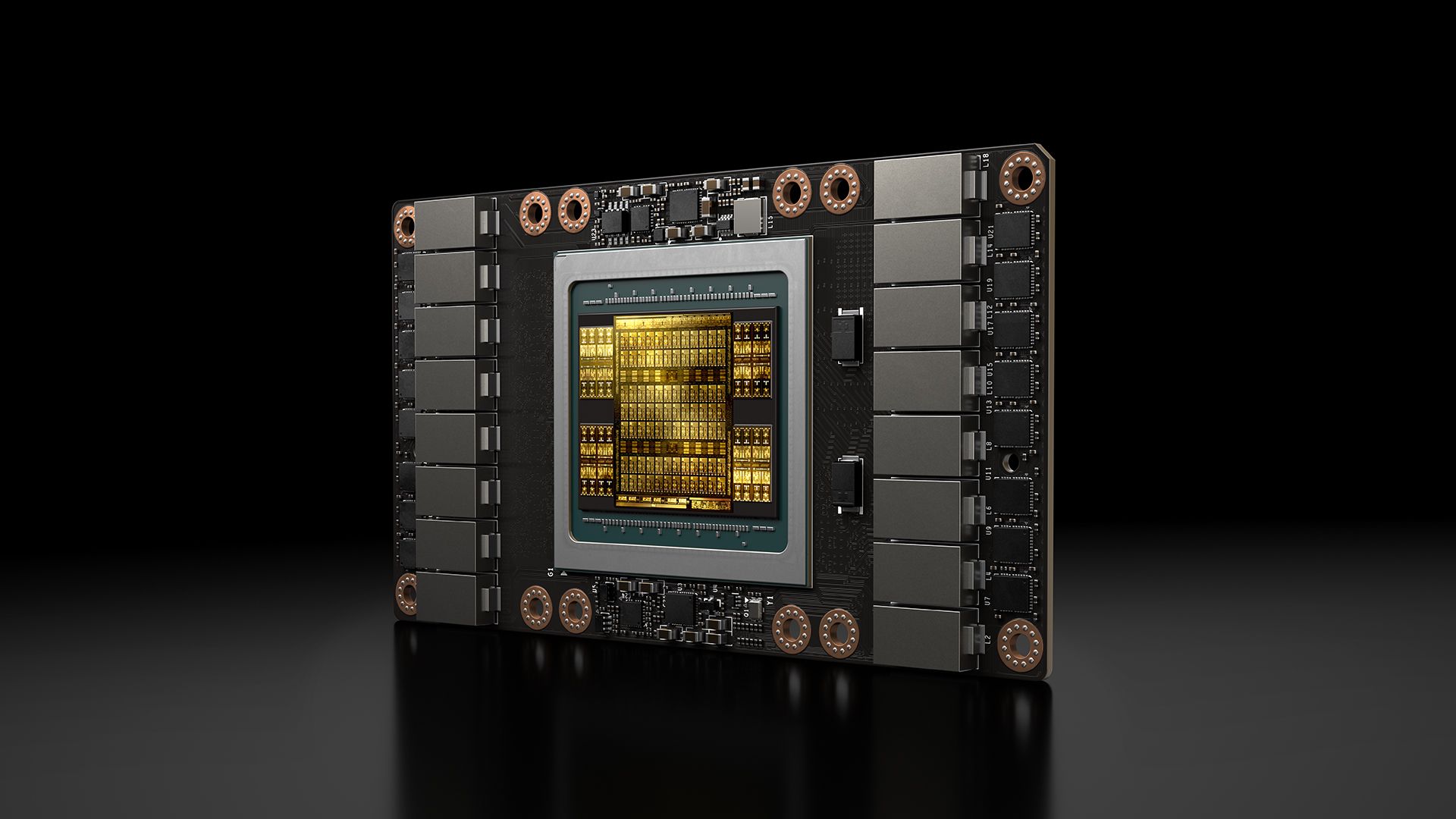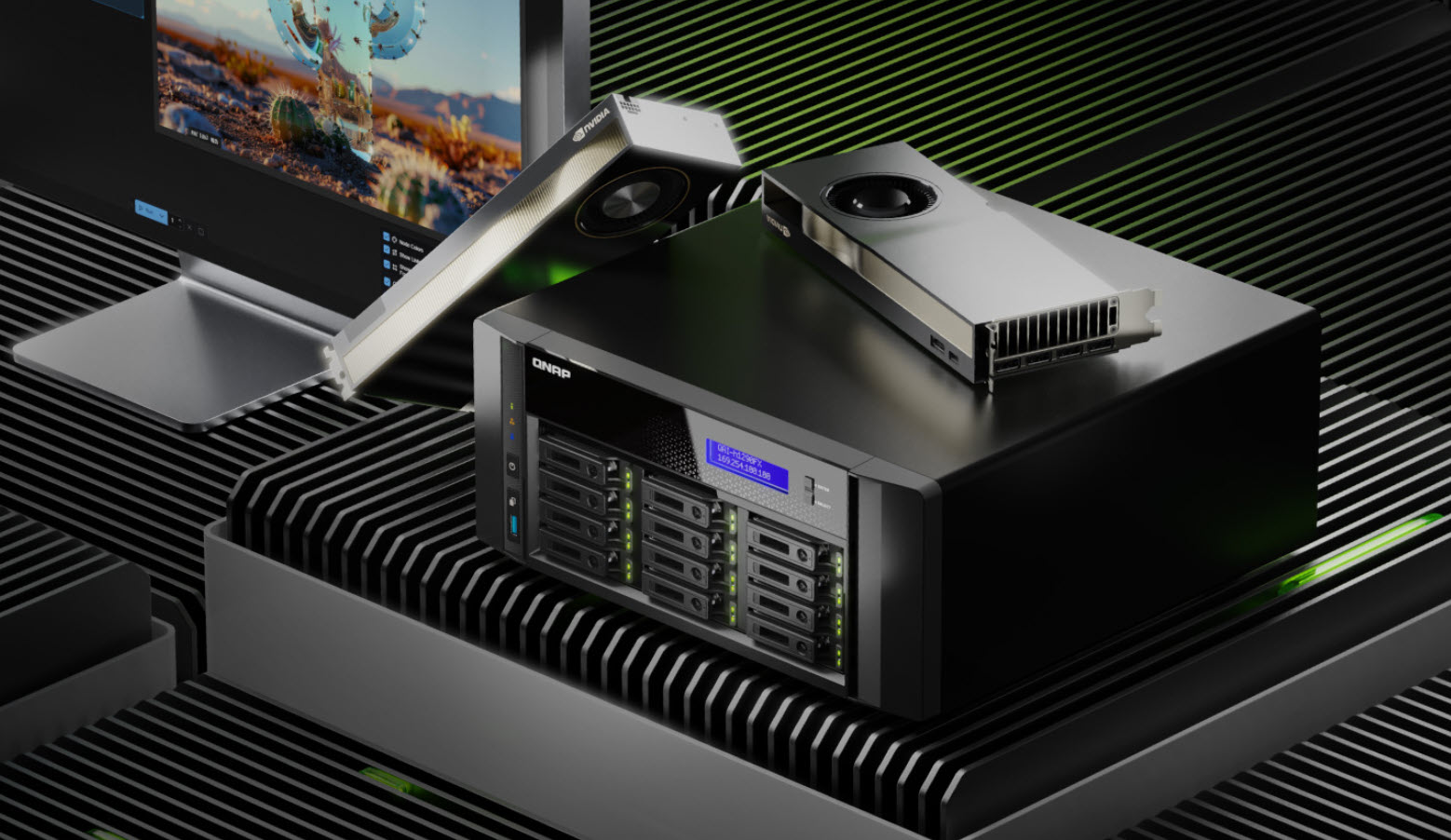
The whirring fans of QNAP’s new QAI-h1290FX AI NAS are a proof to a peculiar market strategy. Here’s the thing: in one corner, you’ve got NVIDIA’s absolute titan of a GPU, the RTX PRO 6000 Blackwell, boasting a staggering 96GB of memory and all the CUDA cores you could dream of for serious LLM inference. And in the other corner? An AMD EPYC 7302P CPU. This isn’t a typo. It’s a 16-core, Zen 2 architecture chip that debuted back in 2019, a full six years ago. Six years in CPU development is an eternity. It’s like pairing a supersonic jet with a propeller engine.
QNAP is clearly targeting the on-premises generative AI (GenAI) market, touting support for LLMs, Retrieval-Augmented Generation (RAG), and other AI workloads. The pitch is simple: keep your sensitive data in-house, ditch cloud dependency, and get significant compute power. The inclusion of the RTX PRO 6000 Blackwell GPU certainly underscores that ambition. This GPU alone is designed to handle massive models, with QNAP suggesting it’s ideal for 70B+ parameter LLMs. The raw data they’ve provided, showing speeds up to 172 tokens/second for smaller models and impressive vLLM concurrency for larger ones, is compelling on the GPU front.
Why the EPYC 7302P? A Curious CPU Choice
But the CPU. Oh, that CPU. The EPYC 7302P, based on AMD’s Zen 2 architecture, was a respectable server chip in its day. It offered decent core counts and PCIe Gen 4 support, which was important for high-speed I/O. However, we’re now well into Zen 4 and even eyeing Zen 5 in the server space. Newer EPYC generations offer significantly higher core counts, vastly improved IPC (instructions per clock), better memory bandwidth, and more advanced I/O capabilities. The performance gap between a 2019 Zen 2 and a 2023/2024 Zen 4 or Zen 5 EPYC is not incremental; it’s a chasm. For AI inference, especially where data preprocessing and model orchestration are critical, a modern CPU can make a substantial difference in overall system throughput and latency.
QNAP’s product page highlights the CPU’s 16 cores and 32 threads, calling it “server-class compute power—ideal for AI inference, virtualization, and heavy parallel workloads.” This statement feels like a stretch when juxtaposed with a flagship 2024 GPU. It suggests QNAP is either trying to hit a very specific, lower price point by recycling older server components, or they genuinely underestimate the impact of CPU bottlenecks in a modern AI pipeline. Given the unit’s pricing, which tops out at a cool $15,999 for 256GB of RAM (RAM sold separately, mind you), cost savings on the CPU seem less likely to be the primary driver.
All-Flash, High-Speed Networking, But What About the CPU?
The rest of the QAI-h1290FX is suitably modern, at least on paper. It features an all-flash storage architecture with twelve U.2 NVMe/SATA SSD slots, promising ultra-fast I/O. High-speed networking is also a focus, with dual 25GbE and dual 2.5GbE LAN ports, and the option for 100GbE upgrades via PCIe slots. The system supports containerized AI environments, Docker, LXD, and an AI app center for easy deployment. This is all standard fare for an edge AI appliance. It’s the GPU-CPU pairing that feels fundamentally unbalanced.
It’s hard not to see this as a potential bottleneck. While the RTX PRO 6000 Blackwell can churn through data, the EPYC 7302P might struggle to feed it efficiently, especially with more complex workflows or when handling system management tasks alongside inference. Imagine driving a Formula 1 car with the steering wheel from a vintage sedan. You’ve got incredible acceleration and braking, but the control and responsiveness are severely hampered.
So, what’s the unique insight here? This isn’t just QNAP being thrifty. This is a microcosm of a broader industry trend: the overwhelming importance of specialized accelerators—GPUs, TPUs, NPUs—driving the AI revolution. Companies are willing to pour vast sums into these components, sometimes to the detriment of balanced system design. It’s a strategy that can work if the CPU is “good enough” for very specific, narrow inference tasks where the GPU is the absolute, undisputed kingpin. But for broader AI development and deployment, it’s a gamble.
Is This a Smart Play for Edge AI?
QNAP is betting on its established NAS infrastructure and its ability to integrate high-end GPUs. The appeal for businesses is undeniable: a single, integrated appliance for AI workloads, promising local control and potentially lower TCO than cloud alternatives. The flexibility to scale storage with JBOD expansion and upgrade networking is also a plus. However, the choice of an aging CPU presents a significant question mark.
Will this machine offer a compelling user experience for demanding AI tasks? The benchmarks QNAP provides are a good starting point, but they often focus on GPU-bound metrics. Real-world performance will depend heavily on how well the CPU can keep up. For smaller, dedicated inference tasks, it might be sufficient. But for developers pushing the boundaries or running multiple models concurrently, the EPYC 7302P could prove to be a significant drag. It’s a product that feels like it’s trying to bridge two different eras of computing, and not always gracefully.
The question isn’t just about raw GPU power, but about the entire system’s ability to efficiently use it. An aging CPU in an otherwise bleeding-edge AI appliance raises serious concerns about its long-term viability and performance ceiling.
QNAP offers a 5-year warranty, which is excellent, but the system itself feels like it’s built on a foundation that’s already several years old. The pricing, while not astronomical compared to dedicated server builds with similar GPUs, is still substantial. At $8,999 for the base configuration (with a lesser GPU, presumably), and scaling up, users are paying a premium for that high-end NVIDIA silicon. The critical factor will be whether the system as a whole delivers a coherent, high-performance AI experience, or if the vintage CPU becomes an unavoidable bottleneck, diminishing the value of that expensive Blackwell GPU.
Performance Benchmarks from QNAP
QNAP provided performance figures for its new AI NAS, showcasing the capabilities of the NVIDIA RTX PRO 6000 96 GB Blackwell GPU across various LLM models.
| Mode | Token/sec | VRAM Usage |
|---|---|---|
| gpt-oss:120b (MXFP4) | 90 Token/sec | ~63GB |
| deepseek-r1:70b (q4_K_M) | 24 Token/sec | ~41GB |
| qwen3:32b (q4_K_M) | 46 Token/sec | ~21GB |
| gemma3:27b (q4_K_M) | 54 Token/sec | ~19GB |
| deepseek-r1:8b (q4_K_M) | 140 Token/sec | ~7GB |
| qwen3:8b (q4_K_M) | 172 Token/sec | ~7GB |
Further concurrency tests using vLLM for the DeepSeek-R1-Distill-Qwen-7B model revealed:
| Thread | Total Token/sec | avg Token/Thread/Sec |
|---|---|---|
| 1 | 79 Token/sec | 79 Token/sec |
| 2 | 166 Token/sec | 83 Token/sec |
| 5 | 410 Token/sec | 82 Token/sec |
| 10 | 688 Token/sec | 68.8 Token/sec |
| 20 | 810 Token/sec | 40.5 Token/sec |
| 50 | 850 Token/sec | 17 Token/sec |
And for the openai/gpt-oss-20b model:
| Thread | Total Token/sec | avg Token/Thread/Sec |
|---|---|---|
| 1 | 218 Token/sec | 218 Token/sec |
| 2 | 340 Token/sec | 170 Token/sec |
| 5 | 1045 Token/sec | 209 Token/sec |
| 10 | 880 Token/sec | 88 Token/sec |
| 20 | 600 Token/sec | 30 Token/sec |
These figures highlight the GPU’s throughput, but the diminishing average tokens per thread at higher thread counts on the larger models hints at potential CPU contention.
🧬 Related Insights
- Read more: NVIDIA’s GH200 Just Clocked Single-Digit Microsecond Latency in Trading – GPUs Strike Back at FPGAs
- Read more: Moore’s Law: History, Current Status, and What Comes Next
Frequently Asked Questions
What is the QNAP QAI-h1290FX?
The QNAP QAI-h1290FX is an Edge AI Network Attached Storage (NAS) device designed for on-premises generative AI workloads. It pairs a powerful NVIDIA RTX PRO 6000 Blackwell GPU with an older generation AMD EPYC CPU and high-speed storage.
Can this NAS run large language models locally?
Yes, it’s specifically designed for running large language models (LLMs) and other GenAI applications locally, with the NVIDIA RTX PRO 6000 Blackwell GPU providing significant compute power for models up to 70B parameters and beyond.
What are the main concerns with this AI NAS?
The primary concern is the pairing of a cutting-edge GPU with a significantly older CPU (AMD EPYC 7302P, Zen 2 architecture from 2019). This could lead to CPU bottlenecks, limiting the overall performance and efficiency of AI inference tasks, despite the powerful GPU.