Let’s talk about 3.2 terabits per second. That’s the kind of mind-boggling data rate Vishay Intertechnology is now aiming for with its new thin film submount platform. Forget incremental upgrades; we’re talking about pushing the envelope for optical transceivers and RF modules where heat dissipation and signal integrity aren’t just nice-to-haves, they’re the absolute bedrock of functionality.
Vishay’s pitch is simple: their precision deposition of passive circuit elements and machining of advanced ceramics like aluminum nitride (AlN) deliver superior thermal conductivity and dimensional stability. This is crucial as components cram closer and power densities climb sky-high. It’s the kind of engineering challenge that separates the good from the, well, the ones that melt.
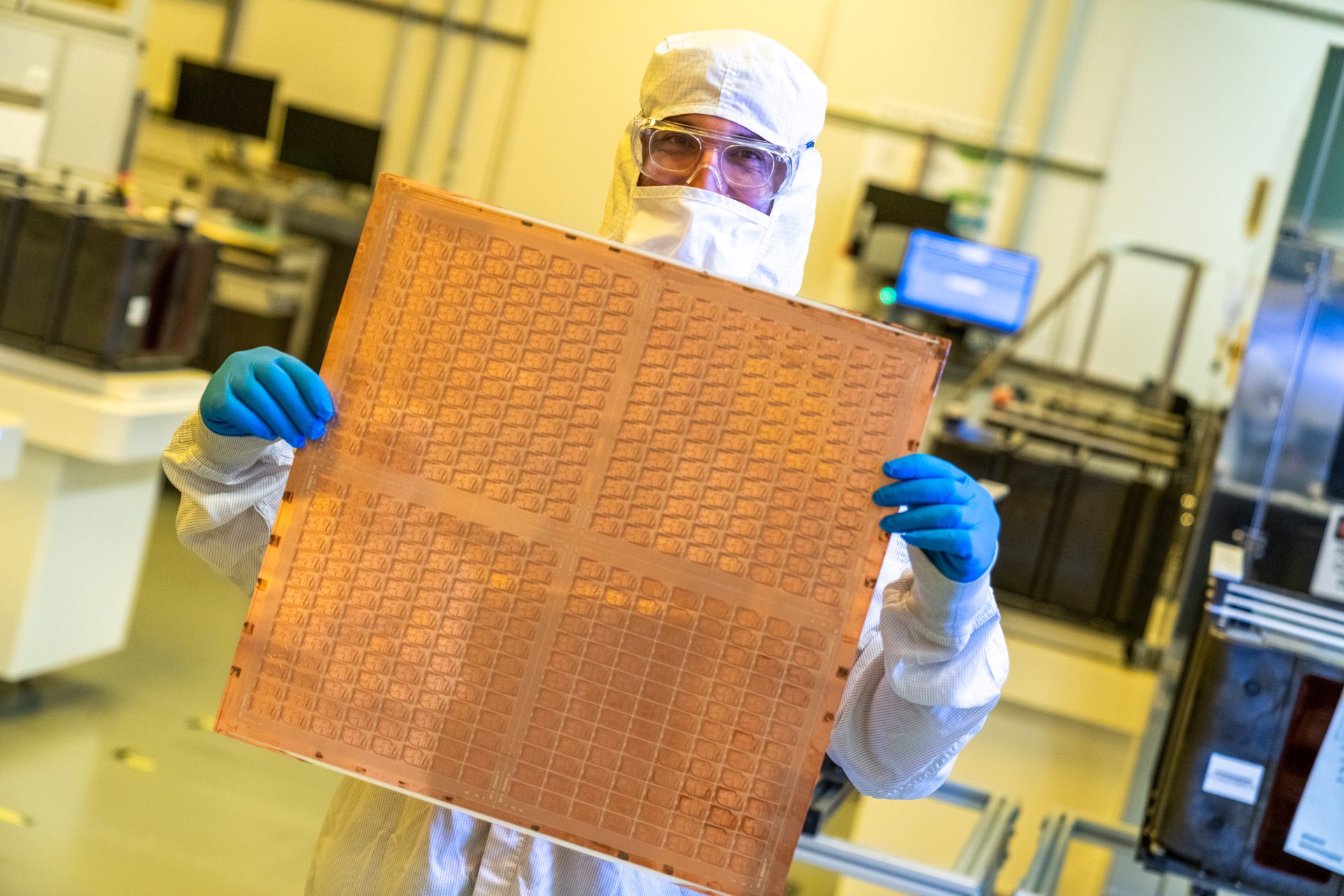
The architecture here hinges on what Vishay calls “thin film metallization.” This isn’t your grandpa’s circuit board. We’re talking about depositing ultra-thin layers of conductive material—think gold-tin solder (AuSn) or epipolishing-grade metals—directly onto a substrate. The substrate itself, often AlN, is chosen for its exceptional ability to draw heat away from sensitive active components.
Why does this matter for 800G, 1.6T, and 3.2T optical transceivers? Because at those speeds, even microscopic thermal fluctuations or signal reflections can cause catastrophic errors. The tighter packaging constraints of these next-generation systems leave little room for error, and conventional solutions simply can’t keep pace. Vishay’s approach aims to tackle thermal management right at the device level, ensuring that signals remain crisp and clean even when things get hot.
Is This Just Marketing Hype, or a Real Architectural Shift?
Michael Casper, Vishay’s vice president of specialty thin film, states, “Next-generation photonics and RF systems push the limits of thermal, mechanical, and electrical performance at the package level.” He goes on to say the platform offers a “flexible solution that enables high performance without compromising reliability.” And sure, that sounds great. But the real story is in the how. The ability to integrate these precise metallization layers and then machine the substrate with such tight tolerances is what truly underpins their claim. It’s a dance between subtractive manufacturing (machining away material) and additive (depositing material), executed with extreme precision.
Think of it like building a miniature city where every skyscraper needs perfect plumbing and electrical wiring, all within a footprint no bigger than a postage stamp. The submount is the foundation and the city’s infrastructure, ensuring everything functions smoothly. The components mounted on it are the skyscrapers, and they’re getting taller and hotter than ever.
The company is emphasizing quick-turn prototyping alongside high-volume production, a critical factor for industries like defense and aerospace where design iterations are common but reliability is non-negotiable. Their claim of “reduction in manufacturing complexity” by offering pre-deposited metallization and precision machining is key. This offloads some of the most challenging steps from the module designer, letting them focus on the optical or RF circuitry rather than the fundamental substrate preparation.
Vishay’s announcement also highlights design flexibility: tailored geometries, specific metallization schemes, and integrated circuits. This isn’t a one-size-fits-all commodity part; it’s a platform designed to be customized. For applications demanding stringent performance and environmental requirements, especially in high-reliability sectors like space and defense, this level of customization is often paramount. They aren’t just selling a part; they’re selling a solution, and that’s a smart play in a market hungry for performance.
The ‘DNA of Tech’: Vishay’s long-standing position as a broad-line manufacturer of discrete semiconductors and passive components gives them a unique perspective. They understand the ‘DNA’ of electronic systems because they make so many fundamental building blocks. This deep foundational knowledge allows them to anticipate the needs of emerging technologies like ultra-high-speed optical transceivers and build solutions that address the cascading system requirements.
Why Does This Matter for Developers and Engineers?
For engineers designing the next generation of high-speed data communication hardware, this means more options and potentially fewer headaches. The ability to offload complex thermal and precision alignment challenges to a specialized submount can accelerate development cycles and improve the final product’s performance and reliability. It signifies a move towards more integrated and sophisticated packaging solutions, driven by the relentless demand for faster, more efficient electronics. It’s a sign that the packaging and interconnect layer—often an afterthought—is becoming a critical design differentiator at the bleeding edge of technology.
🧬 Related Insights
- Read more: Toilet Maker Toto Surges 18% on AI Chip Components
- Read more: Sub-1nm Chips: IMEC Roadmap Pushes Tech to 2046
Frequently Asked Questions
What are optical transceivers? Optical transceivers are devices that convert electrical signals into optical signals for transmission over fiber optic cables, and vice versa. They are essential for high-speed data communication over long distances.
Will this make my internet faster? Directly? Probably not. This technology is for the high-end infrastructure supporting data centers and telecommunications networks, not directly for your home router. However, improvements in this infrastructure ultimately contribute to a faster and more reliable internet for everyone.
Is aluminum nitride (AlN) new for thermal management? Aluminum nitride has been recognized for its excellent thermal conductivity for decades and is widely used in demanding thermal applications, particularly where electrical insulation is also required. Vishay’s innovation lies in its integration and precision machining with specific thin film metallization for these cutting-edge high-frequency applications.