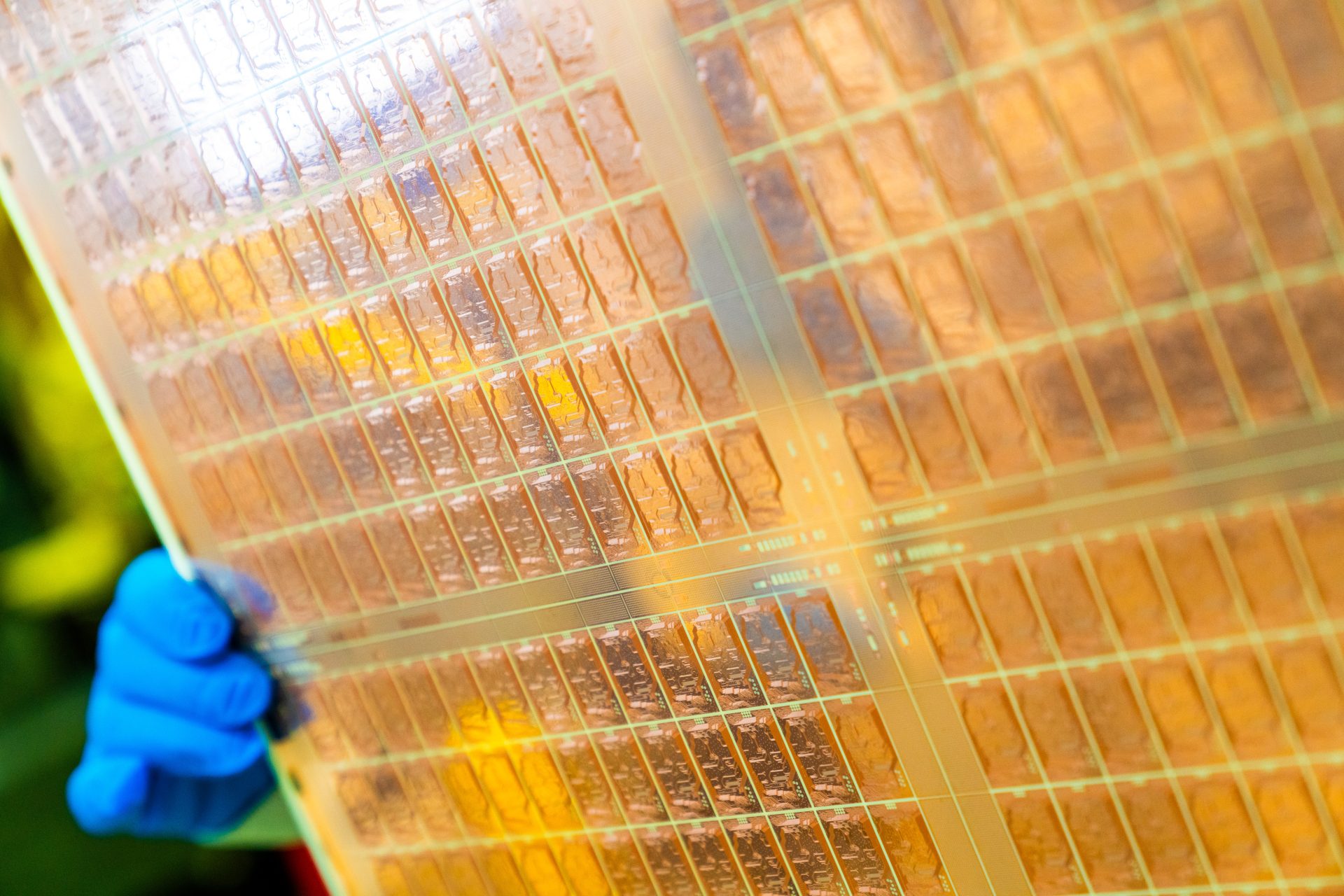
Everyone expected incremental improvements. More silicon, faster clock speeds, perhaps a slight nudge in power efficiency. What we didn’t widely anticipate, at least not this soon, was a fundamental architectural shift in how chips are physically constructed and interconnected. Yet, that’s precisely what Intel’s latest Glass Core Substrate prototypes, complete with co-packaged optics, are signaling.
Seen at OFC 2026, these aren’t just early mockups; they’re tangible evidence that the industry’s quiet desperation for advanced packaging solutions is finally yielding radical innovation. Forget your standard organic laminates for a moment. Intel is betting big on glass, and early prototypes with integrated optics suggest that the AI hardware revolution might look very different than predicted.
The AI Supercycle’s Strain on Traditional Substrates
The current AI gold rush has put an almost unbearable strain on the foundational components of high-performance computing. Traditional organic substrates, the very bedrock upon which our current chip empires are built, are not only facing severe supply shortages— Ajinomoto, a major player, has already signaled price hikes—but also technical limitations. The sheer density of compute and memory required by modern AI models is pushing the boundaries of what copper interconnects on these organic materials can handle.
This is where glass enters the picture. It’s not just a transparent novelty; the material properties offer distinct advantages. Higher thermal stability, better signal integrity at higher frequencies, and crucially, the potential for vastly increased interconnect density. The prototypes themselves showcased four compute chiplets, four DRAM chipsets, and eight smaller auxiliary chipsets, all neatly arranged on a clear glass wafer. But the real showstoppers were the eight yellow components on the periphery: co-packaged optical interfaces.
Optics: The Highway to Next-Gen Bandwidth
Co-packaged optics (CPO) represents a paradigm shift away from bulky electrical connections. Instead of relying on copper traces that become bottlenecks and generate heat, CPO embeds optical transceivers directly onto the same package as the processor. This translates electrical signals into light, which can then travel much faster and over longer distances with significantly less energy loss. Think of it as ditching a congested suburban road for a high-speed, multi-lane bullet train.
NVIDIA and AMD are already in a race to bring CPO solutions to market by 2027-2028. Intel’s integration of these optical interfaces onto their glass substrates, even in prototype form, suggests they’re not just playing catch-up but aiming to define the next standard. The implications for data centers are staggering – massively increased bandwidth and reduced power consumption, crucial factors for the exponentially growing demands of AI training and inference.
Why Glass? The Material Advantage
The benefits Intel touts for its glass core substrates are substantial: a potential 10x increase in interconnect densities, allowing for far more chiplets to be integrated within a smaller footprint. This density is key to overcoming the limitations of scaling up silicon area alone. Furthermore, the manufacturing process for glass wafers, often rectangular, promises higher yields compared to the traditional round wafers, an often-overlooked aspect of cost-effective scaling.
This integration of glass substrates and co-packaged optics isn’t a distant dream. With partners like Amkor indicating readiness within three years, the first commercial rollouts are pegged for 2029-2030. If these glass substrates live up to their marketing, Intel’s Foundry services could become a dominant force in the AI chip manufacturing landscape.
The glass substrate is clear because it uses, well, glass, hence the transparency, while ceramics and organic substrates are often purplish brown and green in color, respectively.
This might sound like a trivial observation, but the transparency is a direct consequence of the material choice and points to its purity and potential for optical integration. It’s a visual cue that underscores a deeper architectural departure.
A Bold Bet on the Foundry Future
Intel’s aggressive push into glass substrates and CPO isn’t just about their own internal needs; it’s a strategic play for their foundry business. By offering cutting-edge packaging solutions that address critical industry pain points—supply constraints and bandwidth limitations—they’re positioning themselves as the go-to manufacturer for the next generation of AI hardware. This is less about an incremental product update and more about redefining the very infrastructure of high-performance computing. The question isn’t whether this technology will arrive; it’s how quickly it will disrupt the established order.
🧬 Related Insights
- Read more: AWS’s Trainium Lifeline: Will Amazon’s Custom Chips Rescue Its AI Laggard Status?
- Read more: Chips&Media CEO Steve Kim: 3 Billion Devices or Video IP Hot Air?
Frequently Asked Questions
What does Intel’s glass substrate technology do?
Intel’s glass substrate technology aims to replace traditional organic substrates in advanced chip packaging. It offers significantly higher interconnect densities and better thermal properties, enabling more complex and powerful chiplet-based designs, especially when combined with co-packaged optics.
Will this technology replace current chips immediately?
No, this is an emerging technology. Commercial rollouts are expected around 2029-2030, meaning current organic substrate-based chips will remain dominant for several years. However, it signals a major architectural shift that will influence future chip design and manufacturing.
How does this affect the AI hardware supply chain?
By offering a new, high-density substrate solution potentially less constrained by current supply issues, Intel’s glass substrates could alleviate some of the pressure on the AI hardware supply chain. Its integration with co-packaged optics also promises to boost data transfer speeds, crucial for next-generation AI accelerators.