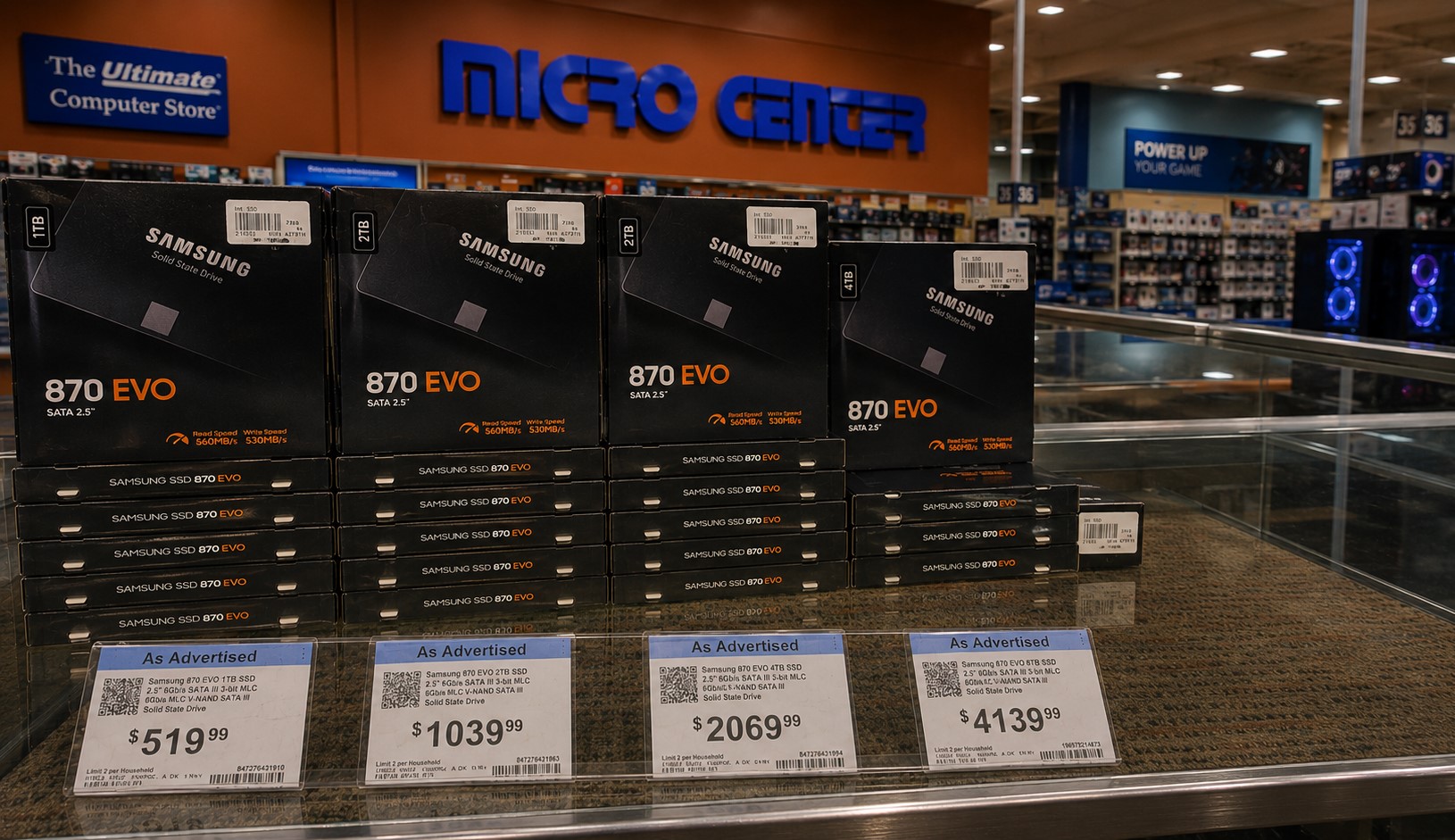
Are we witnessing a fundamental reordering of the storage market, or is this just a bizarre retail anomaly?
That’s the question rattling around the tech community after a sharp-eyed Redditor spotted Samsung’s 8 TB 870 EVO SATA SSD listed at Micro Center for a staggering $4,139. To put that in perspective, that’s more than double the price of many high-end 2 TB NVMe drives, and a price point that would make even an enthusiast blush. It’s not just the 8 TB behemoth; the entire 870 EVO SATA line at this retailer appears to be suffering from sticker shock, with the 1 TB model hitting $519 and the 2 TB crossing the $1,000 mark.
This isn’t just about a few outliers. The data is becoming undeniable: SATA SSDs, long the workhorse of budget-conscious builds and older systems, are now frequently commanding higher prices per gigabyte than their significantly faster NVMe cousins. We’re talking about drives that offer sequential read/write speeds measured in the hundreds of megabytes per second, while NVMe drives boast speeds in the gigabytes. Why would anyone pay a premium for slower technology?
Micro Center’s Sticker Shock: A Market Signal?
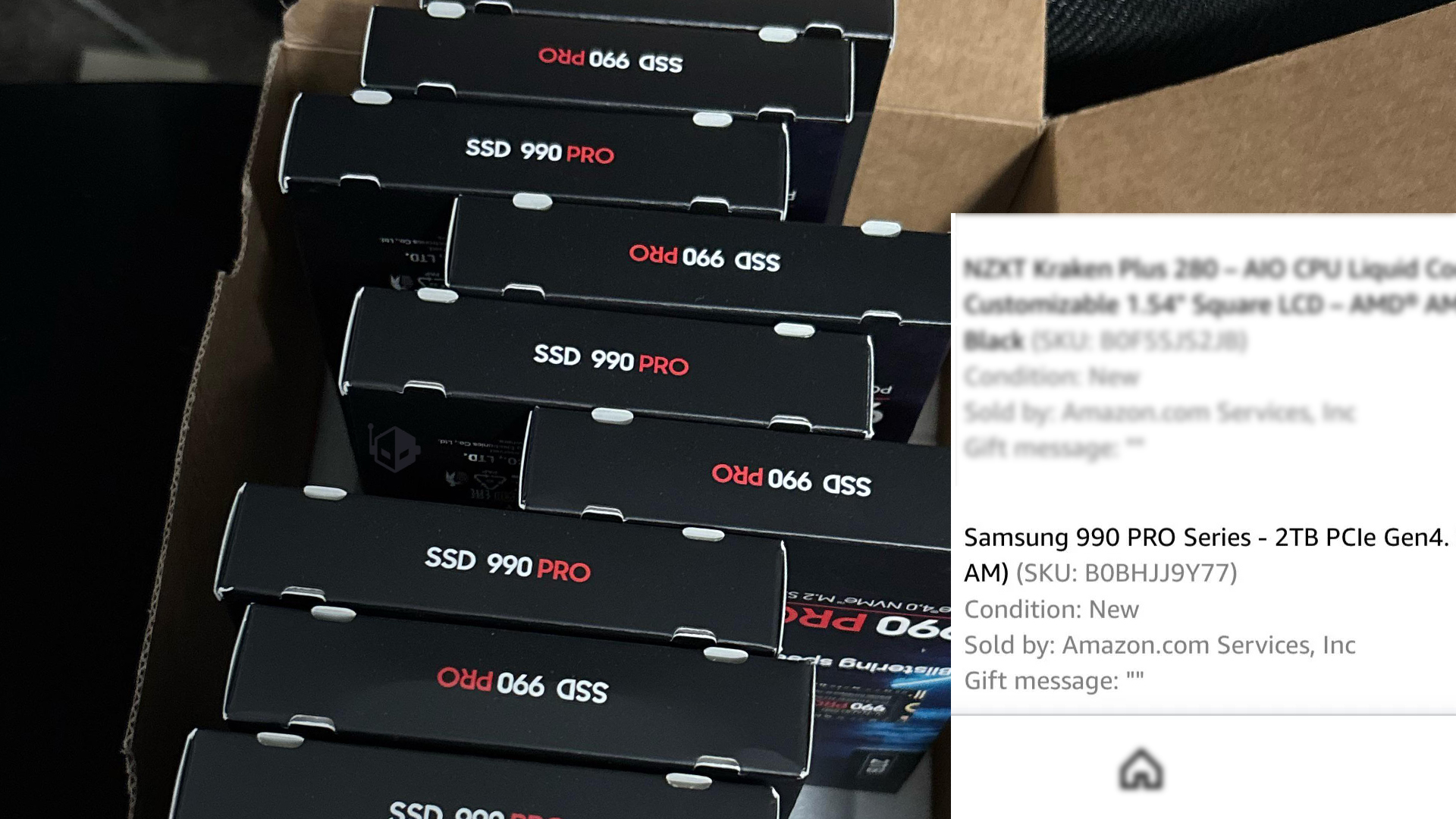
Let’s look at the numbers. Micro Center lists the Samsung 870 EVO 1 TB SATA SSD at $519. For that same capacity, you can easily snag a WD_Black SN7100 1 TB NVMe drive for around $189, or even Samsung’s own top-tier 990 PRO 1 TB for $249. That’s not a slight difference; it’s a nearly 200% premium for a technologically inferior product. The situation only escalates with larger capacities: the 2 TB 870 EVO at $1,039, the 4 TB at $2,069, and the aforementioned 8 TB monster at $4,139. These aren’t prices that reflect competitive market dynamics; they scream scarcity, or perhaps, a severe mispricing strategy.
Amazon offers some solace, listing the same 1 TB 870 EVO for $449. Still exorbitant when compared to NVMe, but it at least suggests Micro Center might be an extreme outlier, albeit a very visible one. The fact that these drives still carry a “Limit 2 per Household” notice, especially when the shelves appear stocked, only adds to the confusion – or perhaps points to a genuine, albeit perplexing, demand.
Why Is This Happening?
Several factors could be at play here. Production volumes are an obvious culprit. As the industry shifts towards the faster, more desirable NVMe interface, SATA SSD production lines may be winding down or reallocated. Lower output naturally leads to higher per-unit costs, especially if demand, however irrational, persists. Furthermore, the enterprise market, which often utilizes higher-capacity SATA drives, could be creating a demand squeeze that’s trickling down to the consumer space.
But here’s the real kicker, the point that transcends mere price discrepancies: this entire situation feels like a symptom of a broader supply chain hiccup, or worse, a strategic pricing play that fundamentally misunderstands the value proposition for the average consumer. We’ve seen memory and storage prices fluctuate wildly before — remember the ‘RAMpocalypse’? — but this feels different. It’s a deliberate pricing of slower tech above faster tech, which is, frankly, absurd.
Will SATA SSDs Disappear Entirely?
It’s unlikely. Legacy systems and certain industrial applications will continue to rely on the SATA interface for the foreseeable future. However, for new builds and upgrades, the writing is firmly on the wall. The price-to-performance ratio of NVMe is simply too compelling to ignore. Consumers are becoming increasingly educated, and the irrationality of paying more for less speed will eventually correct itself, either through market forces or a clear explanation from manufacturers about the underlying economics.
For now, if you’re in the market for an SSD, my advice is straightforward: look at NVMe. Unless you have a highly specific, legacy-bound requirement, the current pricing landscape makes SATA drives, particularly at these inflated figures, a non-starter. It’s a buyer’s market for speed, and the SATA interface appears to be the one getting left in the dust, price-wise.
Is This a Sign of Broader Storage Shortages?
While the extreme pricing of these specific Samsung SATA SSDs at Micro Center might suggest broader shortages, it’s more likely indicative of a confluence of factors: reduced SATA production, persistent demand from specific sectors, and potentially opportunistic retail pricing. The broader SSD market, especially for NVMe, remains competitive, with many viable alternatives available at more sensible price points. This anomaly highlights a specific segment’s pricing dynamics rather than a universal scarcity across all SSD types.
What Does This Mean for PC Builders and Gamers?
For PC builders and gamers, this pricing trend is a clear signal to prioritize NVMe SSDs. The performance difference between SATA and NVMe is substantial, impacting game load times, system responsiveness, and overall user experience. The current inflated prices of SATA drives make them a poor value proposition, even for budget builds, when competitive NVMe options exist. Stick to NVMe for optimal performance and, paradoxically, often better value right now.