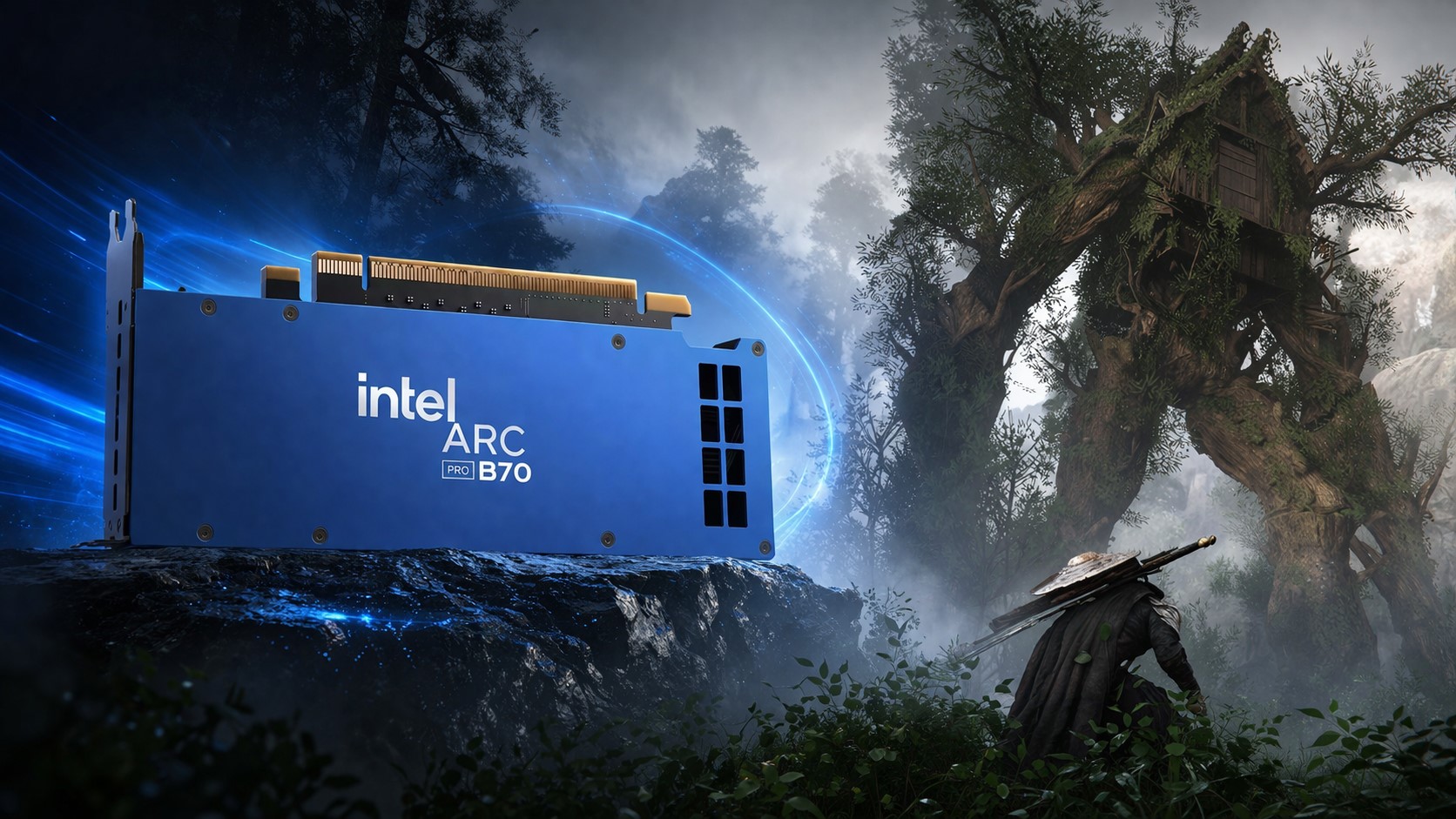
Expectations for Intel’s Arc Pro B70—the beastly Battlemage workstation GPU—centered on CAD renders, AI training runs, maybe some video encoding marathons. Not this. Not firing up Pearl Abyss’s Crimson Desert, a console-grade open-world RPG, and pulling 70-80 FPS averages with 1% lows in the 60s.
But here’s the twist that flips the script: it’s a buggy mess below Ultra settings.
Tech Guy Beau, the YouTuber who cracked this open, tested the B70’s BMG-G31 die (exclusive to pro cards, mind you—no consumer Arc has it yet). Game launches fine post-patch. XeSS 3 and Frame Gen support lands officially. Yet shimmering artifacts—those irksome twinkles on edges, textures crawling like ants—wreck Medium or High presets. Switch to Ultra? Poof, gone.
“The GPU delivers around 70-80 FPS on average with 1% lows in 60s… However, there seems to be some kind of bug that is resulting in a lot of shimmering in the game when it is run on anything other than Ultra presets.”
That’s straight from Beau’s footage, via the patch notes echo. Weird, right? Workstation silicon shouldn’t care about game presets, but here we are.
Why Intel Arc Pro B70 Chasing Games Changes Everything
Look, Intel’s Arc lineage started as a consumer gaming Hail Mary—Battlemage was supposed to fix driver woes, compete with RTX 4060s. Pro variants? They’re for enterprise bucks, certified by ISVs for stable, predictable compute. Seeing B70 tackle Crimson Desert signals Intel’s blurring lines.
Workstation GPUs historically shunned games—NVIDIA’s pro cards throttle fun to prioritize pro apps; AMD’s Radeon Pro line does the same. Intel? They’re all-in on ‘universal’ graphics. This patch—three weeks post-launch—shows Pearl Abyss buying in, adding Arc discrete/iGPU support plus Intel’s upscaling stack. Market dynamic shift: if pro cards game viably, IT admins might greenlight them for dual-use, slashing consumer Arc R&D costs via shared silicon.
But artifacts. They’re not just cosmetic. Shimmering screams unoptimized temporal anti-aliasing or TAA—common early-days plague for new GPU architectures. Consumer Arcs suffer it too; this B70 test mirrors Alchemist’s rocky RTX 30-series debut. Intel’s ReBAR fixation (still mandatory on some titles) compounds it. Prediction: Pearl Abyss patches this in 4-6 weeks, but it’ll expose Arc’s greenness.
And XeSS 3? Boosts FPS a tad, sure—but “detexturing” assets, per Beau. FSR 3.1 looks sharper. Intel’s upscaler lags its hype—remember Lunar Lake’s XeSS promises? Same story.
Is Intel Arc Pro B70 Ready for Gaming Workloads?
Short answer: Barely.
This isn’t hype; it’s data. 70-80 FPS at what res? Beau’s clips suggest 1440p-ish, no RT—solid for a workstation card, beating prior-gen Arc A-series in raw raster. Compare to RTX A4000 (pro peer): similar perf, but NVIDIA’s drivers are battle-tested. Intel’s? Still ironing kinks three gens in.
My unique take—and it’s a doozy—Intel’s playing 1997 all over again. Back then, 3dfx Voodoo ruled gaming; Radeon’s launch bombed on artifacts, drivers. ATI pivoted hard, owned the 2000s. Intel Arc echoes that: Battlemage B70 proves hardware muscle (BMG-G31 crushes prior gens), but software’s the choke point. If Intel nails driver parity by Q2 2025, pro cards flood hybrid creative/gaming rigs. Miss? Enterprise sticks to Quadro.
Pearl Abyss deserves credit—fast Arc support post-launch beats Ubisoft’s eternal NVIDIA bias. But calling this ‘optimized’? Corporate spin. Artifacts scream beta. Fix it, or it’s PR fodder.
Performance roadmap looks promising, though. Regular patches should squash bugs; XeSS 3 proper could leapfrog FSR on Arc metal. Frame Gen’s already wiring in—70 FPS base jumping to 100+? Plausible. Workstation users dipping into after-hours gaming get a win; developers test on pro silicon without consumer detours.
Bottom line: B70’s Crimson Desert run validates Intel’s ambitions. Shimmering? Fixable hiccup. But don’t bet the farm yet—Arc’s proving ground is littered with launch stumbles.
What Does Crimson Desert Support Mean for Arc Owners?
Expands the ecosystem. iGPUs now playable; discrete consumer cards get parity. Market ripple: Intel undercuts NVIDIA on price-per-FPS in pro space, if stability lands.
Skeptical eye: Until Ultra-only artifact-free play, it’s demo-ware, not daily driver.
🧬 Related Insights
- Read more: Crimson Desert Patches In Intel Arc Support After Refund Fiasco — A Win for Battlemage Owners?
- Read more: Nvidia’s $2B Marvell Play: Locking Down AI’s Hidden Plumbing
Frequently Asked Questions
Does Intel Arc Pro B70 run Crimson Desert smoothly? 70-80 FPS yes, but artifacts hit hard on Medium/High—Ultra only for clean visuals.
Will shimmering artifacts get fixed on Arc GPUs? Likely via game patches; similar consumer Arc issues resolved before.
Is XeSS 3 better than FSR 3 on Intel Arc Pro B70? Not yet—FSR wins on visuals; XeSS detextures but boosts FPS slightly.