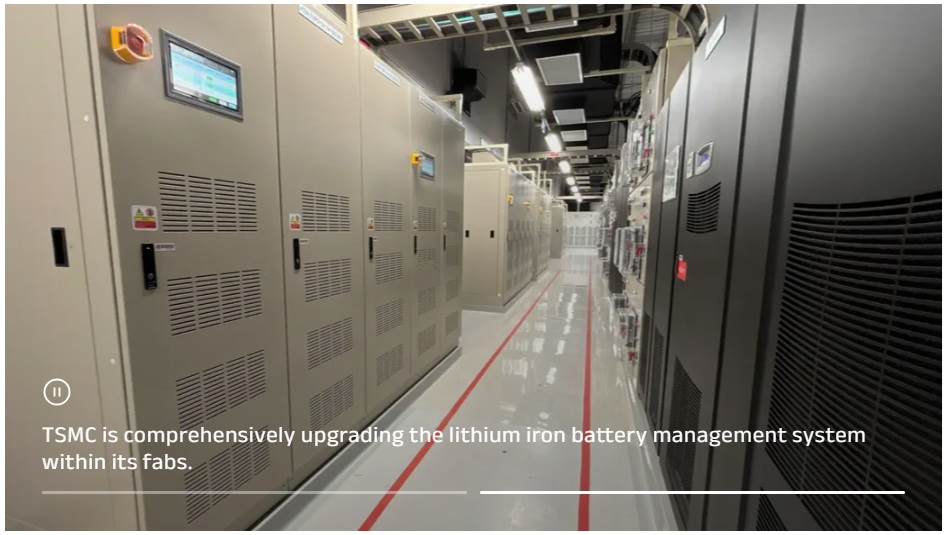
The hum of server racks is one thing. The silent, existential dread of a power flicker in a TSMC fab is another. This isn’t your garage battery backup. This is the heart of global chip production. And TSMC, bless its silicon soul, has finally decided its 408,000 lithium iron batteries deserve an upgrade beyond basic voltage checks. Enter the “Lithium Iron Battery Generation Upgrade Project.” Fancy name. Even fancier implications.
Look, the semiconductor industry runs on clean power. A hiccup means wafers costing millions go bye-bye. TSMC’s been swapping out old lead-acid dinosaurs for lithium iron phosphate (LFP) for a while now. They’re more efficient, last longer, and don’t poison the planet as much. Big win for sustainability, apparently. Earlier LFP forays already saved them enough juice to power a small city. Now, they’re going full digital brain on the whole lot.
A Decade in the Making?
This didn’t happen overnight. TSMC dipped its toes in the lithium battery pool back in 2017, with generation one. It mostly just checked voltages. Yay for rudimentary awareness. Then came generation two in 2018, blessedly compliant with some IEC safety standard. Temperature, state of charge, battery health – suddenly, things were getting observed. A huge leap. If you consider watching a toddler’s tantrum a form of advanced parental oversight.
But the real shift, the one that makes you sit up and notice, started in 2019. Generation three. This is where TSMC decided batteries shouldn’t just be there; they should talk. Real-time current tracking. Direct integration with the Supervisory Control and Data Acquisition (SCADA) systems. Suddenly, battery data isn’t just logged; it’s streaming. It’s being analyzed. Remotely. Predictive maintenance, anyone? This is the kind of granular oversight that prevents disasters, not just reacts to them.
When Does a Battery Become Intelligent?
This third-gen system is practically a tiny data center attached to a power source. Voltage, current, temperature, state of charge, state of health – all monitored with laser precision. TSMC claims this means they can spot abnormalities and find fault locations 25% faster. In an industry where seconds can equal fortune, that’s not trivial. It’s essential. Think of it as giving your critical infrastructure a high-tech nervous system.
And safety? They’ve gone full mad scientist, or rather, extremely cautious engineer. In 2024, they were deliberately setting batteries on fire (well, simulating it) to test their systems. Thermal runaway, they call it. Scary stuff. It’s when one bad apple – or in this case, a single overheated cell – can take down the whole orchard. By throwing extreme conditions at their upgraded BMS, they’re validating that their defenses actually work. Because a battery that claims to be safe is only as good as its ability to prove it when the heat is truly on.
The Finish Line
By Q1 2026, TSMC aims to have all those older battery management systems upgraded to this third-gen standard. Then, they’re adding another layer: trip devices. These are the bouncers at the door, automatically cutting power if the BMS screams “Danger!” It’s designed to prevent equipment damage and, you know, fires. All this should be done by 2027. So, a decade-long project to get its backup power sources to act less like dumb bricks and more like sentient guardians.
This whole endeavor is a stark reminder of the complexity lurking beneath the surface of our digital world. While we’re focused on AI models and new chip architectures, the foundries themselves are undergoing massive infrastructure upgrades. It’s not just about manufacturing more chips; it’s about manufacturing them reliably and safely. This battery project, while perhaps not as sexy as a new GPU, is absolutely critical. It’s how TSMC hedges its bets against the chaos of the grid and the inherent risks of storing vast amounts of energy.
🧬 Related Insights
- Read more: ZOTAC’s 20th: RTX 50 Series Giveaways Hint at Future
- Read more: Notebook Wars: Forget Specs, Your RAM Price Tag Decides Your Fate in 2026
Frequently Asked Questions
What is the “Lithium Iron Battery Generation Upgrade Project”? It’s TSMC’s initiative to modernize the battery management systems for its 408,000 lithium iron phosphate batteries across its global fabs, enhancing safety and operational resilience.
Why is TSMC upgrading its batteries? To improve reliability and safety in its power-intensive fabrication facilities, where even minor power disruptions can cause significant financial losses, and to support its sustainability goals.
When will the battery upgrades be completed? TSMC plans to complete the upgrade of existing battery management systems by Q1 2026 and the installation of additional safety trip devices by 2027.