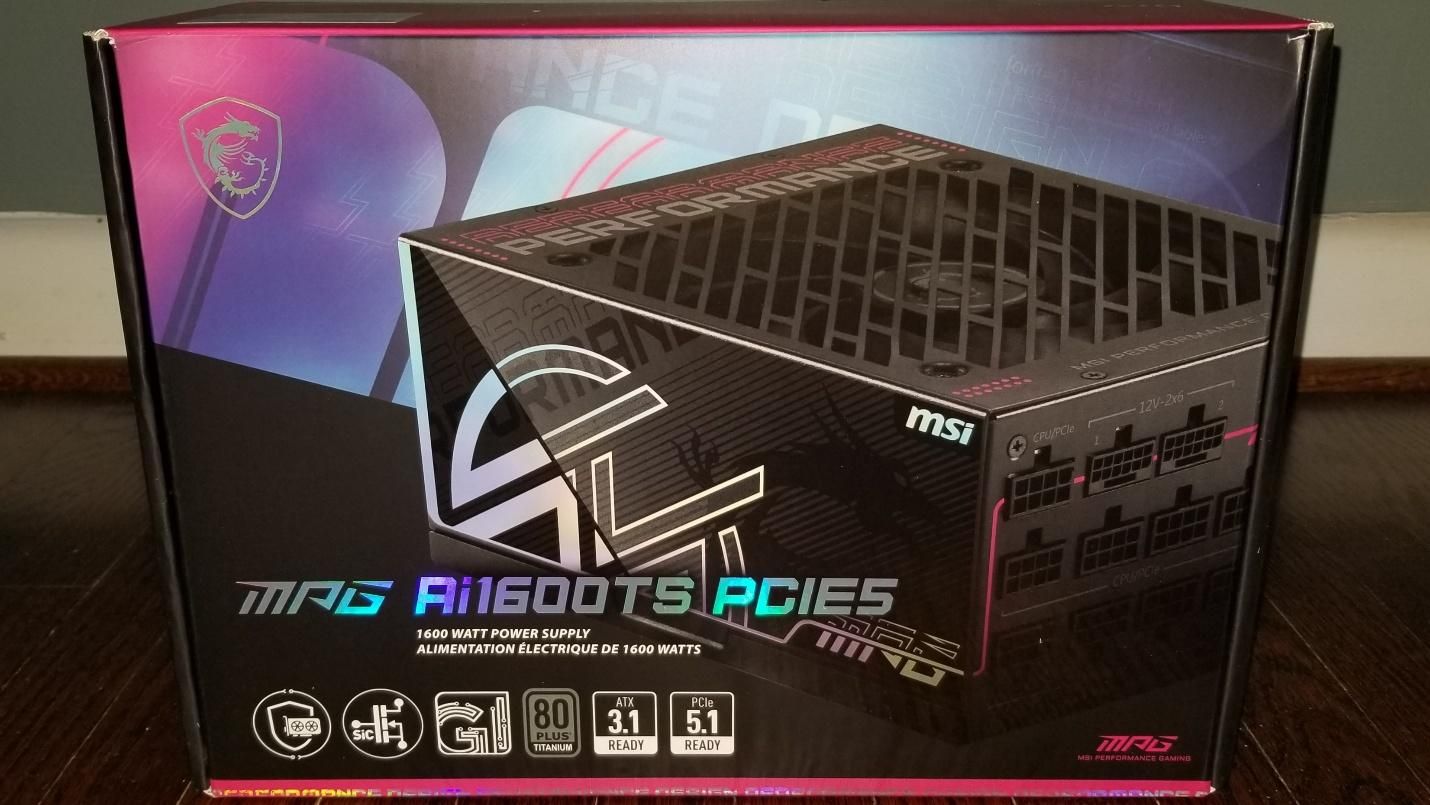
The air at CES 2026 crackled with the usual mix of hyperbole and genuine innovation, but amidst the dazzling displays, a quiet menace loomed large for a specific segment of PC enthusiasts: melting GPU power connectors. MSI, it seems, is taking direct aim at this expensive, headache-inducing issue with its new MPG Ai1600TS power supply, touting a feature called GPU Safeguard+.
And look, this isn’t just some marketing puffery. We’re talking about a real, tangible problem that has plagued users since the advent of the 12VHPWR standard. Reports of melted connectors and damaged GPUs, ranging from NVIDIA’s top-tier RTX 5090 down to more mainstream cards like the 9070 XT, have painted a grim picture for anyone pushing the limits of PC power. The goal of the 12VHPWR connector was simplicity – replacing multiple 8-pin connectors with a single, cleaner solution. But the reality, as it often does, proved more complicated.
The core issue boils down to a lack of strong load balancing and, frankly, user error. If that 12V-2x6 connector isn’t seated perfectly, excessive current can overload individual wires. This isn’t a hypothetical; it’s a documented path to fried hardware. While revisions to the connector spec and manufacturers adding visual cues like colored housings aim to mitigate this, the problem has persisted, often linked to adapter cables rather than native PSU connections.
Does MSI’s GPU Safeguard+ Actually Work?
This is where MSI’s GPU Safeguard+ enters the fray. It’s not just a passive component; it’s an active defense system. The power supply is designed to detect anomalies – be it an uneven current distribution across the 12V-2x6 pins or a sudden, dangerous spike in current. Once a fault is detected, the system doesn’t just shrug.
Instead, it initiates a multi-stage warning. First, a built-in buzzer sounds, and this alert is also accessible via software monitoring tools (more on that later). This audible warning persists for three minutes. The intention here is clear: give the user ample time to react. If the current levels normalize within that window, the buzzer continues, but the system remains operational, prompting the user to force a shutdown and inspect the connection. If, however, the anomaly persists, the power to the GPU is abruptly cut, plunging the display into darkness. Again, a shutdown is required, but the system has, at least, prevented catastrophic damage.
According to MSI, the three minutes between the first beep and the PSU cutting power to the GPU if the current remains abnormal are meant to allow the user to save their work before shutting down, or to take action on the user’s behalf if they are not around when the fault is detected.
That three-minute buffer is a smart, albeit slightly nerve-wracking, design choice. It balances immediate safety with the practicalities of using a high-performance system. For professionals who might have critical work ongoing, it’s a godsend. For the casual gamer, it might feel like an eternity. The key takeaway here is that the system prioritizes preventing damage over graceful shutdown in extreme scenarios.
Tapping Into the Data: Software Monitoring
The real meat of the GPU Safeguard+ system, from an analyst’s perspective, lies in its monitoring capabilities. The MPG Ai1600TS includes a USB-C port that connects to a motherboard header, enabling real-time data streamed into MSI Center, MSI Afterburner, and HWiNFO. This is where the rubber meets the road for proactive troubleshooting.
MSI Center’s ‘power supply’ module provides a dashboard of critical metrics: total system wattage, efficiency, PSU temperature, and, crucially, the per-pin current distribution for the 12v-2x6 connector. This granular data can be logged as a CSV file, opening the door for detailed post-mortem analysis of any anomalies. This isn’t just about fixing problems after they happen; it’s about understanding the power dynamics of your system at a level previously reserved for server-grade hardware.
The implications here are significant for the entire enthusiast market. For years, PSU monitoring has been a rudimentary affair. Now, we’re seeing detailed, real-time telemetry that can directly inform users about the health of their most critical power delivery points. This level of insight could dramatically reduce the incidence of hardware failures stemming from power-related issues, extending the lifespan of expensive components.
The Historical Parallel: Early Days of PC Power Delivery
It’s worth remembering the early days of PC building. Power supplies were often an afterthought, with wildly varying quality and little in the way of user-facing diagnostics. The current situation with the 12V-2x6 connector is, in a way, a modern echo of that era – a critical component struggling with the demands of ever-increasing power requirements. MSI’s proactive approach, however, suggests a maturation in how manufacturers are thinking about PSU reliability and user experience.
We ran simulations, naturally, by creating an improper connection scenario. The results? The safeguard kicked in. The buzzer sounded, and after the allotted time, power was cut to the GPU. The logged data confirmed the current imbalance. While it’s impossible to test every conceivable faulty connection, the mechanism appears to function as advertised in the simulated conditions. This is more than just a buzz in the PSU; it’s a data-driven alert.
Will This Become the New Standard?
The adoption of the 12V-2x6 connector by major GPU vendors has been a double-edged sword. It promised cleaner builds but delivered a new class of failure. If MSI’s GPU Safeguard+ proves reliable and cost-effective to implement across their product lines, it’s not unreasonable to predict that competitors will follow suit. The market pressure to offer demonstrable safety features for expensive GPU investments is immense.
This move by MSI isn’t just about selling a power supply; it’s about addressing a widespread hardware vulnerability with a technically sound solution. The integration of software monitoring alongside hardware protection transforms a reactive fix into a proactive tool for PC builders. It’s a data-driven approach that’s long overdue in this segment of the PC hardware market.
The data is clear: the 12V-2x6 connector, despite its design intentions, has a persistent failure mode. MSI’s GPU Safeguard+ is a direct, technically grounded response. Whether it becomes a de facto standard depends on its long-term reliability and cost, but the direction it points is undeniable: smarter, more communicative power delivery for high-end systems.
🧬 Related Insights
- Read more: [1 ExaFLOPS] Europe Hits Exascale Elite with Jupiter Booster
- Read more: SK hynix Hybrid Bonding: What It Means for Your Next AI Chip
Frequently Asked Questions
What does GPU Safeguard+ actually do? GPU Safeguard+ is a safety feature in MSI power supplies designed to detect and prevent damage from improper 12V-2x6 GPU power connector connections. It warns the user and can cut power to the GPU if an anomaly persists.
Will this fix my current melted GPU connector? No, GPU Safeguard+ is a preventative measure built into new power supplies. It doesn’t repair existing damage. If your GPU connector has already melted, you will need to replace both the connector on the GPU and potentially the power supply cable or PSU itself.
Is the MSI MPG Ai1600TS PSU expensive? The MSI MPG Ai1600TS is a high-end 1600W power supply, typically positioned at the premium end of the market due to its wattage, efficiency, and advanced features like GPU Safeguard+. Pricing will vary by region and retailer.